A backyard birdwatching window earns its place before the feeder does. A feeder can look excellent from the yard and still disappoint from indoors if the only viewing spot is a busy hallway, a backlit pane, or a window that asks the observer to press close to the glass.
This ranking is for homeowners, families, and beginner birders who want steadier views without making birds work around constant human motion. A person watching in 30- to 90-second glimpses while coffee brews will notice different behavior than someone seated quietly for around 15 minutes. Both can be good birdwatching. They simply require different rooms.
The best rooms usually let the observer sit or stand a few feet back from the glass. That distance softens movement, improves comfort, and often makes the window safer to manage. Light, quiet, nearby shrubs or trees, and window-strike prevention all matter.
What's Inside
- Why the room matters before the feeder does
- Criteria for selecting a birdwatching window
- Six ranked rooms and windows for backyard birdwatching
- A one-week test before moving feeders or furniture
- Practical takeaways for safer, calmer viewing
Why the Room Matters Before the Feeder Does
The room sets the terms of observation. It decides whether a bird sees a still figure in the background or a face moving suddenly toward the pane. It decides whether glare hides field marks, whether children can sit calmly, and whether the observer can notice patterns instead of only quick flashes.
A small kitchen window can outperform a patio door when the kitchen faces a shrub, birdbath, or feeder and the patio door reflects sky, handles pets, and gets opened repeatedly. That is the practical logic behind this list.
The ranking favors rooms where the observer can watch comfortably, move little, see useful habitat, and manage reflective glass. It does not rank windows by size alone.
Criteria for Selection: What Makes a Window Good for Birdwatching
A good birdwatching window combines six conditions: low indoor movement, comfortable seating or standing space, clear sightlines, soft side-light, nearby natural cover, and enough distance from the pane that the observer does not need to lean into the glass.
Large glass helps only when the rest of the setup cooperates. A large living room window can be the worst birdwatching choice if it reflects a bright tree line and sits beside a busy sofa, even though it offers the widest view.
During evaluation, two short checks are useful: one after sunrise, when backyard activity often starts, and one in late afternoon, when glare and household movement may change the view. The observer should note where birds go first: tree, shrub, ground, water, feeder, fence, or roofline.
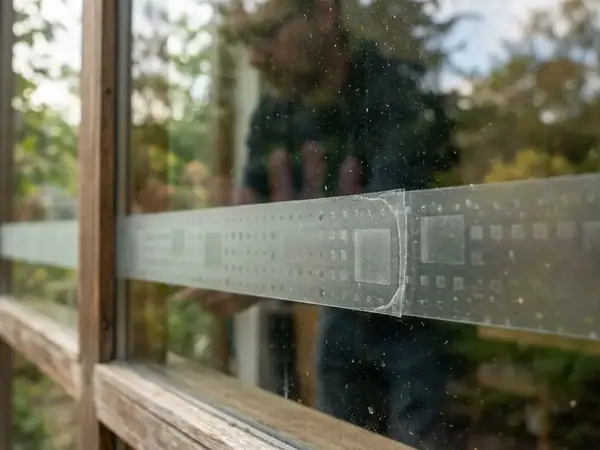
Note: Reflective glass can confuse birds, especially where panes mirror trees, sky, or open habitat. The U.S. Fish & Wildlife Service guidance on preventing birds from hitting windows points to visible exterior treatments such as screens, cords, films, decals, and other markings that help make glass more apparent.
1. Kitchen Sink Window: Best for Everyday, Casual Watching
The kitchen sink window ranks first because it wins on frequency. Even a beginner who never schedules a formal birdwatching session may pass that window roughly a dozen times during a normal morning routine.
This window suits short looks: coffee brewing, dishes rinsing, breakfast prep, a pause before leaving the house. The setup works best when a shrub, small tree, birdbath, or feeder sits in view while the viewer’s hands remain at the sink. No forward step. No face close to the pane.
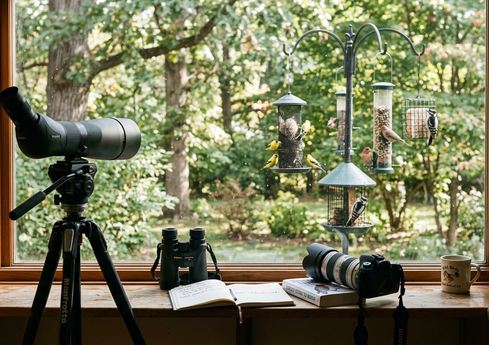
The drawback is movement. Kitchens can be busy, and sudden motion near the sink may startle cautious birds. A person reaching for a mug, turning on a light, or leaning over the faucet can change the whole scene outside.
Keep the tools simple. A compact pair of binoculars or a pocket notebook belongs on a dry shelf, ledge, or nearby drawer, not beside the faucet where splashing and dish soap become part of the equipment plan.
2. Breakfast Nook or Dining Window: Best for Families and Longer Looks
A breakfast nook or dining window ranks second because seated watching changes behavior on both sides of the glass. People move less. Children can learn to whisper, wait, and point slowly. Birds encounter fewer sudden silhouettes.
This is often the best room for turning casual interest into recognition. One page on the table is enough: a local checklist, a seasonal backyard bird sheet, or a field guide opened to common yard birds such as cardinals, chickadees, sparrows, finches, jays, doves, and woodpeckers.
The strongest view is usually not the center of an empty lawn. It is the lawn edge, where birds can move between grass, shrub cover, fallen leaves, a brushy border, or a water source. Edges give birds choices, and choices produce better watching.
Quick Tip: For children, ask for one quiet observation before asking for a name. “It hops under the shrub” teaches more than a rushed guess from a field guide.
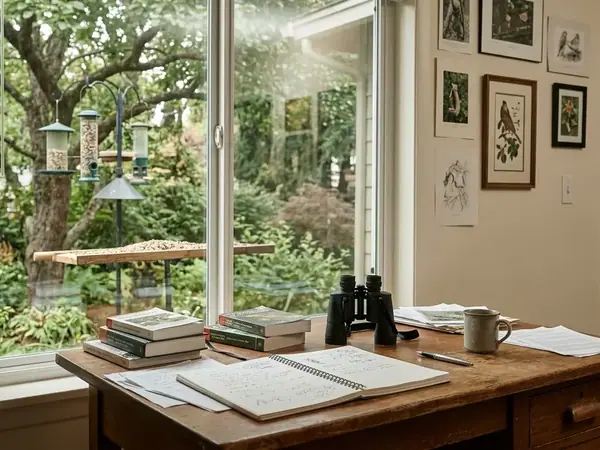
3. Home Office Window: Best for Quiet, Repeated Observations
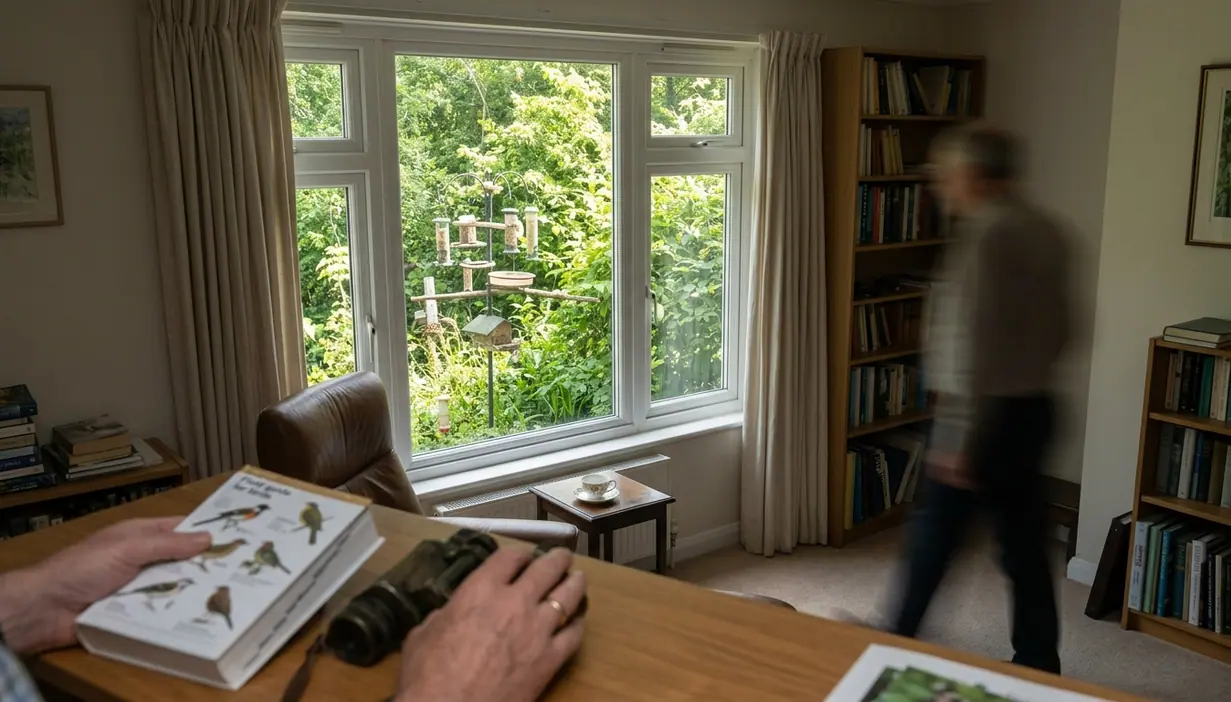
The home office earns its rank through repetition. Its value is not one dramatic view. It is the return to the same seat through the day, where small patterns become visible.
A desk set several feet back from the window usually creates a calmer viewing posture than a desk pushed against the glass. Birds are less likely to react to every hand movement, and the observer can glance out without becoming the main event.
Light control matters here. A narrow viewing gap in blinds or curtains can reduce glare while keeping indoor movement less obvious from outside, especially during bright midmorning or reflective afternoon light. This is also where notes become useful: which perch gets reused, when the birdbath becomes active, whether certain birds arrive after the yard quiets down.
Community observation suggests that repeated, ordinary windows often teach more than the most scenic ones. The office window is a patient teacher.
4. Living Room Picture Window: Best View, Biggest Safety Caveat
The living room picture window often provides the broadest view of bird movement across the yard. It can show birds traveling between tree limbs, shrubs, a water source, fence lines, and feeding areas in one sweep.
That same broad pane deserves caution. If it reflects vegetation, open sky, or a bright tree line, birds may read the reflection as flyable space. Heavy traffic near a sofa, television, or sliding furniture path can make the window less useful for observation and more complicated for safety.
The best use is not to concentrate every attraction directly in front of the largest pane. Instead, watch the routes birds already use between existing features. Then treat the glass where reflections are strong: exterior screens, visible cords, films, decals, or other bird-safe interruptions can help birds detect the barrier.
This window can be excellent. It just should not be treated as harmless because the view is beautiful.
5. Upstairs Bedroom Window: Best for Tree-Canopy Views
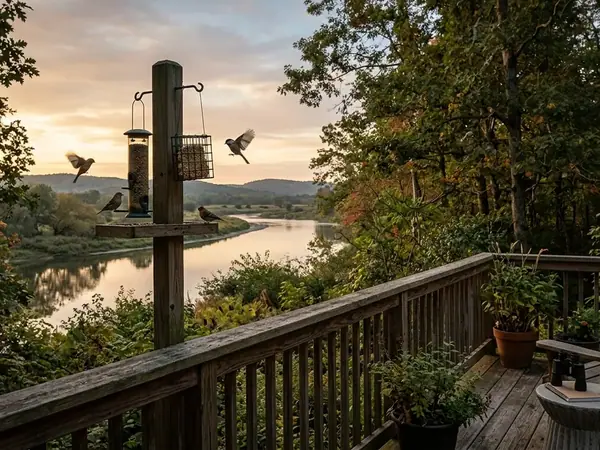
An upstairs bedroom window is more specialized. It becomes valuable only when there is canopy, hedge, roofline, or neighboring-tree activity at that height; otherwise it may miss the busiest ground-level birds.
In a yard with mature trees, this room can reveal birds using outer branches, gutters, utility-free roof edges, fence tops, and upper hedges. Ground-floor windows often miss those routes because foliage blocks the angle or because the activity happens above normal sightline.
A quiet chair placed a few feet back from the bedroom window works better than kneeling at the sill. A short morning check before household activity increases can be enough to learn whether the room deserves a regular place in the routine.
There are limitations. Bedroom windows may not match daily habits, and screens or curtains may soften the view. Still, for canopy movement, this room can outperform larger downstairs glass.
6. Sunroom or Patio Door: Best for Immersion, Not Always for Safety
Sunrooms and patio doors feel immersive because they place the viewer close to the garden, deck, or container plantings. They are tempting places to watch hummingbird flowers, potted native plants, birdbaths, mulch edges, low shrubs, and ground-foraging birds along the patio border.
They rank lower because they are operationally tricky. Broad glass, strong reflections, pets, and sliding-door traffic often combine in one busy zone. A bird may be feeding calmly while a dog moves to the door, a person reaches for the handle, or the glass reflects open sky behind the viewer.
Improve this setup with screens or visible glass markers. Keep the busiest plant containers a few feet away from the immediate glass line. Avoid repeated door movement during active feeding or bathing periods.
Used carefully, this can be a rewarding spot. Used casually, it can become the loudest and most reflective window in the house.
Scope and Limitations: Test Before You Rearrange the Yard
This ranking is based on indoor viewing quality and bird safety, not on a promise that every yard will produce the same activity from the same room. The ranking assumes the home has at least one window facing vegetation, water, or a semi-sheltered yard edge; in a very open lot, the best first step may be adding bird-friendly cover before choosing a viewing room.
Before moving feeders, birdbaths, furniture, or potted plants, test one candidate window for about a week of consecutive days. Keep the method plain. Record time of day, weather, glare level, pet activity, and which yard feature birds used first.
That small log prevents overreacting to one quiet morning. It also shows whether the window problem is truly the room, or whether the yard needs more cover, calmer water placement, or safer glass treatment.
Summary: Best Rooms and Windows, Ranked
Summary: Choose the room where a person can sit still, see clearly, and reduce risk at the glass before adding more feeders or changing the yard layout.
- Kitchen sink window: best for daily glimpses and frequent casual watching.
- Breakfast nook or dining window: best for families, seated observation, and longer looks.
- Home office window: best for repeated pattern-spotting from the same quiet seat.
- Living room picture window: best for wide views, but only with serious attention to reflections and visible glass treatment.
- Upstairs bedroom window: best for canopy birds, roofline perches, hedges, and neighboring-tree activity.
- Sunroom or patio door: best for immersive garden viewing, with extra caution around glass, pets, and door traffic.
The next action is simple: pick one calm seat, reduce glare, add visible window-safety measures where reflections are strong, and observe for a full week before relocating bird attractions.