Why Native Plants Matter More Than a Full Feeder
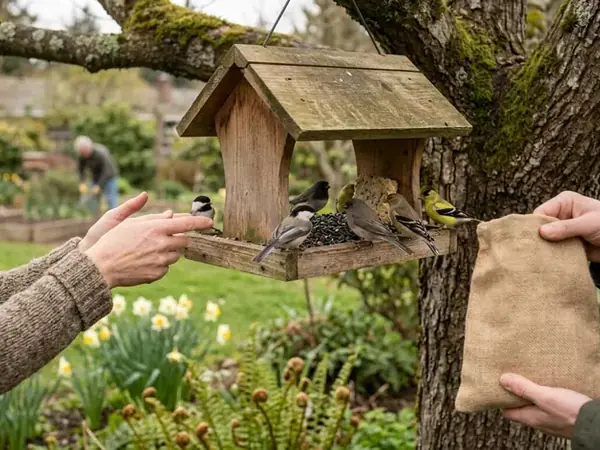
A full feeder gets attention first. That makes sense. It is visible from the kitchen window, easy to refill, and quick to reward the person watching.
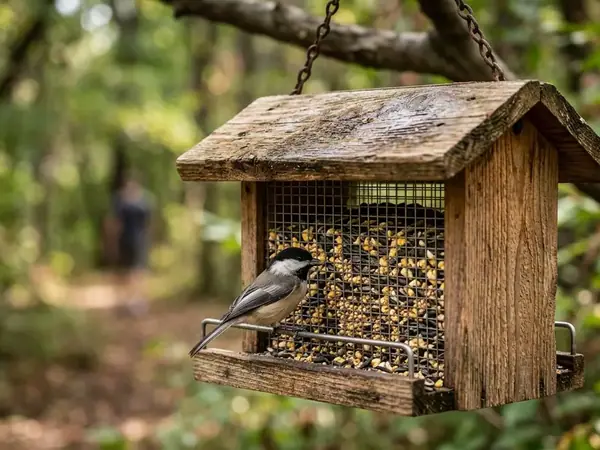
The yard around that feeder, though, often decides whether birds can use the space safely. Native plants provide natural food, shelter, nesting cover, and insect life close to home. Seed helps most when it stays dry and the feeder gets cleaned regularly. Plants keep working when the feeder is empty: leaves host insects, shrubs offer retreat, stems break wind, and fruit or seed heads remain available long after bloom has passed.
For a beginner backyard birdwatcher, the better starting point is not a complete landscape conversion. It is one practical substitution. Replace a small strip of unused lawn, a bare fence corner, or the space under an existing tree with plants birds actually use.
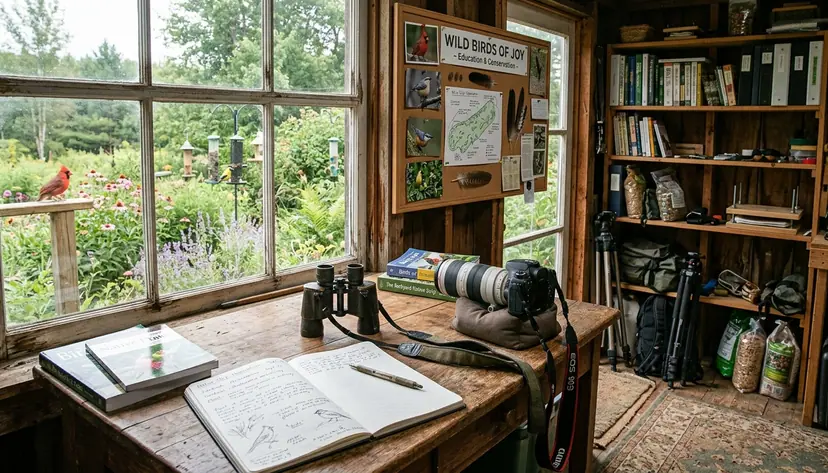
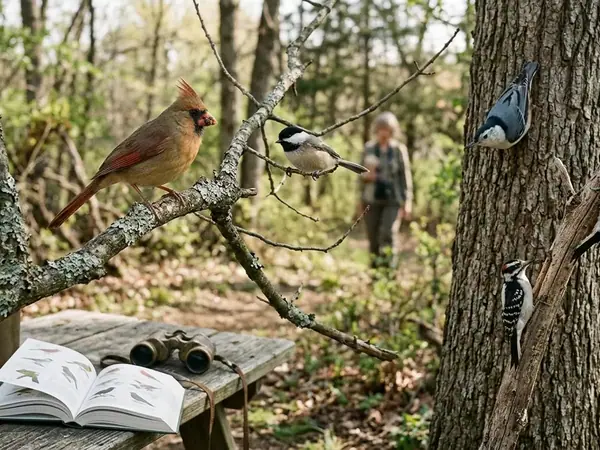
Birds reveal the value quickly. They slip into shrubs before crossing open ground. They pause on low branches before approaching food. During rain or wind, dense stems become more than decoration; they become shelter.
Note: Bird-friendly planting is not about making a perfect wild landscape. It is about replacing low-value spaces with layered habitat that birds can use without taking unnecessary risks.
Criteria for Selection: What Makes a Plant Bird-Supporting
The plant list matters less than the selection method. Decorative landscaping asks how a plant looks from the patio. Bird-supporting planting asks what a bird can eat, hide in, nest near, or investigate during a season when food runs thin.
This guide uses four criteria: food value, shelter value, seasonal usefulness, and suitability for ordinary yards. Food value includes five channels: fruit or berries, seeds, nuts or acorns, nectar, and the insects supported by leaves, flowers, bark, stems, and leaf litter.
That last channel deserves special attention. Many backyard birds rely on insects during nesting season, especially soft-bodied insects gathered from woody plants and fresh foliage. A shrub that looks quiet to a person may carry the caterpillars, beetles, flies, and spiders that keep nestlings fed.
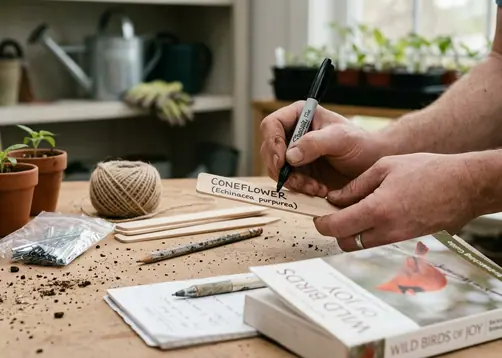
Regional fit comes next. A plant can be native somewhere in North America and still be a poor choice for a particular yard. Before buying, check the genus and species, not just the common name. For example, viburnum in nursery trade can refer to native and nonnative shrubs.
The USDA PLANTS Database is a useful reference for accepted plant names and native range. State extension offices, native plant societies, and local native nurseries can narrow that information further.
Quick Tip: Contact local native nurseries in late winter through early spring. Spring availability is often posted then, and it is easier to ask whether stock has been grown without persistent pesticide treatments.
10 Native Plant Choices That Feed and Shelter Backyard Birds
The choices below are plant groups, not universal prescriptions. A live oak, white oak, Pacific madrone, or red-twig dogwood may be excellent in one region and wrong in another. The method is to match the role first, then choose a locally native species that fits the site.
Oaks and Other Locally Native Canopy Trees
Bird benefit: Canopy trees support caterpillars, acorns, shade, and nesting structure. Oaks are especially valuable where they fit the region and the space.
Best placement: Use a spot where the mature spread will not crowd roofs, wires, or narrow side yards. In a small yard, choose a regional small tree or large shrub instead of forcing a canopy tree into the wrong place.
Care tip: Mulch lightly, keep mulch off the trunk, and protect young trees from mower damage while they establish.
Serviceberry, Dogwood, Elderberry, Chokeberry, or Native Viburnum Types
Bird benefit: These fruiting shrubs can offer soft fruit, insect life, and quick cover near human activity.
Best placement: Place them near a fence, patio edge, or existing tree line rather than alone in open lawn.
Care tip: Choose the exact species by region. The common name alone is not enough, especially with viburnums.
Native Cherries or Plums Where Suitable
Bird benefit: Spring flowers support insects, and summer fruit can draw birds into view.
Best placement: Use them where a thicket or small colony would be welcome, not in a narrow foundation bed.
Care tip: Some native plums sucker. That trait can create excellent cover in the right place and frustration in the wrong one.
Asters and Goldenrods
Bird benefit: Late-season flowers feed insects, and mature seed heads extend the value into fall and winter.
Best placement: Plant them in a sunny patch near shrubs or grasses so birds have a retreat route nearby.
Care tip: Leave selected stems standing through winter instead of cutting everything flush in October.
Coneflowers, Sunflowers, and Black-Eyed Susans
Bird benefit: These native or regionally native flower groups can provide seed heads that birds investigate after bloom.
Best placement: Put them where seed heads can remain without blocking paths or doors.
Care tip: Deadhead only where you need tidiness. Keep some mature heads for birds.
Native Grasses Such as Little Bluestem, Switchgrass, or Regional Bunchgrasses
Bird benefit: Grasses offer seed, cover, and overwintering insect habitat.
Best placement: Plant in groups large enough to read as cover, not as single ornamental tufts.
Care tip: Cut back late, and leave some base material where it does not create a safety or access problem.
Regional Hawthorns or Similar Small Native Trees
Bird benefit: Small trees can provide branching structure, seasonal fruit, and thorny cover where appropriate.
Best placement: Use them as a bridge between open yard and shrub layer.
Care tip: Account for thorns before planting near play areas, narrow gates, or high-traffic paths.
Native Evergreen Cover Where It Belongs
Bird benefit: Evergreen structure can soften winter wind and provide concealment when deciduous shrubs stand bare.
Best placement: Choose regionally native evergreens and place them where mature size will not crowd windows, foundations, or utility lines.
Care tip: Prune for access and safety, not for a bare lower trunk that removes the cover birds came to use.
Native Vines in Controlled Locations
Bird benefit: Some native vines create dense cover, flowers, fruit, and insect habitat.
Best placement: Give them a fence, arbor, or defined edge where spread can be managed.
Care tip: Avoid aggressive vines near siding, gutters, or young trees unless regular pruning is realistic.
Leaf-Litter Zones Under Woody Plants
Bird benefit: Leaf litter shelters insects and gives ground-feeding birds a place to forage.
Best placement: Keep leaves under shrubs and trees rather than across hard walking surfaces.
Care tip: Use managed messiness. A defined edge can keep the area intentional while preserving the habitat function.
How to Arrange These Plants So Birds Actually Use Them
Birds rarely use a flat planting bed the way people view it from the patio. They move through layers. A practical backyard design starts with one canopy or small tree where space allows, adds a shrub layer along at least one edge, then builds outward with flowering perennials, native grasses, and leaf litter under woody plants.
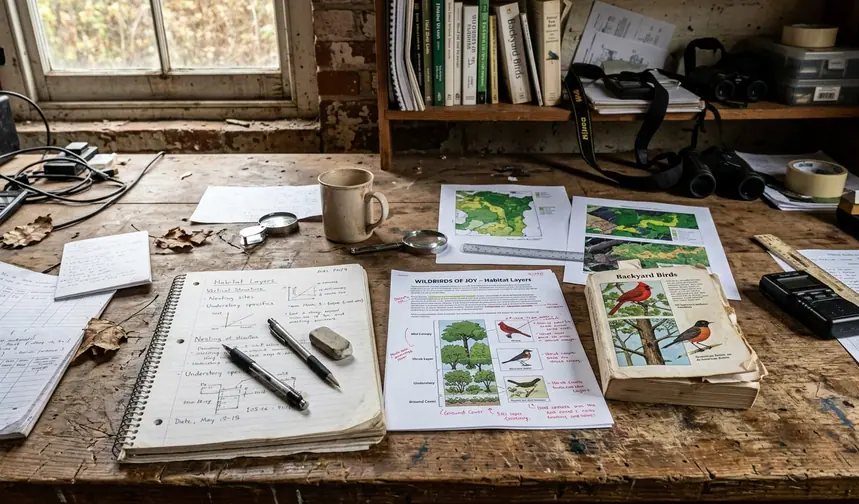
Clustering makes the design work. Plant groups of roughly three to seven of the same perennial or grass instead of scattering one of each across the yard. Birds find seed heads more easily, insects gain enough stem density to overwinter, and the planting reads as habitat rather than a sample tray.
Edges matter. Many birds use transitions between shrubs, open lawn, fences, and trees. A yard with one isolated native flower bed in the middle of open turf may bloom nicely but still feel exposed if there is no shrub cover, tree edge, or nearby escape route.
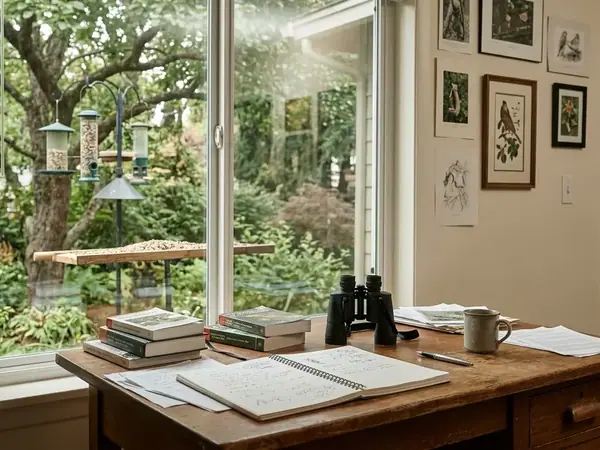
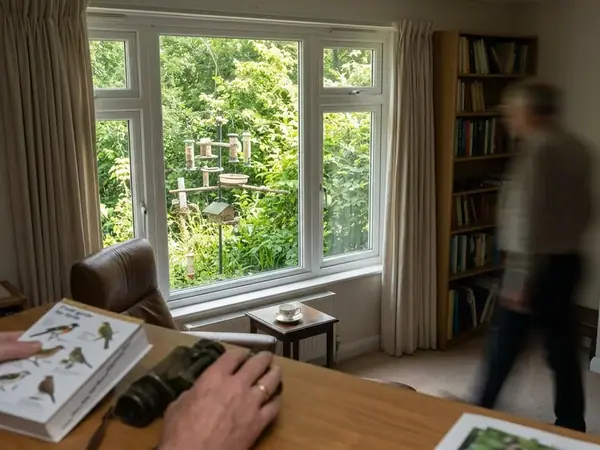
For window viewing, place shrubs within a short hop of the area you watch from: along a fence line, beside a deck corner, or near the outer edge of a window-view bed. If feeders are part of the setup, follow bird-safe window guidance by keeping feeders either very close to glass or well away from it, and add exterior visual markers on collision-prone panes.
Aim for Food Across the Seasons
Seasonal planting changes what a birdwatcher gets to see. In spring, leaf-out, flower buds, early blooms, and caterpillars on native woody plants bring foraging close to the house. During nesting season, many birds gather soft-bodied insects, so pesticide-free foliage carries real habitat value.
Summer shifts attention to fruit and active insect life. Serviceberries, dogwoods, elderberries, cherries, and regional berrying shrubs can bring birds into shrub edges where they pause, feed, and retreat.
Fall belongs to seeds, acorns, late fruit, and drying stems. Asters, goldenrods, coneflowers, sunflowers, grasses, and locally native canopy trees continue feeding birds if the autumn cleanup does not remove everything at once.
Winter asks for structure. Persistent berries, standing stems, grass seed, bark crevices, native evergreen cover, and leaf litter under shrubs all help extend the usefulness of the yard after flowers fade.
Summary: A bird-friendly yard should not peak for only two bloom weeks. It should offer insects in spring, fruit in summer, seed and nuts in fall, and cover through winter.
Scope and Local Limits: Native Is Not One-Size-Fits-All
This is a North America-oriented backyard habitat guide, not a universal planting prescription. The habitat principles travel better than the exact species list. Within the regional limits of this guide, the right plant still depends on soil, rainfall, deer pressure, available space, and local invasive plant rules.
Run two checks before buying. First, check the plant locally through state extension resources, native plant society lists, local nursery guidance, and county or municipal invasive plant restrictions. Second, check the site itself: sun exposure, soil drainage after a heavy rain, mature plant size, deer browsing pressure, and proximity to foundations, sidewalks, septic fields, or overhead utility lines.
Spreaders need special care. Some native vines, thicket-forming shrubs, aggressive goldenrods, and suckering plums can provide valuable habitat where room exists. In a narrow foundation bed, the same traits can create constant maintenance.
Buying a plant labeled only as native can still lead to the wrong choice if the species is native to another region, has been treated with persistent pesticides, or grows too aggressively for the planting site. The label starts the conversation. It should not end it.
Key Takeaways for a Bird-Friendly Native Plant Yard
Start with one high-value woody plant. A locally native tree or large shrub planted in fall or early spring can become the anchor for food, cover, and insect life. Mulch it lightly, keep the trunk clear, and water during dry spells through the first growing season.
Then add a small flower and grass patch nearby. Keeping insects, seeds, and cover concentrated helps birds use the area more confidently than if every plant sits alone across the yard.
Keep some managed messiness. Retain leaves under shrubs. Leave selected stems standing until late winter or early spring. Prune for safety, visibility, and access rather than removing every bit of cover.
A backyard does not need to become a preserve to matter. With a native shrub at the edge, seed heads left through winter, and a tree or thicket where birds can retreat, the view from the window changes. It becomes a daily watching place and, in its own modest way, a small refuge.