What's Inside
- Clean Feeders Start With What Birds Actually Touch
- The Signs a Feeder Should Be Cleaned Before It Is Refilled
- Set Up a Simple Cleaning Station Away From Food Prep
- Wash First: Soap, Scrubbing, and the Corners People Miss
- Disinfect Only After Washing, and Use Chemicals Carefully
- Dry Completely Before Fresh Seed Goes Back In
- When Cleaning Is Not Enough: Pause Feeding and Know the Limits
- A Feeder-Cleaning Rhythm Most Homes Can Maintain
Clean Feeders Start With What Birds Actually Touch
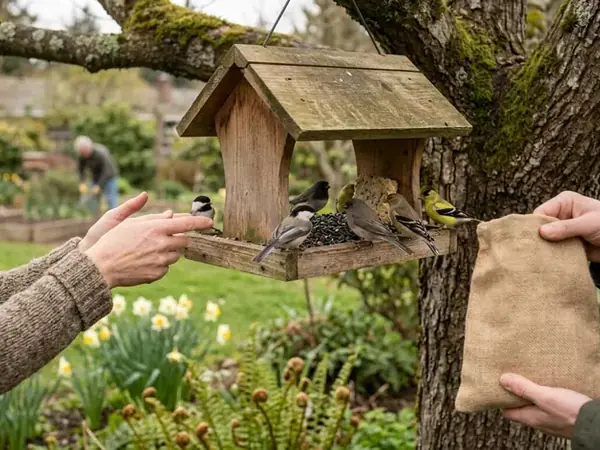
On a busy morning, the evidence gathers fast: seed hulls collect in tray corners, damp residue circles the feeding ports, and several birds land on the same perch before breakfast is over.
That is where feeder care should begin. Not with the idea of making a backyard sterile. A living yard will always hold soil, rain splash, pollen, feathers, and the ordinary mess of birds eating.
The safety habit is narrower and more useful: reduce food residue, droppings, moisture, and oily buildup on the parts birds stand on or feed through before those materials accumulate.
A practical sequence
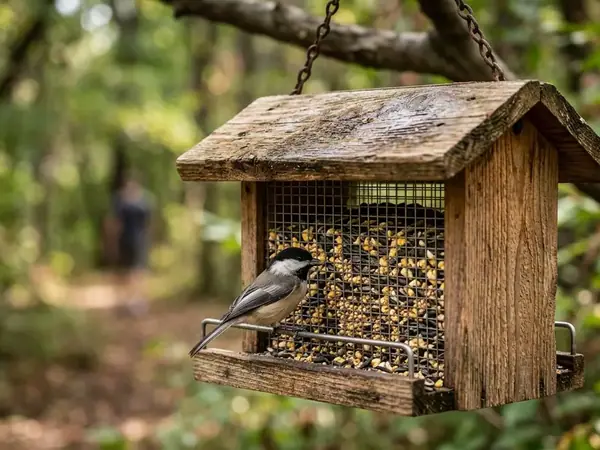
This guide covers the feeders most homes actually use: tube feeders, hopper feeders, platform trays, suet cages, window feeders, and hummingbird feeders. The same question applies to all of them. Where do birds land, grip, sip, peck, and brush their feathers?
Think in contact surfaces
- Tray corners where hulls and wet seed settle.
- Ports where bills touch the same rim again and again.
- Perches, suet cage wires, and hopper lips where feet grip.
- Suction-cup ledges on window feeders.
- Nectar openings and bottle threads on hummingbird feeders.
Summary: A cleaner feeder is not a spotless garden ornament. It is a feeder with less buildup on the surfaces birds repeatedly use.
The Signs a Feeder Should Be Cleaned Before It Is Refilled
A calendar helps only until the weather changes. After rain, humidity, spilled seed, or a sudden rush of birds, the better cue is the feeder itself.
Before refilling, look for food that has changed texture. Wet seed, clumped seed, matted seed, blackened hulls, or seed dust packed into corners all say the same thing: stop and wash.
Visible and tactile triggers
- Wet or clumped seed inside ports, trays, or hopper seams.
- Blackened hulls sitting in corners or along raised rims.
- Droppings on platform trays, ledges, or feeder roofs.
- Sticky sugar-water residue around hummingbird ports.
- Cloudy nectar in the reservoir.
- Seed dust pressed into corners like paste.
Smell matters too, but it should be used plainly. A sour odor, a slimy surface, or matted seed is enough reason to empty the feeder and wash it. No drama needed.
Routine upkeep and urgent cleanup are different jobs. A dry hopper that empties slowly may only need a normal wash when buildup appears. A feeder found soaked after a storm needs same-day attention, even if it was cleaned recently. After a windy rain, a lightly used feeder may need urgent cleaning before a high-traffic feeder that stayed dry under cover.
During active feeding stretches, heavy-use feeders deserve a morning inspection, especially when birds empty trays quickly. The inspection can be short. Lift, look, smell, decide.
Set Up a Simple Cleaning Station Away From Food Prep
The easiest cleaning habit is the one that does not take over the kitchen.
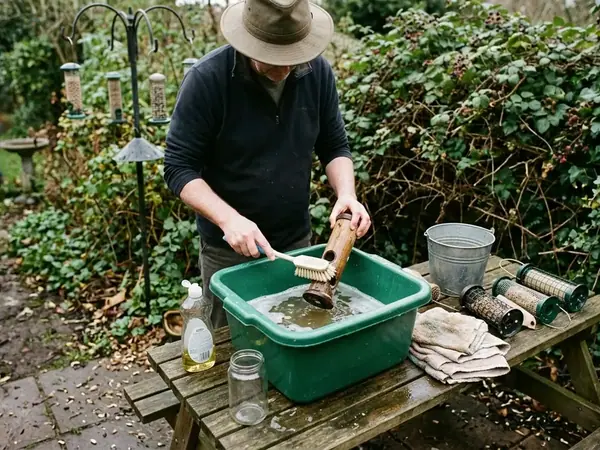
Choose a utility sink, outdoor wash tub, garage basin, or dedicated bucket setup. Avoid kitchen counters and food-prep sinks. Feeder cleaning deals with spoiled seed, droppings, greasy suet fragments, and sticky nectar residue; those do not belong beside cutting boards or dish racks.
Build a small feeder-care kit
A labeled bin keeps the job contained. The bin does not need to be fancy. It just needs to hold the tools so no one borrows the sponge for dishes later.
- Rubber gloves kept only for feeder cleaning.
- Bottle brushes for tubes and nectar reservoirs.
- A small corner brush for tray seams and hopper edges.
- An old toothbrush for ports, hinges, suction cups, and perch holes.
- Mild dish soap.
- A dedicated sponge.
- A drying rack or clean towel.
- A trash bag for spoiled seed, hulls, and suet crumbs.
Scrape loose seed, hulls, and suet crumbs into the trash before washing. That small step keeps swollen seed and greasy fragments out of drains.
Quick Tip: Store feeder brushes and sponges separately from dishes, baby items, pet bowls, and countertop cleaning supplies. The separation is part of the safety practice.
Wash First: Soap, Scrubbing, and the Corners People Miss
Washing is the foundation. Disinfecting, if needed, comes later.
- Remove all old food.
- Take the feeder apart as far as the design allows.
- Scrub surfaces with mild dish soap and warm water.
- Rinse thoroughly.
- Set parts aside to dry.
The important word is scrub. A clear tube feeder can look acceptable from the outside while wet seed sits under the lowest port. Outside appearance alone is not a safe refill cue.
Where buildup hides
Tube feeders need port brushing, especially inside openings and under the lowest feeding holes. Damp seed often lodges there first.
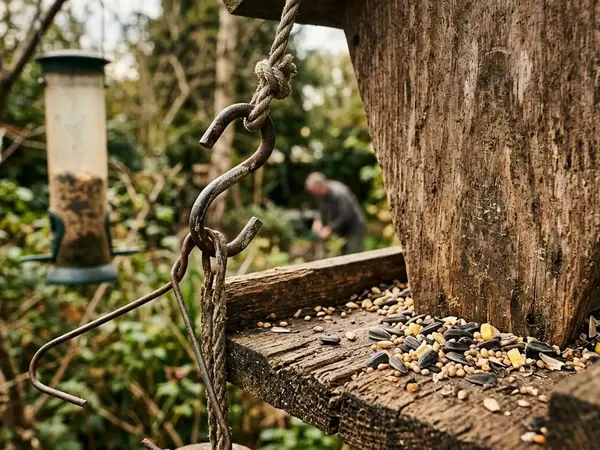
Platform trays ask for a different eye. Corners, underside seams, drainage holes, and raised rims all collect material. Spraying from above may leave droppings and seed paste on the underside rim where birds grip during landing.
Suet cages hold greasy crumbs at hinges, latch points, and wire intersections. The cage may look open and airy, but grease clings stubbornly where wires cross.
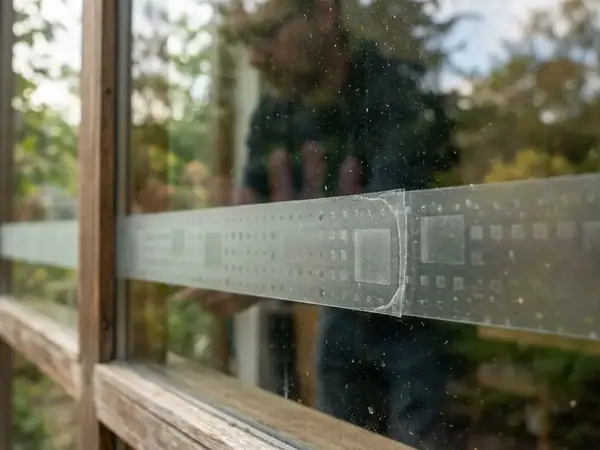
Window feeders deserve careful washing around suction cups, ledges, drainage slots, and the back wall. Residue can sit against glass-facing surfaces where it is easy to miss from indoors.
Note: If a feeder cannot be opened enough to reach ports, seams, or corners, it will be harder to keep safe over time. Cleanability should count when choosing the next feeder.
Disinfect Only After Washing, and Use Chemicals Carefully
Disinfecting works best after visible dirt, seed residue, and oily buildup have been washed away. It is not a shortcut around scrubbing.
Think of it as an occasional escalation: a dirty feeder after heavy use, a disease concern in the area, or a feeder that has been repeatedly contaminated. For general responsible feeding and disease precautions, the U.S. Fish & Wildlife Service guidance on feeding wild birds responsibly is a useful official reference.
If bleach is used
- Use only unscented household bleach.
- Follow the product label or an official wildlife-agency source for concentration and contact time.
- Never mix bleach with vinegar, ammonia, or other cleaners.
- Rinse until there is no cleaner smell and no slippery residue on ports, trays, wires, or nectar openings.
Vinegar can help with mineral film or mild odor. It should not be treated as a dependable disease-control disinfectant when sick birds are a concern.
This is where care gets practical. The person cleaning the feeder controls the sequence: wash first, then disinfect when conditions call for it, then rinse with patience.
Dry Completely Before Fresh Seed Goes Back In
Drying is not the quiet end of washing. It is its own step.
Fresh seed poured into a damp feeder can cake, spoil, or stick inside ports and tray corners. Nectar feeders and window feeders have the same issue in a different form: moisture left in threads, ledges, suction cups, and drainage slots can hold residue where birds return.
Before reassembly
Air-dry feeders on a rack or clean towel until internal tubes, seams, roofs, trays, suction cups, and drainage holes are dry to the touch.
- Check that feeding ports line up correctly.
- Make sure drainage holes are open.
- Confirm roofs sit securely.
- Remove cracked plastic feeders from use when cracks create crevices that cannot be scrubbed clean.
- Inspect rusty metal for rough or flaking areas before returning it to service.
- Press suction cups firmly back into place on window feeders.
If the household cannot inspect or clean often, use smaller amounts of seed. Less food sitting in the feeder means less food available to sit damp in ports and corners.
When Cleaning Is Not Enough: Pause Feeding and Know the Limits
Sometimes the decision is no longer wash and refill. It is remove, clean, wait, and check local guidance.
This article is household feeder-care guidance, not veterinary advice, wildlife rehabilitation instruction, or a disease diagnosis tool. The limitation matters because backyard signs can be suggestive without being conclusive.
Pause feeding when conditions look wrong
- Visibly sick birds appear at or near feeders.
- Dead birds are found near the feeding station.
- A local wildlife agency issues an alert.
- Birds crowd the feeder with unexplained lethargy.
- The feeder becomes contaminated repeatedly despite cleaning.
Ground-level trays can collect droppings, wet seed, and debris quickly after rain or heavy bird traffic. Hummingbird feeders need quick action when nectar turns cloudy or sticky because residue is easy to see at ports and bottle openings. Window feeders need extra caution because residue and collision evidence may appear on the same viewing surface.
The temporary pause is straightforward: remove feeders, discard old food, wash and dry all feeder parts, clean spilled seed below the station, and check local wildlife-agency guidance before rehanging.
A Feeder-Cleaning Rhythm Most Homes Can Maintain
The best routine is simple enough to repeat when the porch is cold, the bucket is in the garage, and the birds are already waiting.
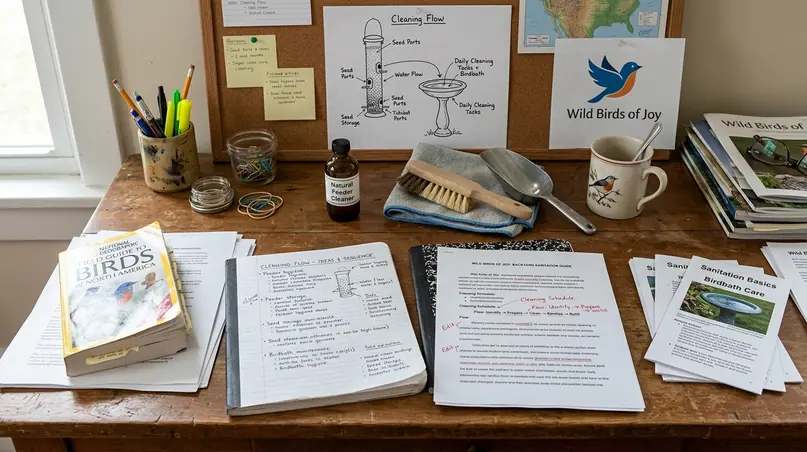
- Inspect before every refill.
- Throw away spoiled food.
- Wash visible buildup with soap, warm water, and scrubbing tools.
- Rinse thoroughly.
- Dry fully.
- Refill lightly when regular inspection is difficult.
- Pause feeding when bird health looks questionable.
Future feeder choices can make the rhythm easier. Open trays, accessible ports, removable roofs or tubes, and visible drainage holes all reduce the wrestling match at the sink.
Cleaner feeders do not require complicated equipment. They require consistency.
A clean perch, a clear port, and a dry tray make backyard watching easier. The birds still scatter hulls, argue over space, and bring their wildness to the railing. The difference is that the feeder no longer leaves the household wondering what they are standing in.