What's Inside
- Start with the Window, Not the Gear
- Choose the Best Window Before You Buy a Feeder
- Make the Glass Safer Before Birds Arrive
- Pick a Simple Feeder and Food Birds Can Use Safely
- Set Up a Comfortable Watching Spot Indoors
- Learn Birds by Shape, Behavior, and Habit
- Build a Cleaning Routine That Protects Birds
- What Window Birdwatching Can and Cannot Promise
- Your First Week at the Window
Start with the Window, Not the Gear
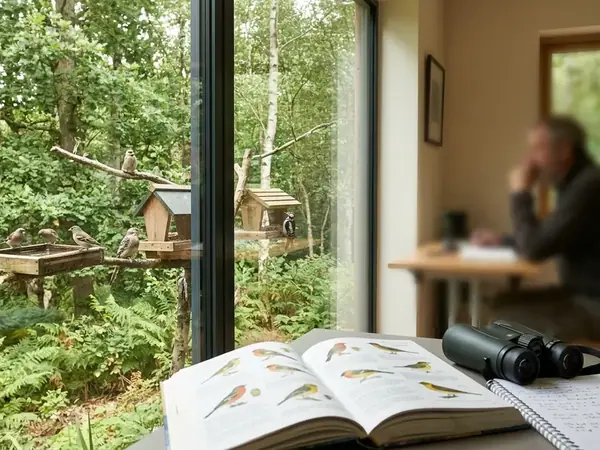
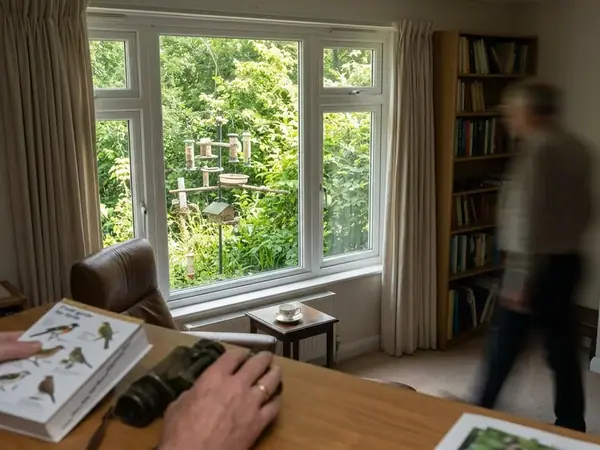
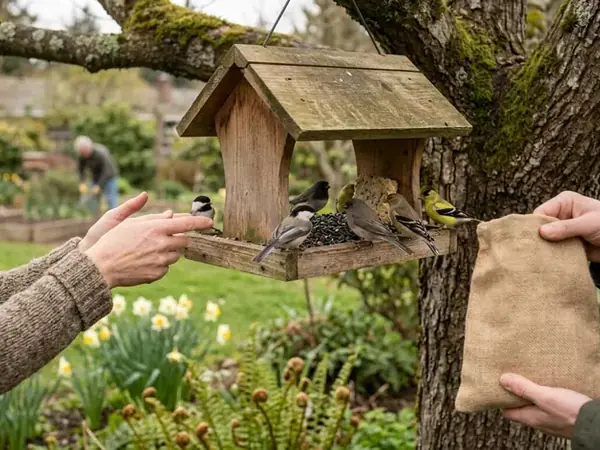
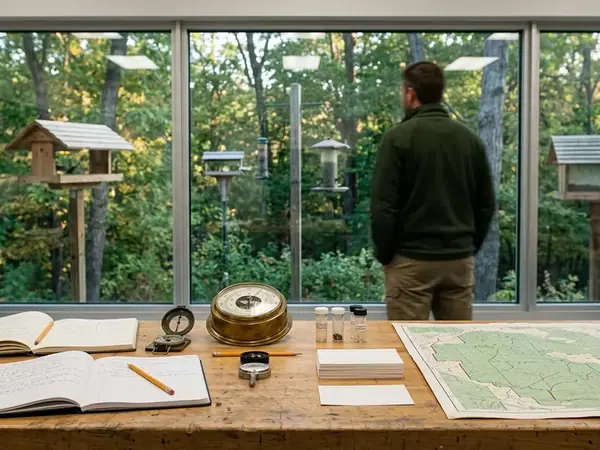
Window birdwatching starts in ordinary rooms. A kitchen table. A living room chair. A home office desk where a person already pauses between tasks.
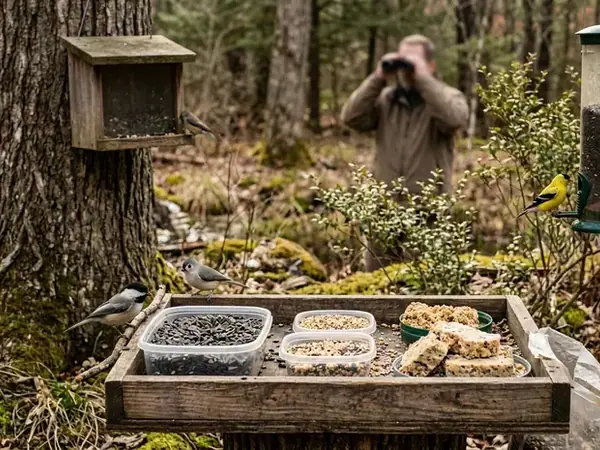
That is the appeal. No trailhead, blind, or specialty setup has to come first. The better starting move is quieter: notice which birds already use the yard, street edge, fence line, or neighboring shrubs. Then make the viewing spot safer. Only after that should food enter the question.
The goal is not to tame birds or pull them close at any cost. It is better noticing. Birds should remain wild, wary, able to leave quickly, and unharmed by the window setup.
Outside-first glass check
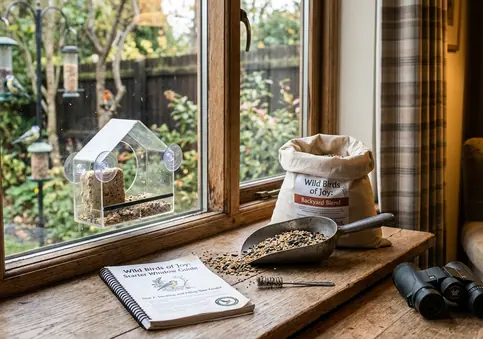
Short sessions beat heroic plans. Ten to twenty minutes during morning coffee or a midafternoon break will teach more than a long watch that happens once and then disappears from the week.
Summary: Begin by observing the window as it already is. Add equipment only after the glass, pets, cleaning access, and bird movement make sense.
Choose the Best Window Before You Buy a Feeder
Rank the window by bird usefulness before human convenience. A bright picture window may look perfect from indoors and still be the wrong place for a feeder.
First, look for existing bird movement. Good candidate windows overlook at least one natural or semi-natural feature: shrubs, small trees, a hedge line, a brushy fence edge, seed-bearing stems, mulch, a lawn edge, or open ground where birds already pause. A dull side window facing a hedge can outperform a dramatic window facing bare patio space.
Second, look for cover and perches. Birds need escape routes. They also need places to land, wait, scan, and retreat. A window near natural cover often works better than a bare wall because it fits the way small birds already manage risk.
Check the room, too
- Look at glare once in the first two hours after sunrise and again in midafternoon.
- Leave room for a chair set back from the glass, usually around three to eight feet inside the room.
- Choose a spot with easy cleaning access from outside or through a safe, reachable window.
- Avoid windows where household traffic stays loud and constant.
- Do not set up a feeder where an indoor cat can launch at the glass, slap a suction feeder, or stalk birds from inches away.
A suction-cup feeder can be excellent for an adult working quietly at a desk. The same feeder may be a poor choice in a playroom where children tap the glass and curtains move all afternoon.
Make the Glass Safer Before Birds Arrive
Treat the glass as a hazard assessment, not decoration.
Clear or reflective glass can confuse birds, especially when it mirrors trees, clouds, shrubs, or open sky. The indoor view does not tell the whole story. Step outside, stand near the expected flight path, and look at the window from bird height.
If the glass reflects habitat, break up that reflection on the outside surface. Birds encounter the exterior face first, and interior stickers may be much less visible in daylight reflections. The Cornell Lab recommends closely spaced exterior markings, commonly following a spacing rule of no more than two inches apart, in its Cornell Lab guidance on making windows safer for birds.
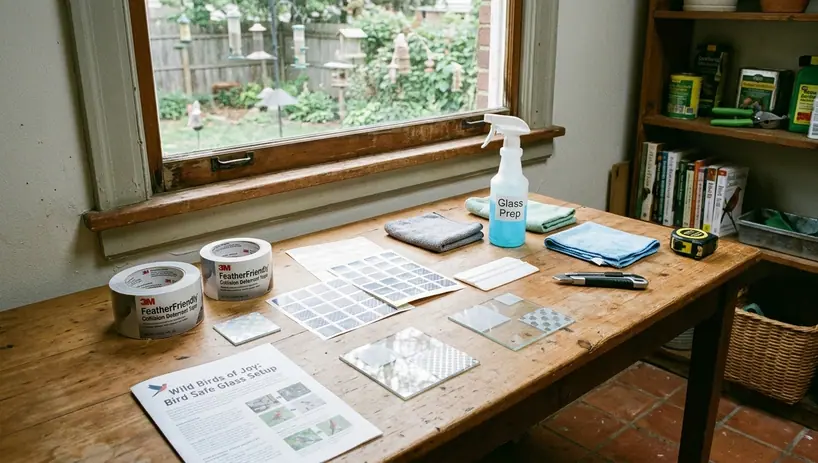
- Use an exterior screen if it fits the window and remains visible from outside.
- Apply closely spaced decals or patterned film across the danger area.
- Try hanging cords or other repeated vertical patterns where they stay secure.
- Use visible temporary markings when a seasonal reflection creates a problem.
A south-facing picture window with a beautiful tree reflection may be worse for feeder placement than a dull side window facing a hedge, because the reflection can create collision risk. If the glass cannot be made visibly safer, keep that window observation-only rather than adding food.