Why Backyard Bird Food Should Change With the Season
Backyard birds do not need the same support year-round—January feeding decisions are mostly about calories, weather exposure, and access, while June decisions are entirely different. The feeding calendar starts from the homeowner's perspective rather than a rigid species catalog. Seasonal feeding means matching food, feeder type, cleanliness, and habitat conditions to actual bird behavior.
This guide focuses on practical guidance for common backyard feeders. It sits alongside native plants, leaf litter, brush piles, insects, clean water, and shelter rather than replacing them. A well-managed feeding station acts as a supplemental resource, and it requires observation and adjustment as the weather shifts.
Spring: Offer Protein, Calcium, and Clean Feeding Stations
Black-oil sunflower seed and hulled sunflower hearts serve as reliable spring staples. They suit many common backyard birds and create less sorting waste than filler-heavy mixes. During courtship and nesting, birds benefit from targeted protein. Offer mealworms in a small dish or guarded feeder. Use modest portions that birds eat the same day rather than leaving a damp protein source out overnight.
Crushed, sterilized eggshell provides an optional calcium source. Rinse the shell, dry it, heat-sterilize it, and crush it into small flakes rather than leaving sharp halves.
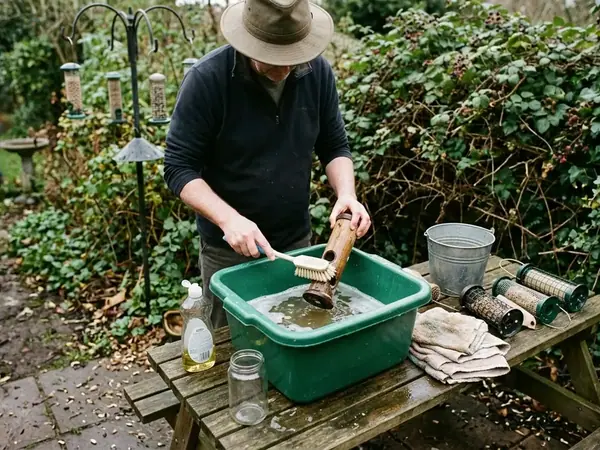
Wet spring weather requires vigilance. Check seed ports and tray corners after rain. Lodged seed swells, sours, or clumps long before the feeder looks empty.
Summer: Feed Lightly, Keep Nectar Fresh, and Prevent Spoilage
Summer guidance narrows the menu. Many birds rely heavily on insects, berries, and natural foods in the yard. The safer homeowner action is to reduce volume and refresh stations frequently.
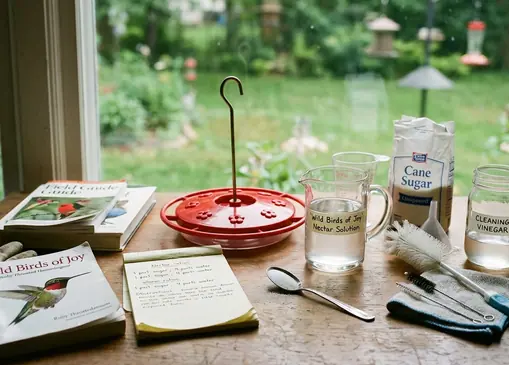
Hummingbird nectar requires strict simplicity. Dissolve plain white granulated sugar in water at a one-to-four ratio by volume. Do not add red dye, honey, brown sugar, or artificial sweeteners. During hot stretches, change nectar based on condition rather than the calendar. Replace the liquid whenever it looks cloudy, smells fermented, or has visible debris. A summer nectar feeder that is safe in a shaded, mild coastal yard may sour much faster on an exposed patio during a heat wave.
Avoid ordinary suet in high heat. It softens, smears on feathers, and smells stale. Use heat-stable suet products only when they remain firm in local conditions. Maintain shallow birdbath water. Shade the bath where possible. Rinse out droppings, algae film, and mosquito-prone debris instead of simply topping off dirty water.
Fall: Support Molting Birds and Migrants With Energy-Rich Foods
Fall feeding provides transition support—some birds are molting, some are moving through, and resident birds are sampling reliable food sources before cold nights. It helps birds refuel during migration.
Stock black-oil sunflower, sunflower hearts, and peanut pieces in appropriate feeders. Introduce suet once temperatures cool enough that the block remains firm. For goldfinches and other finches, buy small bags of nyjer seed that you will use quickly. A nyjer tube can look full for days while finches ignore it because the seed is stale or damp; fullness is not the same as usable food.
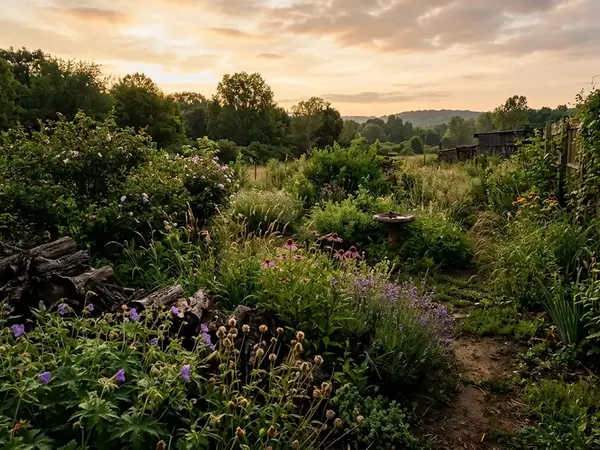
Leave coneflower, sunflower, aster, and goldenrod seed heads standing where practical. Finches and sparrows forage these native plants away from the feeder.
Note: Keeping feeders up in fall does not keep healthy wild birds from migrating. Migration is driven by larger seasonal cues, not by one backyard feeder.
Winter: Prioritize High-Fat Foods, Reliable Access, and Shelter
Winter recommendations prioritize energy density and dependable access over novelty. The practical decision is to stock foods birds can use quickly during cold snaps.
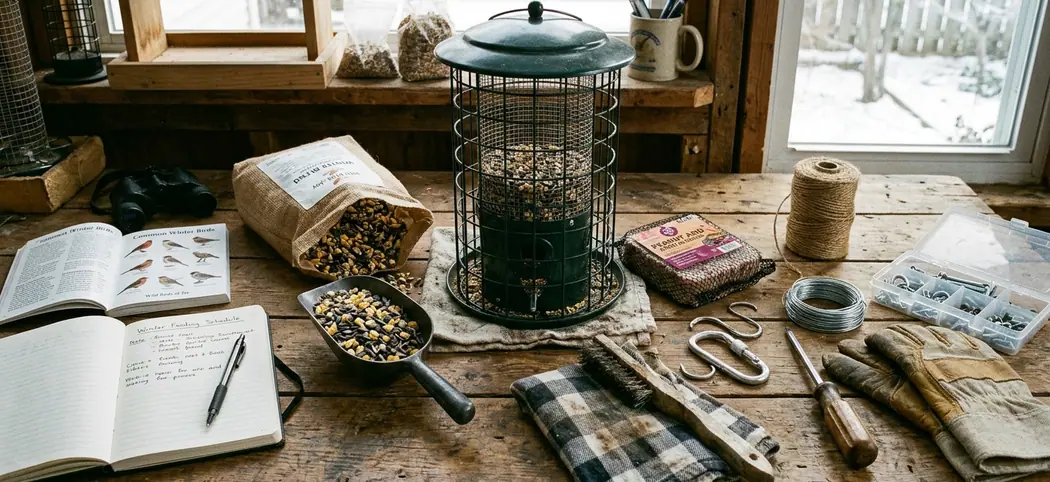
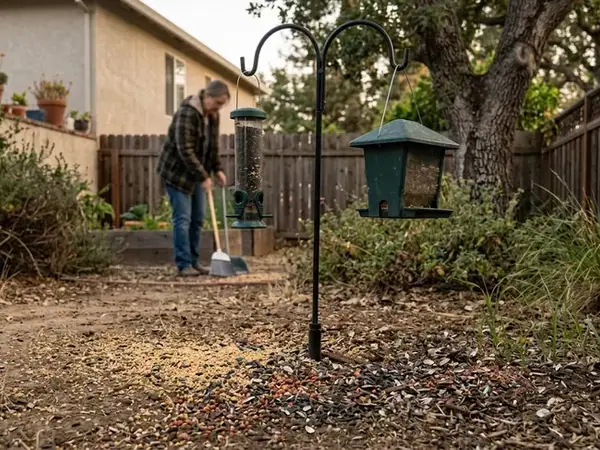
Use black-oil sunflower seed, hulled sunflower hearts, suet, peanut pieces, and nyjer for finch feeders. Platform feeders help juncos, doves, and sparrows. A platform feeder that helps juncos after snowfall can become a waste mat if sunflower hulls and wet seed are not scraped away. Sweep or scrape husks and wet leftovers before they form a frozen layer.
Use cracked corn sparingly, if at all. It attracts mammals and larger nuisance birds. Discard any corn that becomes wet, sour-smelling, or moldy.
Place feeders near enough to shrubs or trees for quick escape cover. Do not bury them inside dense cover where cats or hawks ambush birds at close range. Unfrozen water proves valuable in freezing weather when provided safely with a stable bath setup and regular cleaning.
Match the Food to the Feeder Before You Fill It
Choosing good food but putting it in the wrong feeder creates immediate problems. Port size, drainage, and access dictate success.
- Use standard tube feeders for black-oil sunflower seed or sunflower hearts.
- Use fine-port nyjer tubes or mesh-style finch feeders for nyjer because large ports spill it.
- Use hopper feeders for sunflower seed or better-quality mixed seed. Avoid mixes dominated by hard filler seeds that birds toss onto the ground.
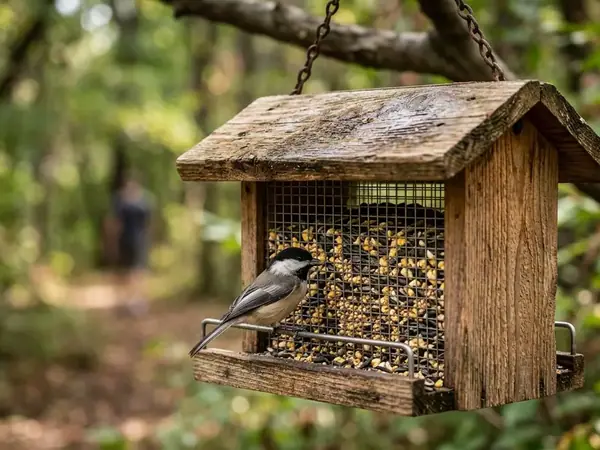
- Use suet cages for woodpeckers, nuthatches, chickadees, and other birds that cling while feeding.
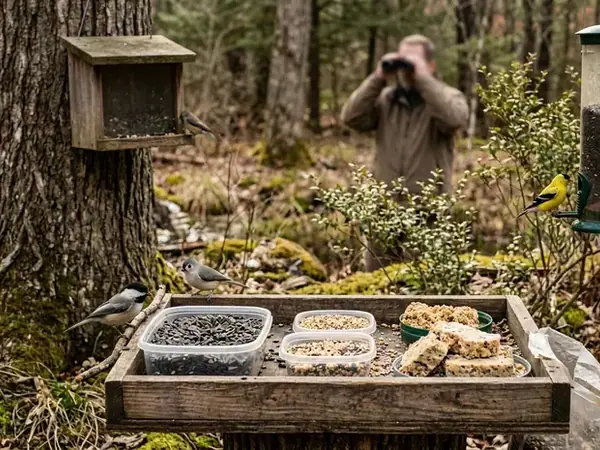
- Use tray or platform feeders for larger birds and ground-feeding species. Put out only enough food for short feeding periods and clean the surface often.
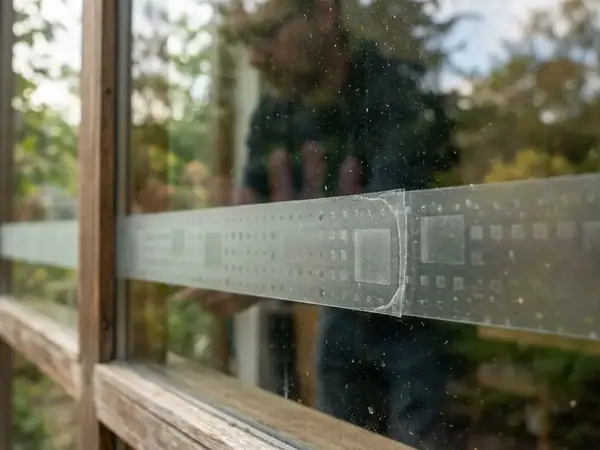
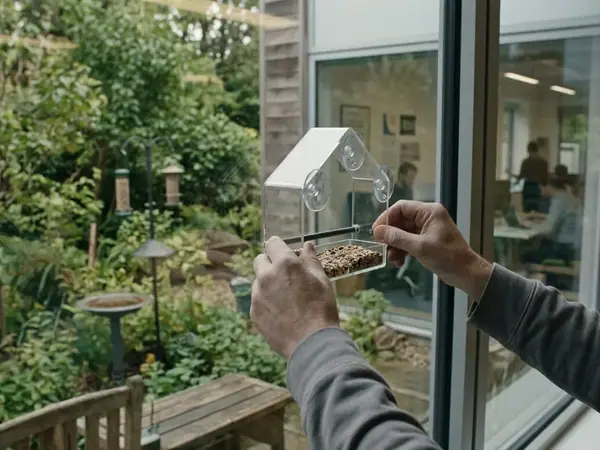
- Use window feeders with small portions, clear drainage, and frequent cleaning so the close-up view does not become a wet seed tray.
Quick Tip: I tried filling a standard tube feeder with a cheap filler-heavy mix early in my feeding efforts, which resulted in birds emptying the entire tube onto the ground to find a few sunflower seeds, so I switched to serving only black-oil sunflower in tubes.
Foods to Avoid in Every Season
The safety list requires blunt action at the feeder.
Do not use bread as a routine food. Avoid salty snacks, chocolate, greasy scraps, heavily seasoned leftovers, spoiled seed, moldy fruit, and old nectar.
Do not use honey in hummingbird nectar. It ferments and supports microbial growth that is unsafe for birds.
Do not offer insects exposed to pesticides. This includes dead insects collected from treated lawns or indoor pest-control areas.
Discard seed that smells musty, clumps inside the bag or feeder, shows webbing, or has visible mold.
What This Guide Can and Cannot Tell You
This is a backyard feeding guide for common North American-style feeder practices. It is not a veterinary diet plan for individual wild birds or rehabilitation cases. Local species, snow cover, drought, migration timing, disease advisories, and municipal or regional rules change what is appropriate at a feeder.
Community observation suggests that local conditions dictate feeding success more than rigid calendars. If sick birds appear near feeders, pause feeding. Empty the feeders, discard contaminated food, clean equipment thoroughly, and restart only after the area has been quiet and clean.
For broader context, consult the University of Minnesota Extension guidance on feeding birds.
Seasonal Feeding Rhythm
Backyard feeding follows a distinct rhythm. Buy smaller amounts of seed more often. Nyjer and hulled sunflower hearts lose appeal fast when stored warm or damp.
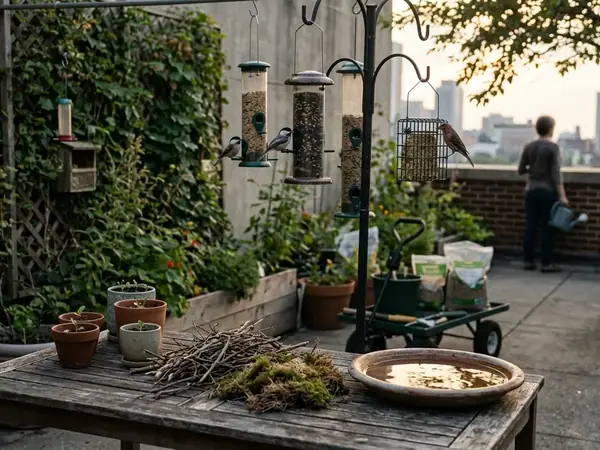
Pair feeders with native seed-bearing plants, berry shrubs, leaf litter, brush piles, and clean water. This makes the yard useful even when feeders sit empty.
Adjust feeder volume after watching actual use for several mornings. Overflowing leftovers, damp husks, or ignored seed mean the quantity or food type should change.
Summary: Clean protein support in spring, restraint and freshness in summer, energy for transition in fall, and dependable access in winter form the foundation of responsible backyard feeding.