Why Small Feeder Choices Matter
A new feeder usually begins with a generous impulse. Someone brings home a tube feeder, a hopper feeder, a platform tray, a suction-cup window feeder, a suet cage, a nectar feeder, a seed mix, or a shallow birdbath, fills it the same day, and waits at the kitchen window.
Then the first visits arrive. That part feels wonderful.
The quieter work starts a few days later, when hulls collect under the perch, rain tests the seed, or birds scatter every time they approach the glass. In the first week, useful questions are simple: do birds find the feeder within a few days to a week, does the seed stay dry after the first rain, and do birds approach calmly or flee over and over?
This guide is for that early stage. The goal is not a perfect feeding station. The goal is a safer routine: one that lets you observe birds without adding preventable hazards.
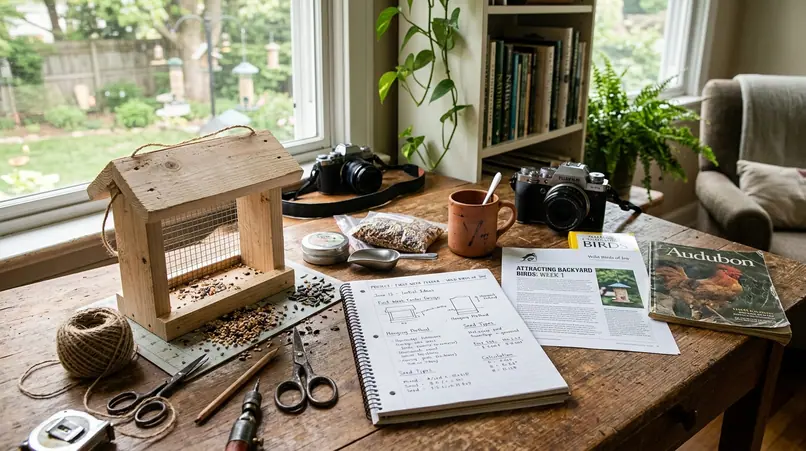
Criteria for Selection: What Counts as a Feeder Mistake
Not every awkward feeder choice belongs on a risk list. A feeder that looks a little plain does not matter much. A feeder that concentrates droppings, damp food, window strikes, or predator pressure does.
This list favors mistakes that affect bird health, predator exposure, collisions, spoiled food, or household frustration. Each one is common for beginners, easy to miss, and fixable in one afternoon without specialized gear. You can move a feeder, reduce a refill, scrub a basin, switch food, or pause feeding.
I first thought about ranking these by homeowner annoyance, but that put the patio mess too high and window safety too low. A feeder that looks successful because it attracts many birds can still be a failure case if the tray holds droppings, the seed ports are greasy, and damp hulls are collecting below it.
Scope: What This Guide Can and Cannot Decide
This is a home-feeding safety guide, not veterinary advice and not a disease diagnosis guide. If you see lethargic birds, birds with crusted eyes, birds unable to fly normally, or multiple dead birds near the same feeding area, check local wildlife agency, park, or rehabilitation guidance before you keep feeding as usual.
Note: For routine home feeding, these habits help; during disease warnings, bear activity, or repeated unusual bird behavior, local advisories should override normal feeding plans.
Placement also changes from yard to yard. Reflective window angle, deck height, shrub distance, neighborhood cats, prevailing rain direction, and the way birds queue from trees, fences, or rooflines all shape the safer choice.
Common New Bird Feeder Mistakes
1. Starting With Too Many Feeders Too Soon
New birders often overbuild the station because every feeder promises a slightly different visitor. A tube feeder for finches. A suet cage for woodpeckers. A platform tray for cardinals. A window feeder because it brings the action close.
The risk is not enthusiasm. The risk is maintenance capacity.
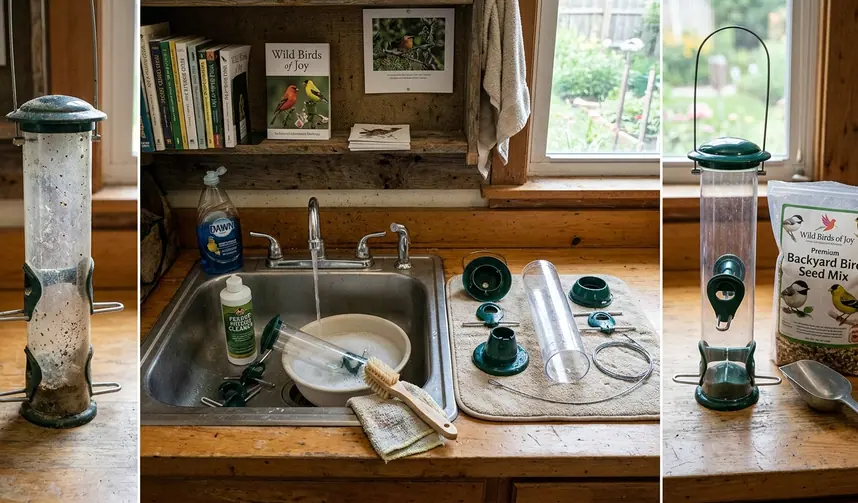
Start with one feeder that fully opens, empties, scrubs, rinses, and dries in a household sink or outdoor wash area. Use one food type for the first couple of weeks. Then watch what happens: which birds arrive, which food sits untouched, where seed falls, and how often the feeder needs cleaning.
Quick Tip: Expand only when the first feeder is being cleaned on schedule, ground mess stays manageable, and the same food is not sitting untouched for more than a few days in damp weather.
2. Refilling Feeders Before Cleaning Them
Refilling is a decision point, not just a top-off. Before adding fresh seed, inspect what is already there. Old hulls, damp crumbs, droppings, and greasy ports can turn a feeder into a contamination point.
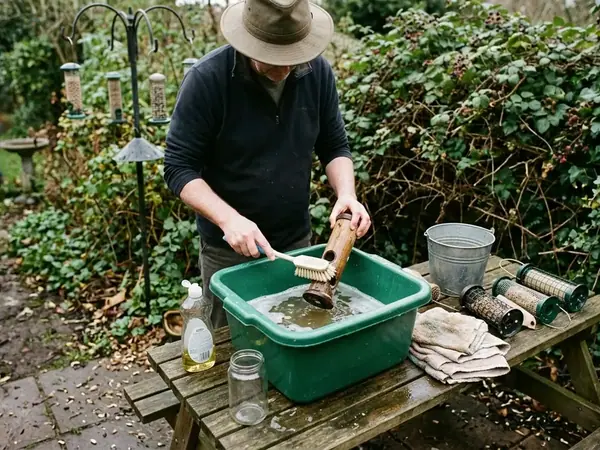
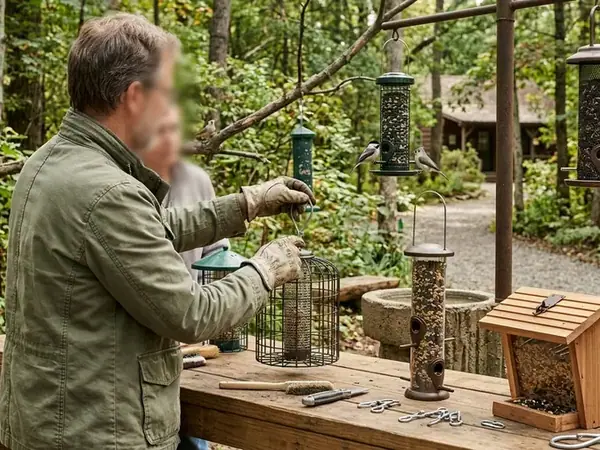
Clean immediately when seed clumps, the feeder smells sour or musty, ports look greasy, trays collect droppings, or rain has soaked the food within the last day or so. The basic sequence stays steady: empty old seed and hulls, disassemble removable parts, scrub ports and tray edges, rinse until no residue remains, air-dry completely, then refill with fresh seed.
The Cornell Lab guidance on cleaning bird feeders recommends regular cleaning, commonly about every two weeks, with more frequent cleaning during heavy use, wet weather, or disease concerns. Drying matters. A clean feeder that stays damp can still spoil the next refill.
3. Ignoring the Mess Under the Feeder
The ground beneath the feeder is part of the feeding station. Treat it that way.
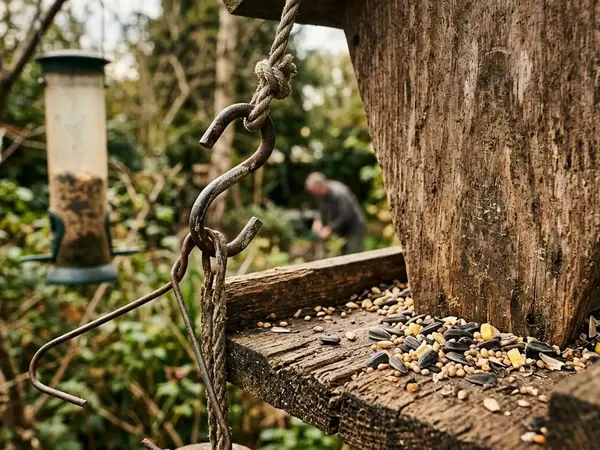
Hull piles, damp seed, sprouting grains, and scattered food often settle into deck boards, patio cracks, mulch rings, gravel edges, stair treads, and the damp strip directly below a hanging feeder. That mess can attract rodents, raccoons, insects, and ground-foraging birds into tight spaces near the house.
During rainy stretches and after windy days, check the ground every couple of days. Reduce refill volume, add a catch tray where appropriate, sweep hard surfaces, rake compacted hulls from mulch, and move feeders away from corners where cleanup turns into a chore.
4. Offering Foods That Do Not Belong in a Feeder
People share leftovers with birds because birds seem eager. I understand the impulse. Eagerness, though, is not the same as suitability.
Keep bread, chips, salted nuts, seasoned rice, buttery crumbs, moldy fruit, sweet baked goods, and stale pantry grains of uncertain age out of feeders. If food smells rancid, feels damp, shows mold, or has been sitting open in a humid pantry, skip it.
Use feeder foods meant for birds instead: fresh seed suited to local feeder species, plain suet products, species-appropriate nectar mixed and replaced on schedule, and clean shallow water. A feeder should supplement natural foraging, not become a disposal spot for human food.
5. Placing Feeders Where Windows Become a Hazard
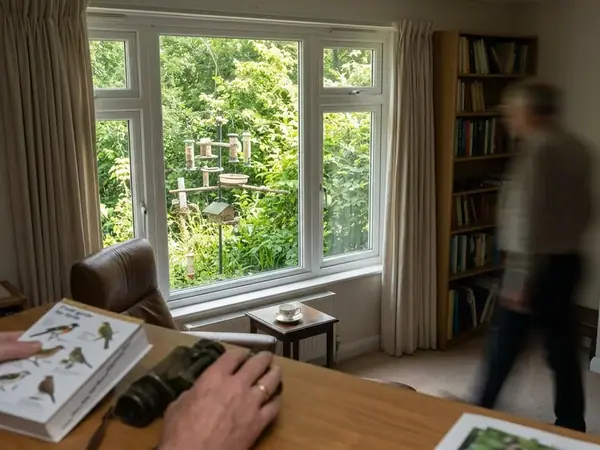
Windows ask for close observation after installation. That applies to standard hanging feeders near reflective panes and suction-cup feeders mounted directly on glass.
A suction-cup window feeder is not automatically unsafe or safe; the risk depends on glass visibility, reflected vegetation, room lighting, and how birds actually approach and leave. Reflections of trees, sky, or shrubs can confuse birds, especially when a feeder creates repeated flight paths near the same pane.
Watch the first several active feeding periods after installation, especially as sun and cloud cover change reflections. Adjust placement or add glass visibility treatments if birds accelerate toward reflected trees, make repeated startle flights, skim the pane while leaving, or flush into glass when startled by people indoors.
6. Forgetting That Cover Can Also Hide Predators
Birds often use nearby cover before they approach a feeder. A fence rail, tree limb, or loose shrub can give them a waiting place. But cover that sits too dense and too close can also hide a stalking animal.
A shrub near a feeder can be useful cover in one yard and an ambush point in another if neighborhood cats use it as a hiding route. Look at the feeder from ground level, not only from your window. Check low shrubs, deck gaps, woodpiles, storage bins, and fence corners.
If birds pause unusually long before landing, explode away in repeated alarm flights, feed only from one exposed side, or avoid ground spill after a cat appears, change the setup. Keep pet cats indoors or physically away from the feeding area, and avoid scattering seed directly beside low cover.
7. Treating the Birdbath Like Decoration
A birdbath helps only when birds can use it safely. Think of it as maintenance equipment.
Check for algae film, floating feathers, leaf litter, droppings, cloudy water, slick basin texture, or mosquito larvae near the surface. After heavy use, storms, leaf drop, or hot spells, refresh the water. In warm weather, a daily visual check beats waiting for a fixed calendar day.
Keep water shallow and footing stable. If the basin feels slippery, add clean stones or choose a textured basin so small birds can stand without sliding.
8. Never Pausing When the Yard Sends a Warning
Taking feeders down can be an act of care. It reduces concentrated contact, removes spoiled food, and interrupts risky patterns without ending your interest in birds.
Pause feeding when a visibly sick bird uses the feeder, cats or hawks pressure the same station repeatedly, seed spoils after wet weather, raccoons or other non-target wildlife return nightly, or a local agency issues an advisory.
During a pause, empty feeders, discard stale food, scrub and rinse equipment, dry it fully, and store it indoors or in a sealed dry area. Restart only after the immediate problem has changed: the advisory has lifted, spoiled food is gone, the feeder is clean, or predator pressure has been reduced by placement changes.
Summary: A Safer Beginner Routine
Summary: A good feeder is judged less by how many birds arrive and more by whether visits stay clean, calm, and low-risk.
Start small. Use one manageable feeder, appropriate food, modest refills, regular cleaning, visible glass, predator-aware placement, tidy ground, and a willingness to pause.
Observation is part of care. Notice flight paths, feeding order, ignored foods, wet spots, and changes after storms. Families and new birders do not need an elaborate station to learn a great deal; they need a routine that respects the birds as living neighbors, not decorations outside the window.