One Month at a Busy Kitchen Window
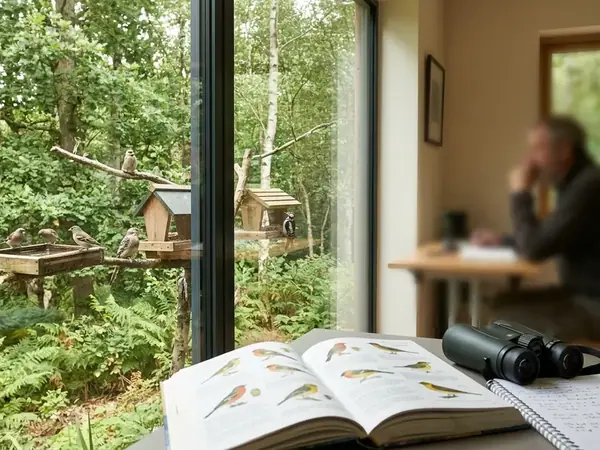
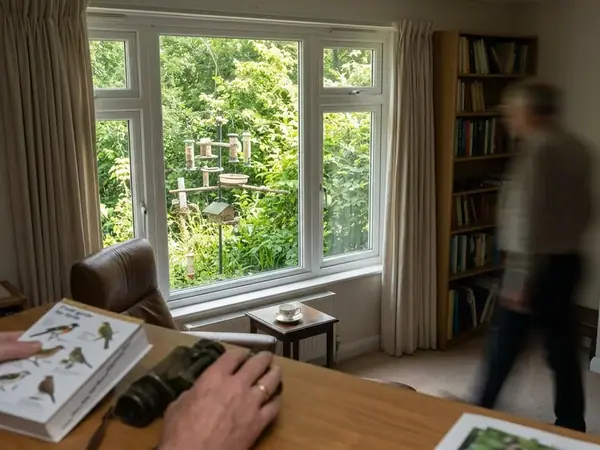
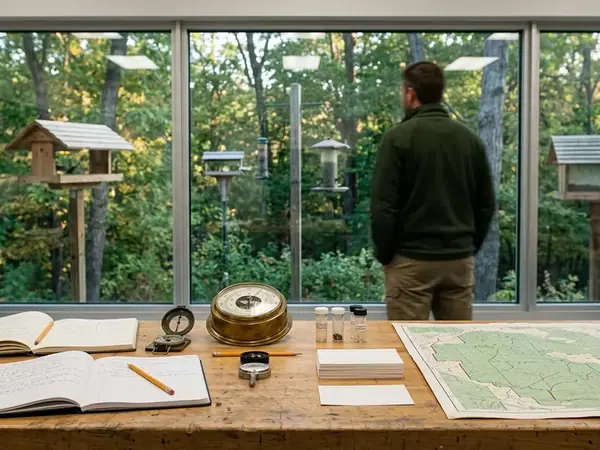
For one month, a family treated its busy breakfast-nook window as a practical test of quieter birdwatching. The window offered convenient backyard views, but ordinary kitchen movement and noise could interrupt them. The family chose this specific spot because it was already part of the morning routine, not because it offered blind-like conditions.
The case-study sequence follows a clear, replicable path. The observers set out to identify disturbances, make small household adjustments, and observe whether sightings became calmer. The room stayed in normal household use throughout the observation period, including meals, chair movement, dish handling, and entries from adjoining rooms.
The Challenge: A Good View in a High-Traffic Room
A breakfast nook differs entirely from a dedicated wildlife blind. Meals, chairs, dishes, people entering the room, and changing indoor light all occur close to the glass. To understand what caused departures, the observers separated interruptions into three practical categories: a person or chair moving near the glass, an abrupt kitchen sound, and a change in indoor light or reflection.
Reconstructing the disturbance sequence from the household notes reveals a distinct pattern. The log captures what household action happened, whether a bird paused or departed, and how quickly activity resumed outside. Lower voices did not eliminate interruption when a chair moved or someone crossed close to the glass; sound and visible motion had to be logged separately.
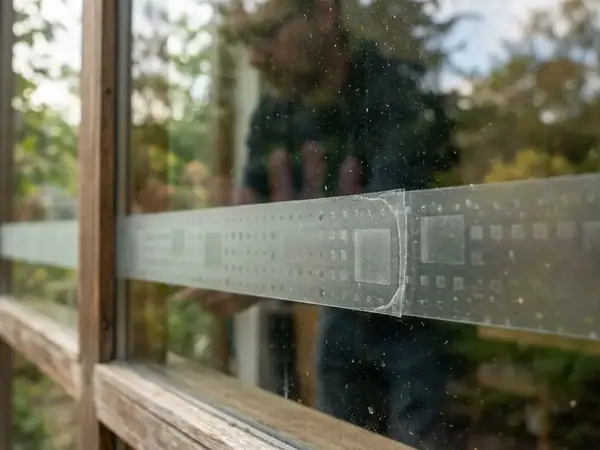
Note: Collision prevention was treated as a distinct issue from viewing comfort. Quieter occupants do not make reflective glass safe for birds.
How the Family Established a Usable Baseline
Before judging any adjustment, the family recorded ordinary breakfast conditions. A simple event log proves more useful here than relying on memory, especially when comparing routine movement with genuinely abrupt disturbances. The observation method requires noting specific details for every event to build a reliable foundation for comparison.
A usable entry contains the time, observer position, household activity, bird behavior, apparent interruption, and whether the bird remained visible or returned during the same observation period. The baseline and adjusted observations both fall within the same one-month case period.
Breakfast-Window Observation Log
- Time: Use the clock time shown when the bird first becomes visible.
- Observer position: Record seated, standing, entering, or crossing near the window.
- Household activity: Note the specific action underway, such as clearing dishes or pulling out a chair.
- Bird behavior: Document the immediate reaction, categorizing it as stayed, became alert, or departed.
The Solution: Change the Room’s Rhythm, Not the Room

The family organized changes around moments they could control. They focused on reducing abrupt movement near the window, limiting avoidable clatter during active sightings, and creating a consistent place from which to watch. These changes work as low-cost household habits rather than specialized birding gear.
For every adjustment, the reasoning precedes the outcome. Birds outside react differently to a person already seated than to someone suddenly crossing close to the glass. A regular seat farther from the glass was favored where the room allowed it, and unnecessary crossings were minimized. The immediate-response routine became simple—pause first, remain seated or move gradually, and postpone chair movement or dish clearing until the bird leaves naturally.
Results: Calmer Sightings, With Some Triggers Unresolved
At the end of the month, the family compared sequences rather than calculating an unsupported success rate. Small household adjustments improved sightings and made the breakfast-nook experience calmer. The outcome categories focused on whether birds remained visible through steady room activity, resumed activity after a pause, or departed after an abrupt household action.
One catch exists when reviewing these logs: uncontrolled weather, activity elsewhere in the yard, and differences among birds prevent the log from showing that a household action caused every observed response. Despite this variable, the before-and-after comparison tracks four items for each change: original behavior, revised behavior, bird response to watch for, and whether a similar response appeared again under comparable breakfast conditions.
Why Predictability Mattered More Than Equipment
Interpretation of the case rests on the contrast between steady background activity and sudden nearby changes. The family favored a repeatable room rhythm over enforced silence. Preparing the seat and meal items early reduced the need for sudden close-window movement, while normal low-level breakfast activity continued.
A repeatable family routine proves more practical than trying to keep a kitchen perfectly silent. The breakfast nook stayed a shared household space instead of becoming a restricted birding zone. Responses require reading by event sequence because a routine tolerated by one bird during one breakfast may still prompt departure from another bird under different weather, cover, seasonal, or backyard-activity conditions.
Summary: Steady background activity allows for longer observation periods than a cycle of complete silence broken by sudden, abrupt movements near the glass.
Try the Same Reset at Tomorrow’s Breakfast
A reader can copy the family's decision sequence by observing one unchanged breakfast first, then preparing the next comparable morning in advance. Select one frequently used window. Place a stable viewing position several feet back where practical, and observe one ordinary breakfast period before changing anything.
Record each arrival with the household action underway and one of three immediate outcomes: stayed, became alert, or departed. Compare ordinary breakfast periods under similar household conditions rather than combining breakfast observations with quieter times when the room is otherwise unused.
Take one real morning as the model: a chickadee lands on the feeder at 7:15 while someone is still eating. The watcher stays seated, keeps the coffee mug still, and lets the half-cleared plates sit. The chickadee works the feeder for a full minute and comes back twice more before anyone stands to clear the table. That single unhurried breakfast is the pattern worth repeating — chairs moved before the watching starts, the loud tasks held until the bird has left on its own.