Reevaluating a Crowded Backyard Setup
Could fewer feeders actually create a better backyard feeding setup?
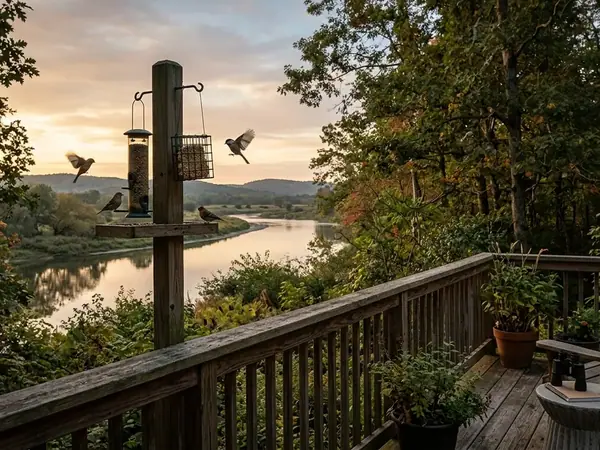
Six hanging and pole-mounted feeders had gradually become more than I could inspect properly during each round of chores. The daily routine required constant topping up, adjusting baffles, and sweeping hulls. After finding old seed in two lightly used feeders while the busiest stations desperately needed attention, I stored three of the six units. It was a practical adjustment in one backyard to a maintenance schedule that had outgrown me.
The active setup was reduced from six feeders to three. I kept a tube feeder, a platform-style feeder with drainage, and a suet cage. The decision followed a stretch of about nine days with repeated rain. During that wet period, seed in the least-used feeders remained longer than seed in the main tube feeder, creating a persistent risk of mold and bacterial growth.
Tracking Seed Turnover and Spoilage
An empty feeder became useful information. Modest amounts went into the three active feeders, and I checked what remained before adding more. Seed was discarded immediately when moisture, odor, or clumping made its condition doubtful.
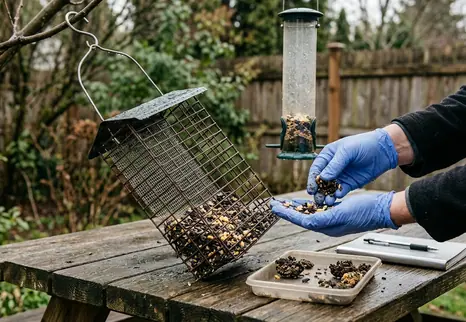
That shift in approach made turnover highly visible. A feeder holding damp seed no longer disappeared into a row of other containers. Checks focused specifically on seed stuck behind feeding ports, compacted material at the tube base, and husks blocking platform drainage. I also watched for a musty odor and kernels that held together when the feeder was tilted.
After wet weather, I checked the active feeders the same day the rain ended, then again within the next day or so. Initial fills covered only the next short interval of observed use. The amount was increased only when birds were clearing sound seed before it became damp or stale.
Managing Bird Traffic Without Bottlenecks
Removing feeders often raises concerns about crowding. The three remaining feeders provided distinct ways of feeding. Small birds could use several tube ports, larger ground-oriented visitors could approach the platform, and clinging birds could use the suet cage.
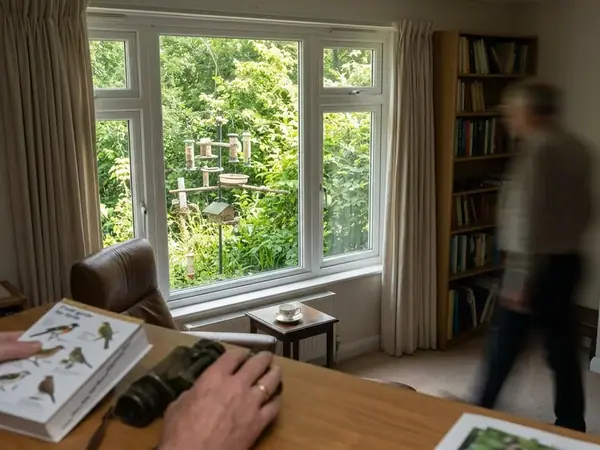
I positioned them so a bird leaving one feeder did not have to fly directly through the traffic at another. All three remained visible from a single vantage point. Rather than clustering them on one hook, I spread them out, thinking about open approach paths and nearby retreat cover alongside the need to monitor fallen seed.
Crowding was judged from specific behavioral cues. I watched for repeated chases, a bird holding one port while not feeding, hesitant fly-bys, and birds waiting on a nearby branch through several landing opportunities. Conflict observations were recorded by feeder and food type because a guarded sunflower port and a busy suet cage indicated entirely different access problems.
A quieter result in this yard serves as a baseline. Species mix, breeding or flocking season, feeder geometry, nearby cover, and the number of visiting birds can turn a reduced setup into a bottleneck, so behavior at the remaining perches must decide whether the arrangement is acceptable.
Building a Sustainable Maintenance Routine
With three active feeders, a maintenance round meant fully emptying each one. I separated the removable parts, cleared the ports and drainage openings, washed the components, allowed them to dry completely, and inspected everything before seed went back in.
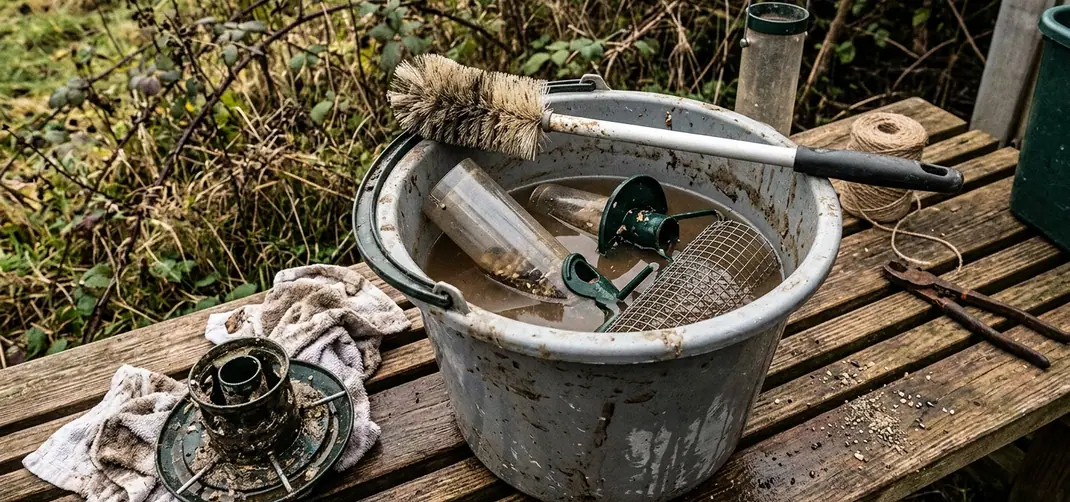
No feeder was refilled while moisture remained in the reservoir, port recesses, seams, or base. Drying was verified by sight and touch. Each maintenance pass included the feeder body, lid, ports, perches, drainage points, suspension hardware, pole or hook, and the patch of ground receiving hulls and spilled seed.
A feeder was taken out of service immediately when seed became wet, a drainage opening stayed blocked, a seam retained debris, or hanging hardware no longer felt secure. A wet or damaged feeder could stay out of service—sometimes for days—without prompting a rush to replace it.
Across the observation record for the six-to-three change, the useful habit was separating seed-turnover failures from perch-access problems, and both of those from chores simply left unfinished.
Auditing Your Current Feeding Stations
I approached the reduction as a strict inventory exercise. For every feeder, I wrote down the food offered, whether birds had recently used it, what seed remained, how easily the body opened for cleaning, and whether it duplicated another feeder.
The observation record used dated lines with four plain entries:
- What was filled
- What remained at the next check
- What became wet or compacted
- Where chasing or waiting occurred
The least useful unit went into dry storage until the next comparison point. The stored feeder was kept clean, empty, and dry with its hanging parts attached. This made reinstatement possible if the remaining stations showed persistent access problems.
Picking one underused, duplicative, or maintenance-heavy feeder and putting it away before the next refill keeps the comparison clean, as long as the food type and the other feeder positions stay unchanged.
Which feeder can you put away this week and still maintain the rest to a standard you trust?