Designing the Ground Plane for Feeder Health
Unmanaged seed, discarded hulls, and droppings quickly transform the area beneath a bird feeder into a zone of damp waste. This accumulation creates immediate opportunities for mold growth, dense sprout mats, rodent activity, and concealed predators. Tracing the movement of materials reveals three separate flows: material falling from the feeder, food intentionally offered to ground-feeding birds, and bird movement between the feeding patch and refuge. Treating these as separate design decisions prevents the usual under-feeder mixture of edible kernels, hulls, droppings, sprouts, and damp soil from being mistaken for habitat.
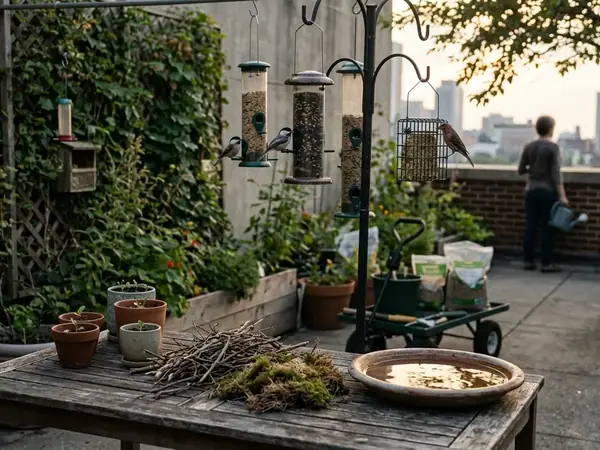
Debris that happens to gather under a feeding station is simply waste, even when juncos, doves, or sparrows visit it. Designing a safe environment requires separating falling waste, intentional ground-level food, and protective vegetation into distinct areas. The functional zones remain useful across yards, but their dimensions and placement must follow local rainfall, soil drainage, feeder output, bird traffic, and the predators regularly present.
Inspect at least the full scatter footprint, instead of limiting the view to the ground directly below the ports. Wind and feeding birds regularly throw light hulls far beyond the area where heavier kernels land. Judge the site during both a dry feeding period and the first 12 to 24 hours after rain or irrigation, when retained moisture and matted debris become highly visible.
The Hidden Risks of Accumulated Feeder Waste
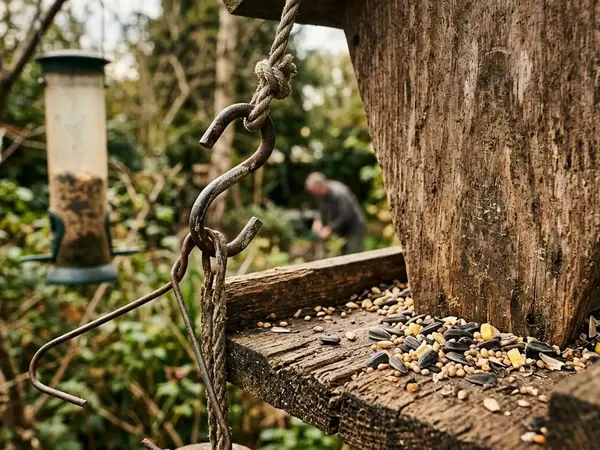
Sorting a small sample of the ground layer reveals whether a patch contains usable food or mostly residue from earlier feeding. Separate intact kernels and whole seed from empty coats, droppings, sprouted seed, and soft or clumped material. Birds sorting through this pile do not make every component useful. Rain, irrigation, shade, and poor drainage turn loose material into a damp layer that is difficult to inspect and remove.
Evaluating Drainage Performance A patch that remains damp into the next daylight period after surrounding bare soil has dried should be treated as a drainage or trapped-debris problem, requiring physical correction before adding more food.
Check material lodged at the mulch-soil boundary and around paver joints, plant crowns, and exposed roots. These pockets often retain seed after the visible surface looks clear. Recurring food at ground level attracts rodents, especially when spill remains available overnight or becomes lodged in mulch and vegetation.
Mapping the True Scatter Footprint
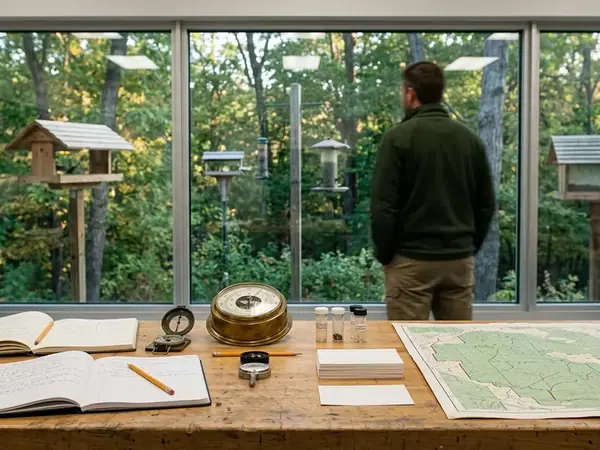
Give the yard an observation sequence before buying materials. Identify where seed actually lands, including scatter caused by birds, wind, feeder height, and seed type, since a neat circle rarely forms beneath active ports. Make three observations within 24 to 48 hours: after active feeding, following a wetting event, and during the final 30 to 60 minutes before dusk.
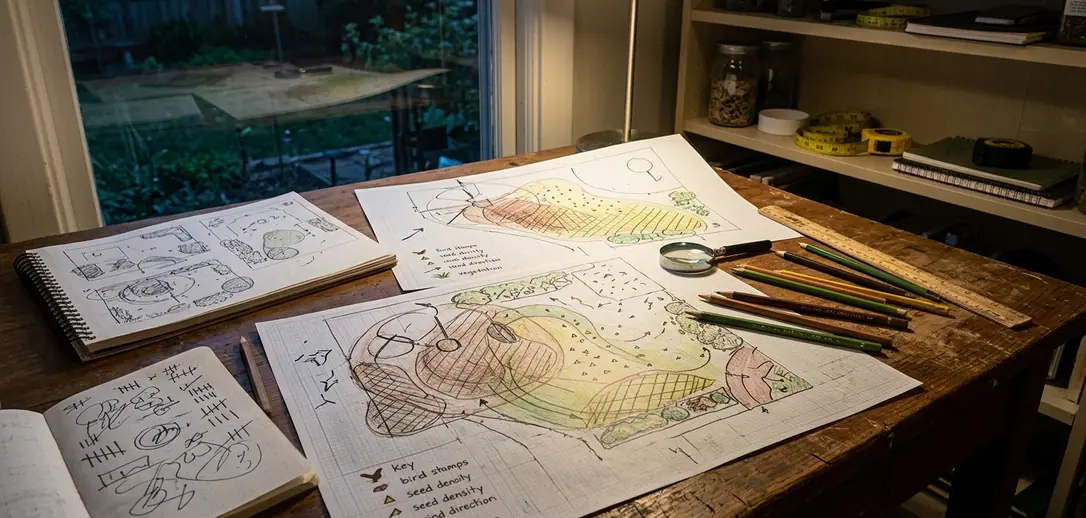
Light hulls travel well past the ring where heavier kernels drop. Record five ground conditions separately: embedded hulls, droppings, compacted soil, dense seedlings, and seed that vanishes into mulch or low vegetation. Note wet pockets, rodent paths or burrows, and places where fallen seed disappears.
Structuring the Collection Core and Feeding Margin
Build outward in a fixed order. Establish the collection core first, place the deliberate feeding margin beyond the droppings-heavy center, and then verify an unobstructed line toward suitable refuge. The sequence matters because choosing shrubs or a ground tray first can lock the dirtiest part of the footprint into a place that cannot be swept or watched safely.
Selecting Surface Materials
For the collection core, a feeder-mounted catch tray works where the feeder allows it; otherwise use a smooth, sweepable surface such as fitted pavers. Choose a smooth, liftable surface where runoff can leave the collection core, preventing pooling. Inspect seams after the first rain for trapped seed. Loose mulch and deep gravel trap small seed and hulls, making cleanliness difficult to judge.
Managing the Feeding Margin
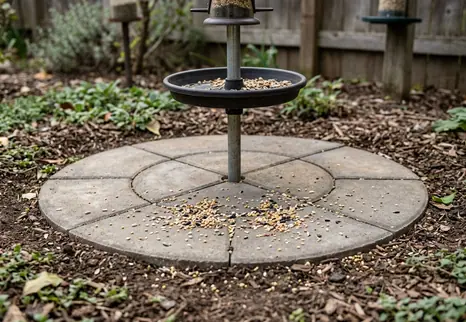
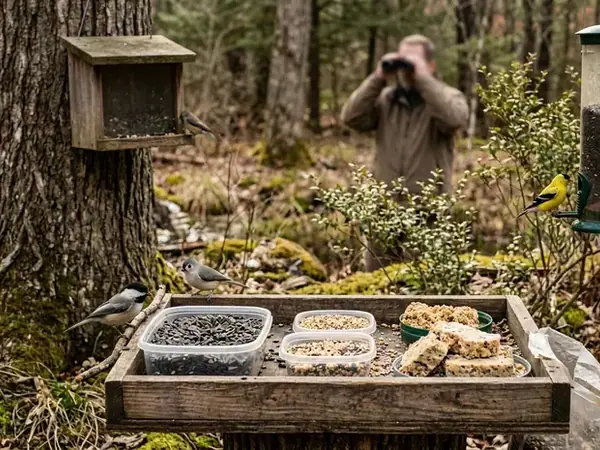
Account for drainage so the collection surface does not become a basin. Material choice should respond to rainfall, runoff, frost, soil, and the homeowner's ability to sweep or lift components. Put fresh ground food in a shallow, defined tray or limited bare patch and remove what remains at dusk. Functional separation means collecting and removing spill beneath the feeder, offering fresh food deliberately at the visible margin, and retaining an open route from that margin toward appropriate cover.
Condition-Based Maintenance for Ground Hygiene
Let the ground trigger maintenance. Reject a rigid cleanup interval in favor of condition-based checks because humidity, storms, bird traffic, feeder capacity, and seed type change how quickly material accumulates. Wet clumps, a new layer of hulls, droppings on the feeding margin, seedling mats, or food remaining near dusk each call for action even if the last cleanup was recent.
- Inspect within 12 to 24 hours after substantial rain or irrigation.
- Lift removable trays and check beneath them because retained seed may be hidden from the surface view.
- Remove wet or sour-smelling seed immediately.
- Sweep loose residue once it can be collected cleanly.
- Pull seedlings before their roots bind hulls and soil into a mat.
Wash removable trays according to their materials and manufacturer guidance. When rodents appear, bring the food supply under tighter control. Remove accessible leftovers, secure stored seed, inspect entry routes, and reconsider feeder placement before simply adding more barriers. If visibly sick birds or unusual mortality are observed, pause feeding and obtain current instructions from the relevant local wildlife authority, leaving diagnosis to professionals.
Implementing a Sweepable Catch Area
Begin with the feeder that creates the most persistent debris. Remove the accumulated layer down to a surface that can be inspected. Watch one busy feeding period to find the true scatter boundary, and fit the collection core to that observed footprint. Move deliberate ground feeding to a clean, visible margin, then revise the arrangement according to what the next wetting event exposes.
Recheck the redesigned footprint twice within the next week or so: once after the busiest feeding period available and once after rain or irrigation. Expand the catch surface only toward repeated spill, or reduce the food quantity when intact seed is still present during the last half hour before dusk. A seed hull is an empty seed coat — the edible kernel is already gone, so a carpet of hulls records past feeding rather than creating future habitat.