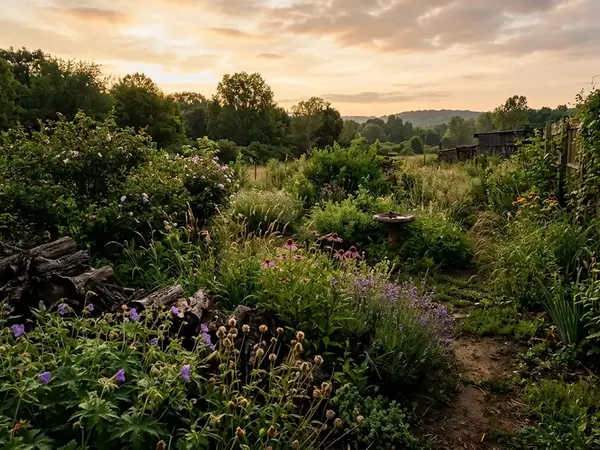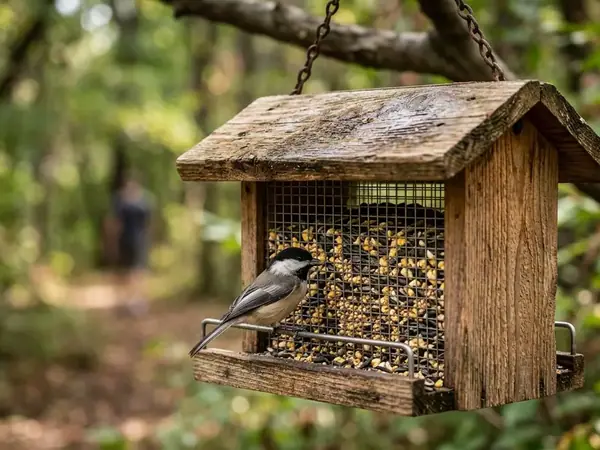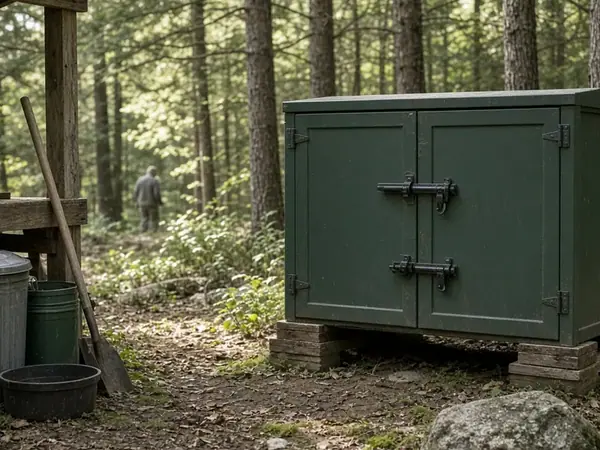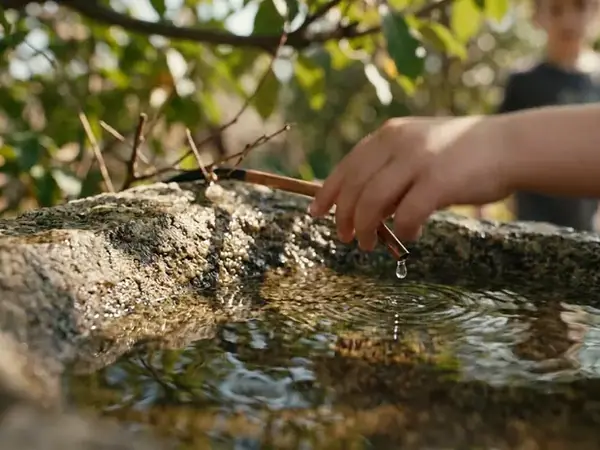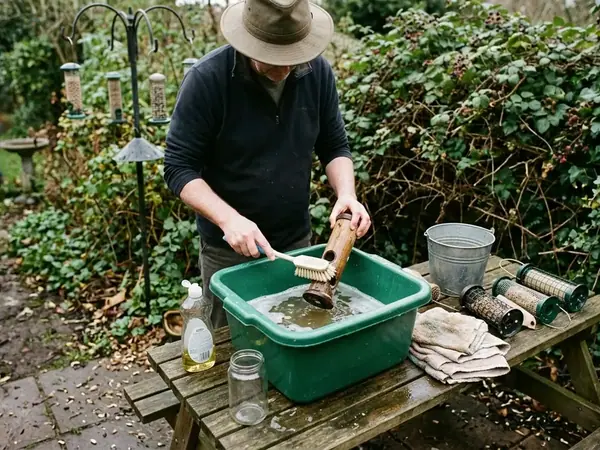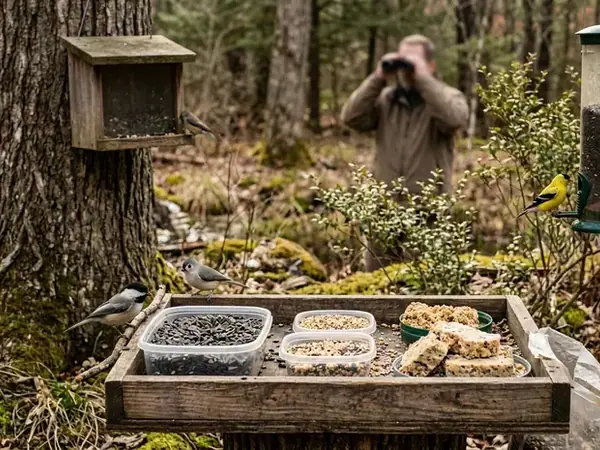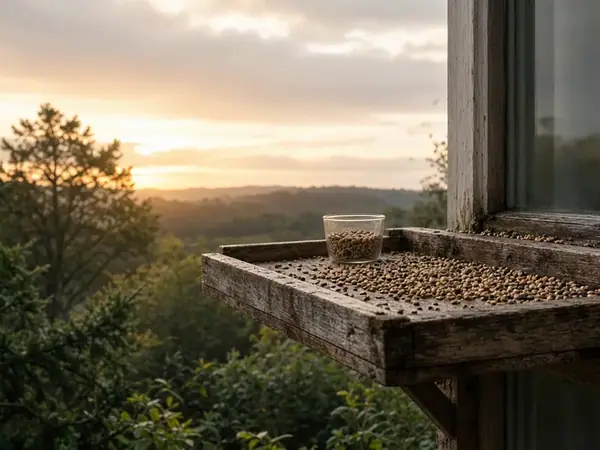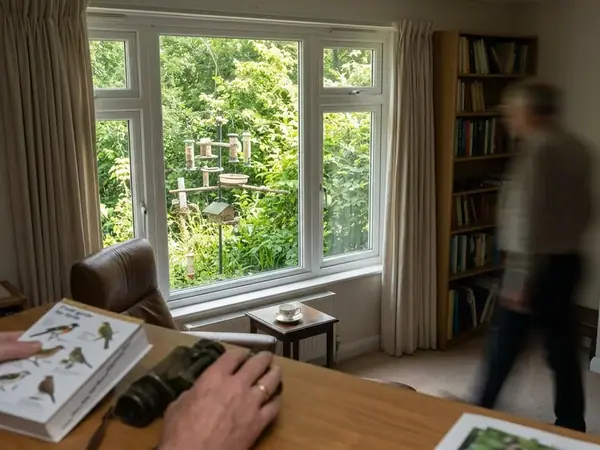
Picture a bird leaving a hanging seed feeder, crossing a strip of open ground, and disappearing among tangled branches at the garden edge. This illustrative backyard scene suggests a practical project: reuse fallen branches as nearby shelter while keeping the feeding area open for inspection and cleaning.
A Fallen Branch Becomes Shelter for Feeder Visitors
A useful brush pile begins with a ground inspection. Before moving wood, distinguish three spaces: the ground receiving spilled seed, the route used to refill and clean the feeder, and the proposed garden-edge refuge. Each has a separate purpose, and the layout should preserve all three.
The seed-fall area needs regular attention. A workable service route must accommodate a seed container, rake, and cleaning equipment. As for the refuge, it needs sheltered gaps without spreading into either working space.
This approach connects backyard bird feeding with bird-friendly habitat while keeping feeder care & safety practical. Placement comes first; branch stacking follows only after checking bird access and concealed ground-level approaches.
Choose the Gap Between the Feeder and the Brush
Keep dense brush out from beneath the feeder and away from its support. Preserve an open, inspectable area between spilled seed and concealed cover.
This guide establishes no universally safe feeder-to-brush distance. Yard layout, existing vegetation, and predator activity shape the decision. An open gap helps with inspection and reduces avoidable risks; it cannot make feeding birds predator-proof.
Inspect the site in this order:
- Find the seed footprint. Follow the actual distribution of hulls and spilled seed, including accumulations displaced to one side.
- Walk the service route. Carry the usual seed container and check clearance for a rake and feeder-cleaning equipment.
- Examine concealed connections. Look along fence bases and beneath shrubs toward the proposed pile. Assess a bird's route into shelter separately from a cat's possible approach toward feeding birds.
Where cats already stalk feeder visitors, avoid adding dense brush beside that activity. Reconsider both locations, and keep household cats indoors.
Keep the Gap Inspectable
Choose placement by preserving open feeding ground and checking concealed approaches. A visible lawn gap supports inspection; no single measurement guarantees safety.
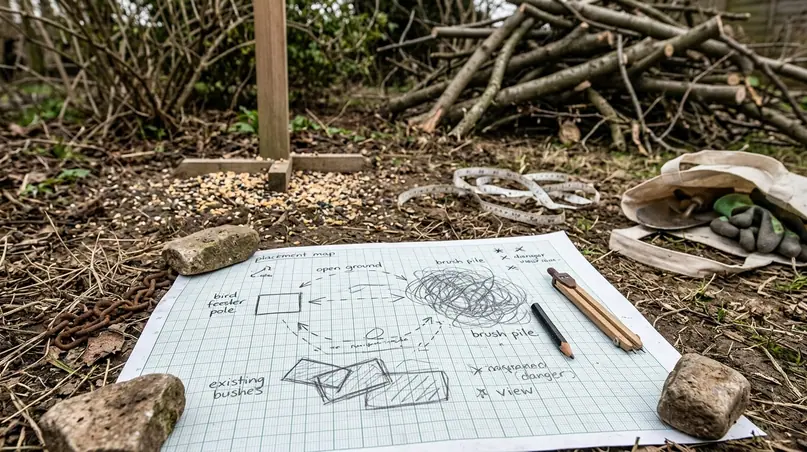
Gather Clean Branches and Leave Room Around the Pile
Sort material from routine yard maintenance by its structural job. Set aside sound, stout fallen limbs for the base, branching pieces for the middle, and smaller twigs for loose upper cover. Supporting wood should hold crossed branches without crumbling.
Exclude painted or treated lumber, wire, plastic netting, sharp fasteners, and branches carrying attached litter. Leave wood in natural areas rather than collecting it for this project.
Choose firm ground outside drainage channels and ordinary foot traffic. Keep projecting branches away from paths and places where children or pets routinely play. Allow access around buildings, vents, and utility equipment, and follow local wildfire defensible-space requirements when selecting the site.
Check the service route once more with the equipment that actually travels along it. A position that looks roomy from the kitchen window may snag a rake carried beside a full seed container.
Stack a Low, Interlocking Refuge with Openings Inside
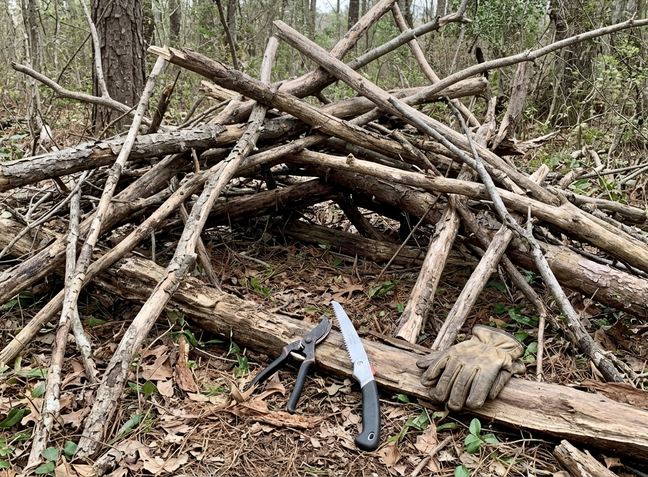
Build for support and sheltered spaces. Crossed limbs and natural forks can carry successive layers while resisting rolling. Packing every gap defeats that structure.
Reserve the Base Limbs
Put the largest sound limbs aside first so they remain available for the supporting layer.
- Lay the stoutest limbs on firm ground. Retain spaces between them rather than filling the base solid.
- Cross additional supporting limbs over the base. Let this layer bridge openings and support the material above.
- Interlock branching pieces through their forks. Leave several irregular entry gaps instead of directing access through one narrow entrance.
- Add smaller branches loosely across the top. Keep the pile low and broad, with its edges clear of the feeding ground and service route.
Check stability from outside as the pile grows. Gently test projecting branches and reposition pieces that rock, roll, or extend into the maintenance route. Do not climb onto the structure.
Use the wood's shape to hold the arrangement together, without exposed wire, string, or netting. Entry gaps provide access to shelter; their size does not establish predator exclusion. Stop adding material when the pile becomes unstable or spreads toward the seed-fall area.
Keep Seed Waste Out of the Refuge and Watch the Approaches
Keep feeding and shelter functions separate. Continue cleaning the feeder and removing accumulated waste beneath it. Never scatter seed into the brush or transfer wet seed, hull accumulations, or feeder-cleaning debris there.
After strong wind, inspect displaced outer branches and newly obstructed access. Check again as the wood settles. Adjust loose outer pieces without unnecessarily dismantling occupied shelter. Before substantial disturbance, check for active nests and other occupants; leave an active nest undisturbed and seek applicable local guidance.
Window birdwatching offers a useful check on this particular arrangement. Watch where birds enter and whether cats wait along the pile's edges facing the feeder. Repeated stalking calls for reassessing both locations and considering a pause in feeding.
Keep Feeding Waste Separate
A brush pile does not replace feeding-area hygiene. Remove waste from beneath the feeder rather than hiding it among branches.
Copy This Layout for a Lawn Feeder and Garden-Edge Refuge
Consider a hypothetical yard with a pole-mounted seed feeder on open lawn, a garden bed along one side, and a gate used for refilling. The following sequence makes the placement decision on the ground.
- Reserve the feeding and service spaces. Trace the spilled-seed footprint, then walk from the gate to the feeder. Keep both areas free of branches.
- Check the garden edge. In this example, reject a position where the proposed pile would extend a concealed fence-line cat approach toward feeding birds. Select another position only after checking its connections to fences and shrubs and preserving a visible lawn gap outside the feeding area.
- Build the refuge. Lay stout fallen limbs at the selected edge, cross supporting branches over them, interlock forked pieces, and add smaller branches loosely. Retain internal gaps and keep the structure low and broad.
- Test everyday access. Carry the usual seed container from the gate to the feeder. Check space for raking beneath it, then reposition any branches that obstruct either task.
- Observe from indoors. Watch subsequent feeder visits and the pile's approaches. If a cat waits at the pile facing the feeder, pause feeding and reconsider the arrangement instead of adding more brush.
In this yard, the finished job looks like a clear path from the gate to the feeder, bare ground beneath it with the construction debris raked away, and a low tangle of limbs at the garden edge that the first bird of the morning reaches by crossing open lawn in plain view of the window.