Why Water Belongs in a Bird-Friendly Yard
Building a safe backyard water station requires a sequence of practical decisions. Homeowners typically start by choosing a container, then finding a location, and finally establishing a maintenance habit. Treating water as a small, manageable habitat feature rather than a grand landscaping project yields the best results for local wildlife.
A beginner setup can be as simple as one shallow basin placed where you already walk past it daily. Locations near a patio path, a garden gate, or a hose bib make observation and maintenance effortless. Birds use water for both drinking and bathing. Clean, shallow, visible water makes a yard much more useful to them without requiring a large pond or an expensive architectural feature.
The primary goal is observation without creating hazards. Poorly planned water features introduce risks: dirty water, slick footing, exposed bathing spots, concealed predator approaches, and repeated flight paths toward reflective glass. Once you place a new water source, observe the setup for a week or so before changing multiple variables. Birds often need several quiet mornings to notice and trust a new addition to their environment.
Start With a Shallow, Easy-to-Clean Birdbath
Cleanability serves as the first sorting rule when selecting a basin. If a container looks attractive but features deep grooves, raised figures, shell patterns, or tight corners that a scrub brush cannot reach, it fails as a daily water source. A deep glazed planter saucer may look like a birdbath but can leave small birds without secure footing if the sides are slick and the center is too deep.
Keep the usable water depth shallow. Aim for roughly 1 to 2 inches in the main bathing area, ensuring there is a shallower edge or a gently sloped entry for smaller birds. A basin measuring around 14 to 20 inches across provides enough room for common backyard birds to bathe while remaining practical to lift, dump, scrub, and refill.
Material choice dictates the daily workload. Concrete is highly stable but heavy to tip. Glazed ceramic and resin offer smooth surfaces that are much easier to rinse clean. Metal basins heat quickly in exposed sun and must be checked by touch during hot afternoons to ensure the water remains safe.
Quick Tip: Add one or two clean, fist-sized stones to the basin only if they are stable and easy to remove during scrubbing. Avoid loose gravel entirely, as it traps droppings and accelerates algae growth.
Use Drippers, Misters, or Small Bubblers for Movement
Moving water catches a bird's attention faster than a still basin, especially in a visually busy yard. The most effective decision path starts with an existing shallow basin, then adds the smallest useful amount of motion. A strong pump that makes a decorative splash can empty a shallow basin by midday and leave birds with wet stone instead of usable water.
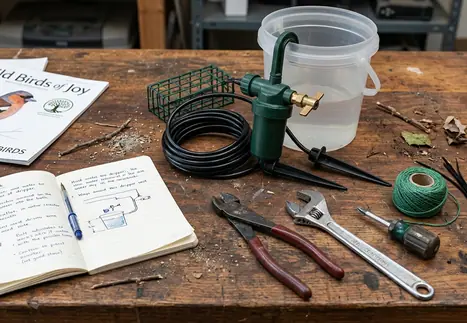
A slow dripper should land in the basin as a quiet drip or a thin thread. It should never act as a spray that throws water over the rim. Misters serve a different purpose; they are best aimed at nearby leaves or the edge of the water station. Small birds and hummingbirds will investigate this damp foliage without having to enter deep cover. If you prefer a small bubbler, it should barely disturb the surface. If the water sloshes against the rim, the pump is too strong for a birdbath-scale setup.
Power sources require specific considerations. Solar units demand direct light on the panel for reliable daytime operation. Plug-in pumps must use outdoor-rated equipment, a dedicated drip loop, and a protected outdoor outlet. If you install a hose-fed dripper, check the area after the first full day of use for puddling, soft soil, and slow leaks at the connector.
Place Water Where Birds Can See Escape Cover
Place the water station strictly from the bird’s point of view. A wet bird carries extra weight and needs to see danger early, lift off without hitting patio furniture or fencing, and reach cover without diving straight into dense hiding places.
Maintain open sightlines immediately around the basin. Shrubs, brush piles, or a small tree should be a short flight away rather than wrapped tightly around the bath. A hidden bath tucked under dense shrubs can attract birds while also giving cats or raccoons a concealed approach route. Avoid setting any ground-level dish under low, dense shrub skirts.
On decks and patios, secure the basin on a level, heavy base. Narrow rails, loose stools, or lightweight tables that rock when birds land will discourage use. On lawns, keep the bath out of mower paths and away from high-traffic zones where children, dogs, or garden carts regularly pass. If the bath sits near reflective glass, add exterior collision-reduction measures. Closely spaced window markings or exterior screening work far better than relying on a single decorative decal.
Keep the Basin Fresh Before It Looks Dirty
Make the cleaning routine a core part of the initial setup rather than an afterthought. Stagnant water collects droppings, algae, leaves, pollen, and seed debris rapidly. Maintenance matters just as much as the physical design of the station.
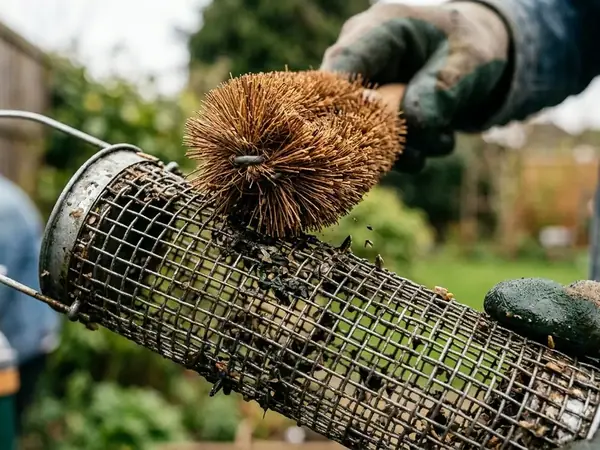
The routine is simple—dump first, scrub second, rinse third, then refill. Judge the basin's readiness by touch and smell as much as by appearance. Use a dedicated stiff brush exclusively for birdbath cleaning so soil, algae, and droppings are never transferred to household dishes or pet bowls.
Service the basin the same day if it contains droppings, seed hulls, dead leaves, cloudy water, a slick film, mosquito larvae, or a sour smell. During hot spells or periods of heavy bird use, a morning check and a late-day glance prove more useful than waiting for the basin to look obviously dirty. If you use any cleaner, rinse the basin thoroughly until there is no odor, foam, grit, or slippery residue left on the surface.
Cornell Lab’s Project FeederWatch guidance on providing water for birds advises keeping bird water clean and accessible. Treat this as a practical daily maintenance cue rather than a guarantee that a clean birdbath entirely prevents avian disease.