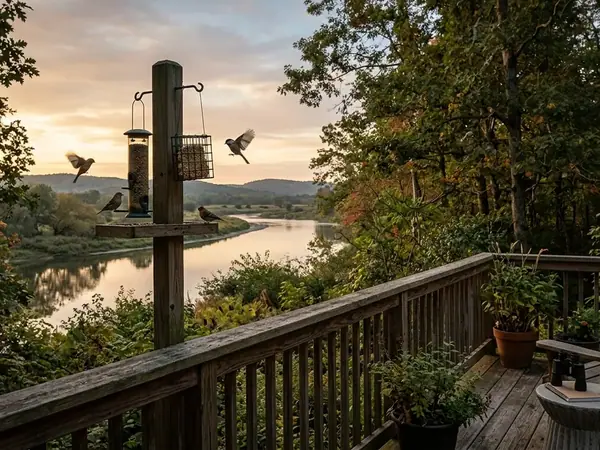
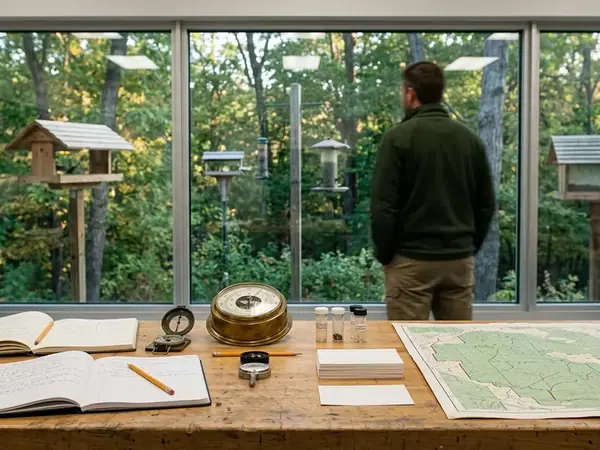
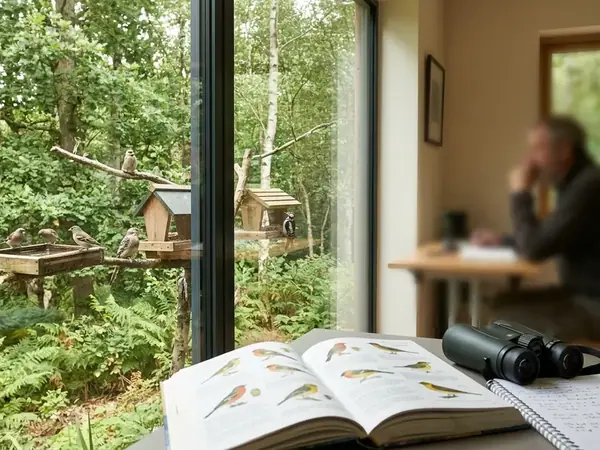
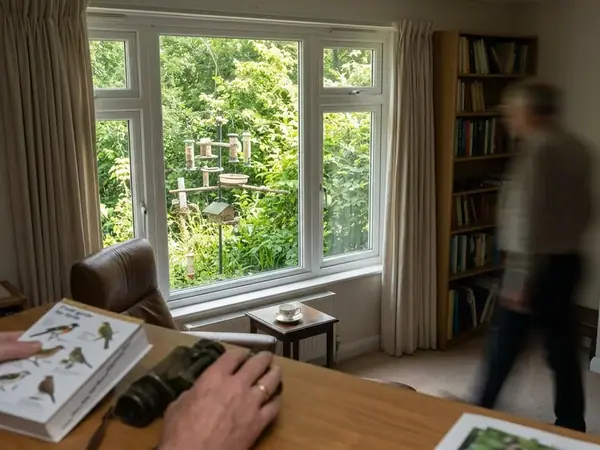
Two neighboring yards can hang equally full feeders and offer birds very different meals. In one, birds find seed plus leaves, bark, stems, and soil alive with potential prey. In the other, routine spraying and thorough cleanup remove those natural food sources. The stakes reach beyond feeder traffic: a tidy yard can leave surprisingly little for a bird to search.
Beyond seed volume, what matters is whether birds can also forage through a functioning backyard food web. Seed serves familiar feeder visitors well. Plants, fallen leaves, insects, and spiders create another layer of opportunity, including food that adults may carry to nestlings.
A few practical changes can preserve that living pantry. They cannot guarantee bird visits or produce species absent from the neighborhood; migration timing, weather, predators, nesting cover, and the surrounding habitat still shape what appears.
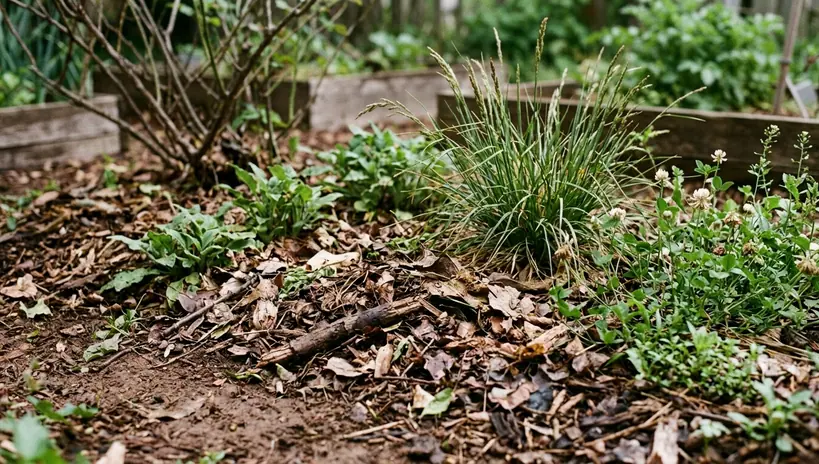
One Feeder, Many Hidden Meals
Start at the feeder and follow the food outward. A seed passes directly from the feeding port to a bird. A leaf follows a longer path: it feeds or shelters an insect, which may then be taken by an adult bird or carried toward a nest.
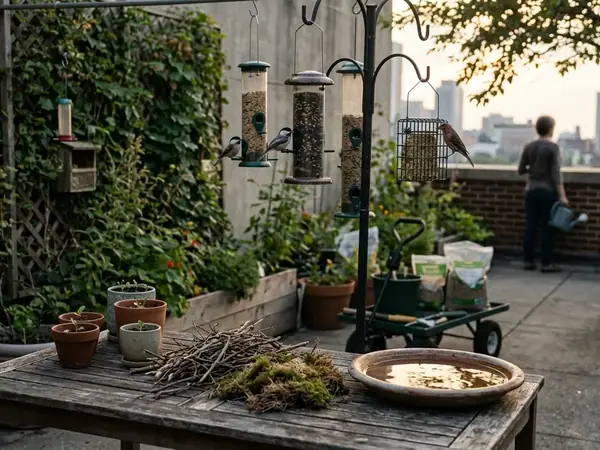
This chain gives the yard three working zones: the clean seed station, the leaf-and-stem prey patch, and the shrub or tree layer above it. Each zone supports different behavior. Together, they give watching from the window more depth than a feeder count alone can reveal.
Watch Beyond the Perch
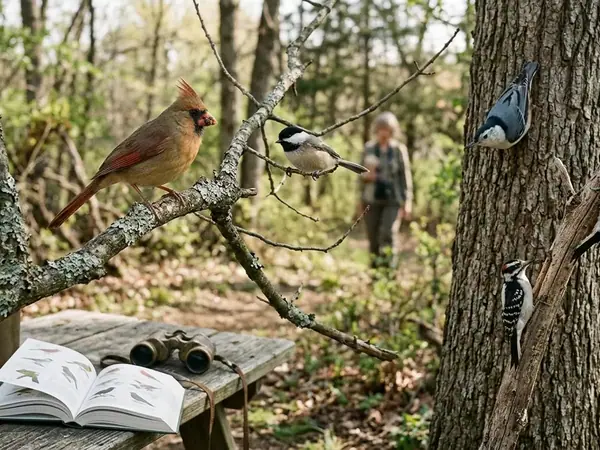
A bird that eats seed may still spend much of its next visit inspecting twig joints, probing bark, or turning through litter. Adult diets also differ from nesting-season demands. Dry seed can suit the adult while soft-bodied prey proves easier to deliver to growing young.
Choose one shrub and watch it for roughly eight to twelve minutes. Repeated pecks beneath leaves or along branch joints often reveal active foraging. A quick glance at the feeder misses this quieter work.
Follow the Search
Look where the bird directs its bill. Leaves, stems, bark seams, and the ground each point to a different part of the yard’s food web.
Chewed Leaves Can Feed a Nest
Caterpillars draw attention because many are small enough for birds to collect and carry whole or in pieces. Other soft-bodied invertebrates can serve a similar role. Spiders and insects tucked into bark crevices, stems, and low vegetation add further choices.
Location matters as much as prey type. A bird may glean a caterpillar from shrub foliage, pull a spider from a bark seam, or pick through low growth for something hidden from human view. The yard works as a collection of search surfaces.
Inspect Before Tidying
Small holes, rolled leaf edges, silk, or droppings beneath foliage can mark active ecological relationships. Those signs do not automatically mean a plant is ruined. Before removing damaged growth, check the undersides of about ten leaves on each of three plants. Include some leaves showing wear.
- Check foliage during active leaf growth.
- Repeat the inspection every few days.
- Notice whether birds revisit the same plant.
- Record leaf-gleaning separately from casual perching.
This slower rhythm helps distinguish a continuing plant problem from ordinary feeding activity. It also prevents a single chewed leaf from triggering wholesale cleanup.
Four Changes That Keep Prey in the Yard
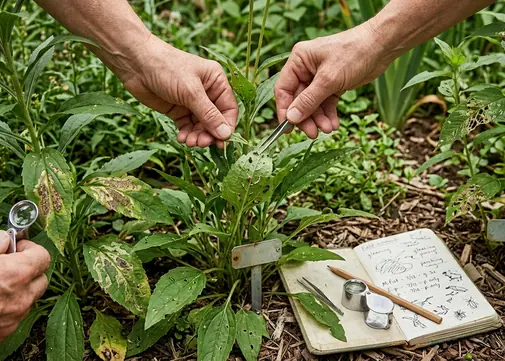
The least disruptive change comes first: stop automatic treatment. Broad, routine pesticide use can remove unwanted organisms along with the invertebrates birds might otherwise eat. A full feeder does not compensate for a yard where every chewed leaf is removed, every fallen leaf is bagged, and every unfamiliar insect is treated.
- Identify the organism and affected plant. Confirm what is causing the damage before deciding whether intervention is warranted.
- Choose the narrowest practical response. When control is necessary, follow the product label and avoid treatment near active nests or open bird food.
- Keep leaves in defined beds. Loose leaves beneath shrubs hold moisture and shelter small invertebrates among decomposing plant material.
- Observe before adding plants. Find where birds already glean leaves, probe bark, or work the ground, then strengthen those useful areas.
Give Leaf Litter a Boundary
A managed bed avoids the problems associated with leaves in the wrong places. Keep them beneath shrubs or inside a clearly edged planting area. Clear drains, walking surfaces, building foundations, and locally designated fire-clearance zones.
Protect Open Food
Move or cover bird food before any necessary treatment nearby. Keep spray and drift away from feeding surfaces, water, and active nests.
To see whether the changes matter, make three ten-minute observations over a week or so: one in the morning, one at midday, and one in late afternoon. Mark the plants where birds repeatedly search. This is a modest field check, and brief watches can miss quiet or seasonal visitors.
Let Seed and Habitat Do Separate Jobs
Backyard bird feeding remains useful, especially for species comfortable visiting exposed feeding stations. The feeder supplies concentrated supplemental food. Surrounding vegetation offers cover and natural prey, while also giving birds more surfaces to investigate.
Place the Feeder for Clear Viewing
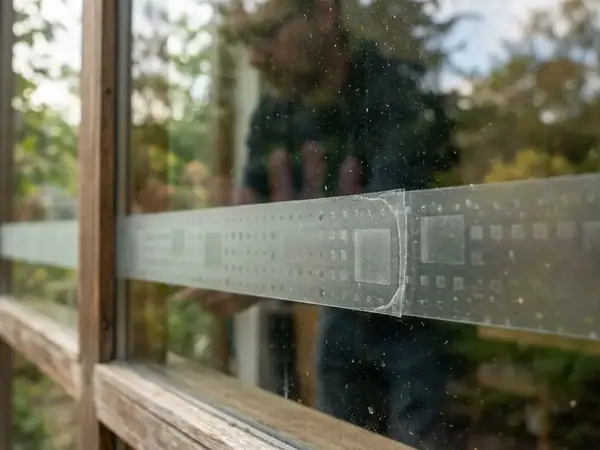
Shrubs or trees nearby can provide retreat cover, but dense vegetation immediately beside a feeder may conceal an approaching predator. Before settling on a position, observe the station from more than one angle for ten or fifteen minutes. Look for reflective windows, common flight paths, and places where an ambush could go unseen.
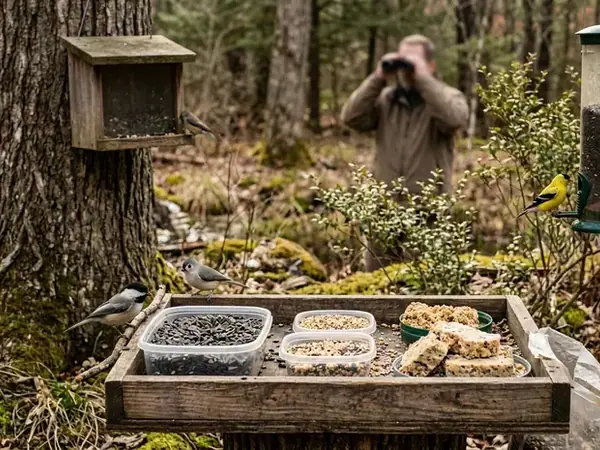
The feeder itself should remain exposed enough to inspect and clean. Habitat goals never excuse poor feeder hygiene.
- Inspect seed at every refill and after wind-driven rain.
- Discard wet, clumped, moldy, or sour-smelling food immediately.
- Remove hull buildup and droppings from feeding surfaces.
- Avoid topping fresh seed over spoiled material.
Keeping the systems separate makes the feeder easier to keep clean and safe. Seed stays concentrated at a washable station, while leaves and invertebrates remain in the habitat patch where birds can forage naturally.
Build One Sheltered Bird-Food Corner
A single bed beneath an established shrub makes a practical starting point. The shrub already supplies shade, branch structure, and a visible maintenance boundary. Its drip line also provides a sensible outline for the patch while paths and the immediate foundation zone stay clear.
A Small Patch, Watched Closely
- Stop routine spraying inside the chosen bed.
- Retain a shallow, loose layer of fallen leaves.
- Add one regionally suitable caterpillar-host plant after observing where birds already search.
- Keep scattered seed out of the patch and maintain the nearby feeder as a separate, regularly cleaned station.
Then watch. Complete four ten-minute sessions over the next two or three weeks, varying the time of day. Note the plant used and whether each bird gleaned leaves, searched bark, or worked through litter. Those notes can turn a vague impression into a useful record of which birds visit and how they forage.
Begin with that one sheltered corner and manage it as living habitat: keep the leaves, stop routine spraying, add one suitable host plant, and let the birds reveal which parts of the patch deserve to grow.