What Happens to Birdseed Between the Bag and the Feeder?
Where should you keep birdseed so it stays dry and rodents cannot get to it?
Start with a tightly closed bin in a dry indoor spot. Then pay attention to what happens each time that bin opens. Seed can pick up moisture in storage, handling debris during a refill, or unwanted attention from rodents when spills collect nearby. A good container handles only part of the job.
Think of the routine as a path from the first opened bag to the last scoop: choose a sound container, place it where you can inspect it, handle seed with a clean, dry scoop, and finish older seed before opening more. Each step protects the supply for the next feeder refill.
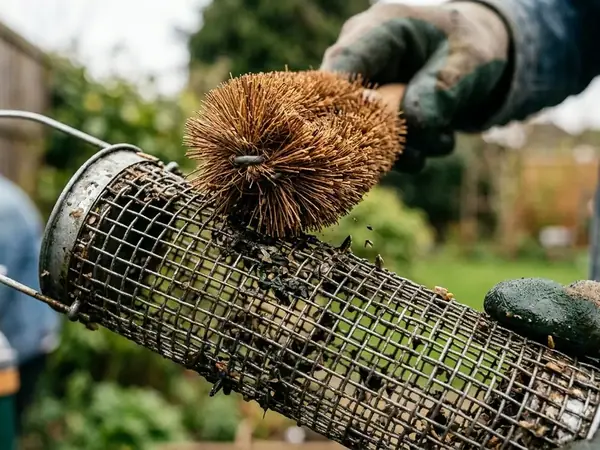
The distinction matters in everyday backyard bird feeding. A bin protects stored seed. A clean scoop protects it while someone handles it. Feeders get their own cleaning routine. Keeping those jobs separate makes it easier to spot the point where a problem starts.
Choose a Bin That Closes Tightly and Resists Chewing
A rigid metal bin with a snug lid is the stronger choice where rodents may chew through storage containers. A sturdy, food-safe plastic container can also protect dry seed when its lid closes properly, but plastic deserves closer inspection in a spot with rodent activity. For either material, a lid that sits askew defeats the purpose of the bin.
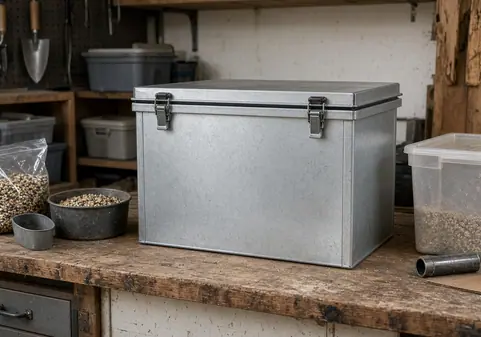
Before filling an empty bin, run a hand and an eye around the lid, seal, rim, and walls. Look for gaps, cracks, chewed edges, or other damage. Do this again whenever the container empties; a quick check before a new bag goes in is easier than sorting through a mixed supply later.
Keep the original seed bag inside the bin if it fits without interfering with the lid. If you transfer the seed, save its product details elsewhere. The label helps distinguish blends and keeps the contents identifiable after the bag is gone. A folded paper bag or an open bucket leaves too much exposed for ongoing storage.
Put the Seed Bin Somewhere Dry and Easy to Inspect
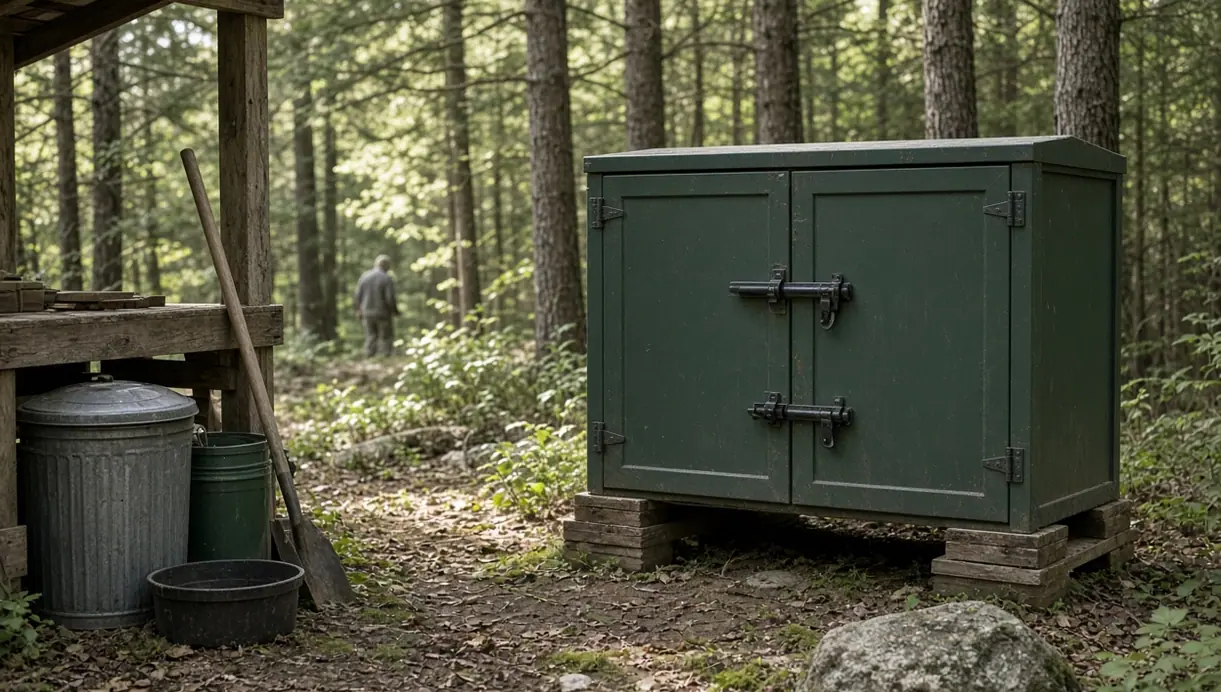
The best storage spot is one you can check without moving a stack of other things. A dry indoor pantry or utility area gives the bin shelter while keeping its lid and the nearby floor within reach. A damp basement, exposed porch, or hot shed makes that routine harder and may expose seed to moisture or temperature swings.
Test the location before settling the bin there. Can the lid open and close fully? Can someone see and sweep seed that falls beside it? Scattered seed can attract pests even when the lid stays shut, so an easy-to-clean floor is part of the storage setup.
After a damp spell or temperature change, look under the lid for condensation and through the seed for clumps. A closed container cannot dry seed that is already damp. If indoor storage is unavailable, choose the driest sheltered place available and inspect it more often; an outdoor spot should not be treated as rodent-proof.
Check the Lid
Condensation under a closed lid is a reason to inspect the seed itself before filling a feeder.
Give Birdseed Its Own Clean, Dry Scoop
Give the stored supply a dedicated scoop. It should fit into the bin and clear the rim when lifted, without dragging seed across the edge. Wash or wipe it when needed, then let it dry completely before returning it to the container. Even a sound bin cannot protect seed from moisture carried in on a damp tool.
Pour from the scoop into the feeder. Dipping a used feeder into the bin brings whatever is on that feeder back to the stored supply. That is the useful boundary between storage and feeder care: the scoop stays with the seed, while the feeder gets cleaned on its own routine.
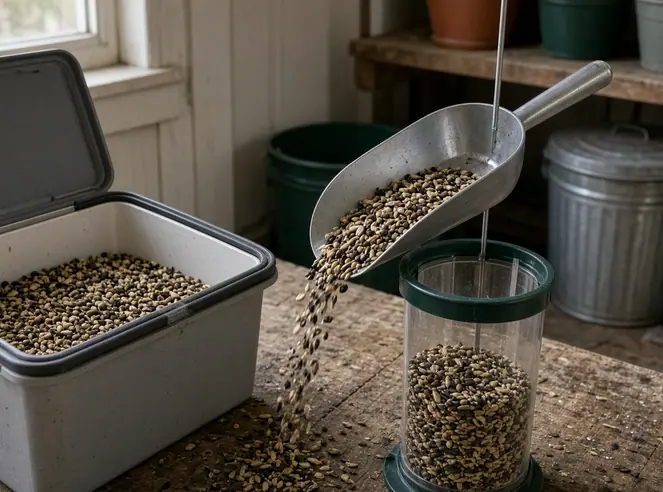
Watch the floor during this step. A few seeds can fall beside the bin, and more may drop along the route to the feeder. Wipe them up promptly rather than waiting until the next refill. A snug lid matters much less if spilled seed offers rodents a reason to visit the storage area.
Label Each Purchase and Finish Older Seed First
Before buying another bag, consider how quickly the household actually uses its current seed. A manageable purchase is easier to finish while the seed remains in good condition than a large bag chosen solely for convenience.
Write the purchase or opening date and seed type on the bin or retained bag. When several blends share a storage area, keep their product details with them. That small habit settles a common question at refill time: which seed was opened first?
Finish the older supply before opening a new bag. Repeatedly topping off a bin can leave older seed at the bottom, hidden beneath each fresh addition. Emptying and checking the container before refilling it also creates a natural moment to inspect its lid and walls.
Look at the seed before it goes into a feeder. Damp clumps, visible mold, insects, or an unusual odor are reasons to discard affected seed rather than mix it with fresh seed. A date label helps organize the supply, but the condition of the seed still decides whether to use it.
Make Every Feeder Refill a Quick Storage Check
A refill works best as a short sequence performed in the same order each time:
- Read the label and choose the older seed that remains in good condition.
- Inspect the supply for dampness, clumps, insects, visible mold, or an unusual odor.
- Use the clean, dry scoop to pour seed into the feeder without dipping the feeder into the bin.
- Close the lid firmly and check that it sits snugly all the way around.
- Sweep up spills beside the bin and along the path to the feeder.
Before leaving, scan the bin and nearby floor for moisture, chewed edges, droppings, or other signs of pest access. If seed is contaminated, discard it. Address the access point or the scattered seed before restocking, or the next bag faces the same conditions.
So for the next bag of birdseed: buy a size the household can finish, pour it into a tightly closed rigid bin in a dry indoor spot, hang the scoop beside it, and sweep the floor before you walk away. No container excludes rodents on its own, but that floor check is what keeps them from learning the route.