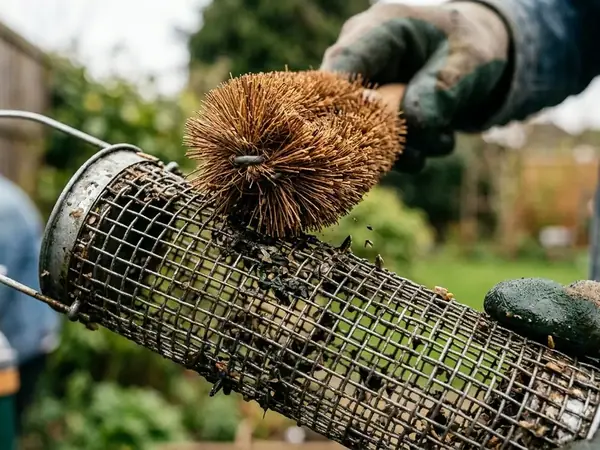
A baffle has to block the whole route to the feeder
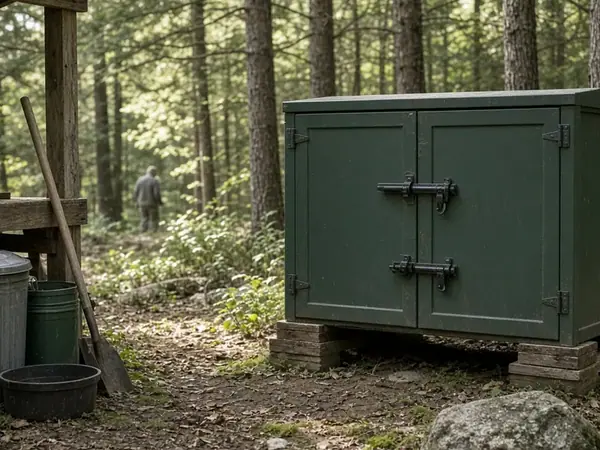
A squirrel can reach seed in two ways: climb the feeder pole or jump straight to the feeder from something nearby. A stovepipe baffle addresses the climb. Its smooth cylinder interrupts the route up the pole, provided the squirrel has to pass it. A patio chair, fence top, or branch can make that careful metalwork irrelevant.
There is a safety question, too. A loose support can let the cylinder slip, while a cut cap or exposed screw tip can leave a sharp point near feeding birds and the person refilling the station. Treat seed protection and feeder safety as parts of the same job.
Before buying or cutting anything, trace both approaches: follow the pole upward from the ground, then look across from every elevated surface toward the feeder. The project that follows covers parts, placement, assembly, and a hands-on check of the finished station.
Two Routes To Check: Follow the pole from ground to feeder, then scan for a direct jump from a chair, rail, fence, branch, or roofline.
Match the support to the pole before choosing the stovepipe
Start with the part that carries the weight. Measure the feeder pole’s outside diameter where the support will sit, then compare it with the stated fit of a pole-compatible clamp or bracket. A clamp sold for stovepipe alone may have no suitable way to grip a feeder pole. Forcing it on can damage a part or leave the baffle poorly supported.
Once the support fits, choose a smooth metal stovepipe section that forms a broad cylinder around the pole. Its surface should offer little to grip, and its width should make it difficult for a squirrel to reach around. Add a fitted cap that closes the cylinder’s upper opening around the pole. Check that the cap opening, cylinder, and support work together without the assembly binding against the pole.
Set out the parts and tools
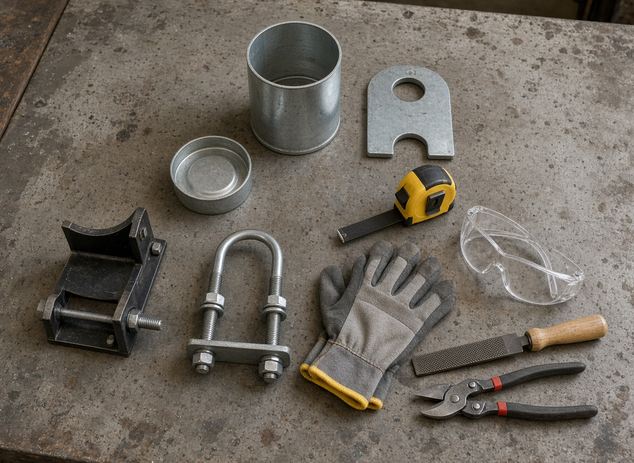
- A smooth metal stovepipe section and a cap suited to its upper opening.
- A clamp or bracket specified to fit the measured feeder pole.
- A measuring tape, work gloves, and eye protection.
- A file and appropriate metal-cutting tools if a part needs modification.
Lay the parts together before cutting. Check where the cap meets the cylinder, where the pole passes through, and where the support bears the load. If making and finishing a metal opening safely is beyond the tools available, compatible ready-made parts are the cleaner choice.
Find the jumps before fixing the pole’s position
Placement deserves a walk around the yard. Stand near the proposed feeding station and look toward it from the places a squirrel can reach: branches, fence tops, deck rails, outdoor furniture, and the roofline. A chair beside a patio feeder is easy to overlook because it seems temporary. For a squirrel, it is another elevated approach.
Position the pole in open space before fixing the baffle in place. Check the clearance guidance supplied with the chosen components rather than relying on a single promised jumping distance. Then look again from each possible perch to the feeder itself, not just to the pole. A squirrel that lands on the feeder never encounters the cylinder.
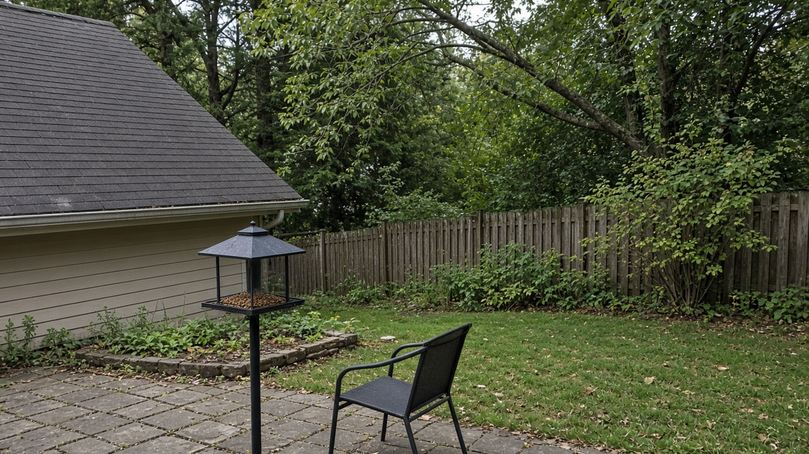
The site still needs to work for people and birds. Leave a practical path for refilling, cleaning, and watching the birds themselves. Moving a feeder close to window glass simply to escape a railing can create a different concern; look for another open position instead. For window birdwatching, the useful view is one that allows the station to be maintained without crowding it against the glass.
Fit the cap, smooth the cuts, and mount the cylinder
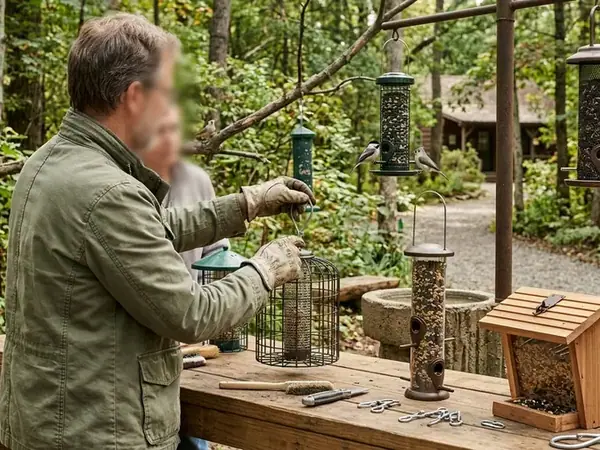
Dry-fit every component against the pole first. This catches an unsuitable cap opening or support before any metal is altered. Keep the feeder off the pole during the cutting and mounting work so there is room to handle the parts securely.
- Check the fit. Hold the support at its intended position beneath the feeder. Confirm that it grips the pole as specified and that the cylinder can sit on it without contacting the feeder.
- Prepare the cap. Make the pole opening only if the chosen cap requires modification and the work can be done safely with suitable metal-cutting tools. The cap needs to close the cylinder’s upper opening around the pole.
- Finish every changed edge. Wearing gloves and eye protection, use a file to remove burrs from the cap opening and any other cut metal. Feel for roughness carefully through a glove, including along seams that may face the feeder.
- Join the cap and cylinder. Follow the components’ fastening design and the maker’s instructions where applicable. An unverified friction fit can work loose outdoors.
- Mount the assembly. Secure the pole-compatible support, seat the capped cylinder on it, and install the feeder above. Check that the support carries the baffle without an exposed snagging point.
Look closely at fasteners from the side a bird might approach and from the position used to refill the feeder. Screw tips and unfinished seams should not project into either space. Replace a part if its edge cannot be made smooth and secure. A neat-looking cylinder offers little reassurance if the cap shifts when touched.
Cut Edge Check: Inspect the cap opening, seams, and fasteners before the feeder goes back on the pole.
Test the finished station from ground to feeder
Install the feeder and test the whole station in two passes. First, gently move the baffle by hand. Watch for wobble, slipping, or rattling hardware. Check whether the cylinder touches the feeder and whether the pole itself remains stable. A sound cap joint cannot compensate for a moving support below it.
Next, inspect at bird height and at the height used for refilling. Look for sharp seams, protruding fasteners, and openings that could trap a bird. Run a careful visual check around the back as well as the side facing the house; a hard-to-see joint can still be reachable during feeding or cleaning.
Step away and retrace the squirrel’s routes. Can it climb the pole and get around the cylinder? Can it bypass the pole from a branch, railing, fence, roofline, or chair? If an elevated surface gives it a direct jump, moving the pole may help more than raising or altering the baffle. That comparison matters: hardware solves the climb, while siting solves the bypass.
Seed Route Verdict: A smooth, secure tube protects seed when the surrounding yard offers no easy path around it.
The check also makes future changes easier to spot. Once the feeder has a clear position and the metal sits firmly, a moved object near the station stands out.
Recheck the baffle when the yard shifts
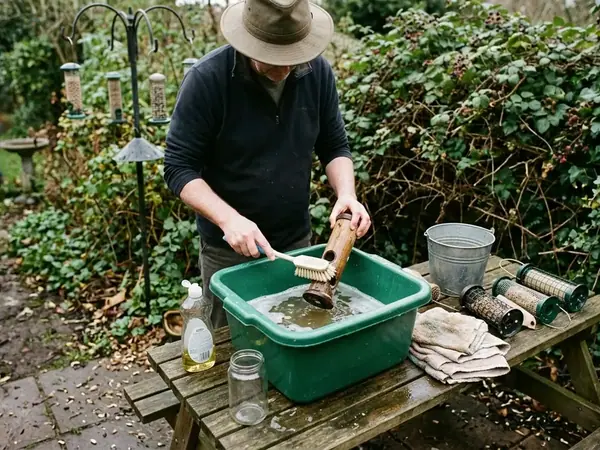
Wind, feeder refills, pruning, and moved outdoor furniture can change a station that worked well yesterday. During routine feeder care, give the support a gentle check, look over the cap and cylinder for damage, and scan the jumping routes again. Tighten compatible hardware if it has loosened; replace damaged metal rather than leaving a rough edge in place.
Clear spilled seed beneath the station while cleaning the feeder. The baffle guards the route up the pole, while ordinary upkeep keeps the feeding area in better order. Both belong in responsible backyard feeding and a bird-friendly yard.
The morning after a windy night, a homeowner looks out from the kitchen and notices the patio chair has shifted toward the feeder. She moves it back, then steadies the stovepipe cylinder with one gloved hand. It sits firmly on the pole as birds return to the perch above.