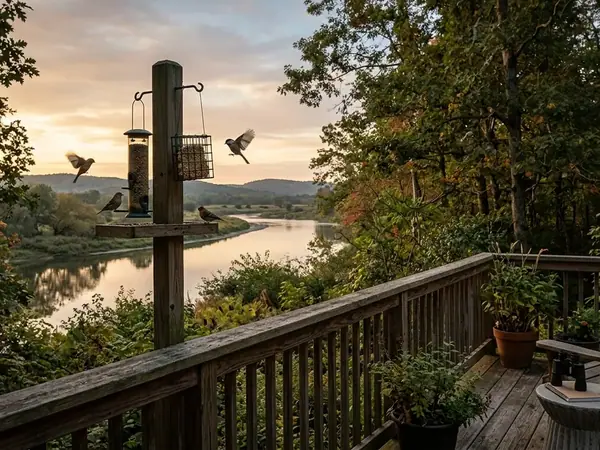
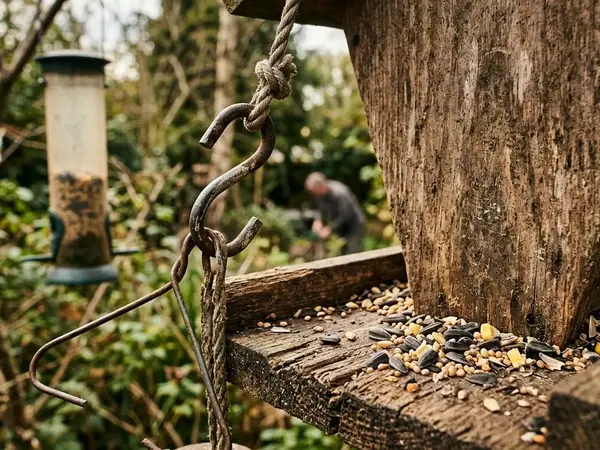
How can you welcome birds without letting your cat hunt them? Keep pet cats indoors or within a secure outdoor enclosure, then support visiting birds with suitable plants, responsible backyard bird feeding practices, and a thoughtfully structured bird-friendly habitat. Treating physical separation as the foundational decision—rather than an adjustment made after feeders start drawing songbirds—allows a household to fulfill two compatible responsibilities at once. Wild birds gain a safe place to forage and rest, and domestic cats receive an engaging, well-planned home territory built around their natural behaviors.
Designing these two spaces together requires looking beyond the hanging feeder tube itself. A complete plan accounts for ground-foraging zones, birdbaths, and the indoor or enclosed outdoor areas where a cat spends its day.
Why Well-Fed Cats Still Stalk Ground-Foraging Birds
Regular meals satisfy a cat's nutritional needs, yet a full food bowl leaves the instinct to stalk and catch moving prey intact. In a backyard setting, watching how birds feed and move quickly reveals where the sharpest risks lie. While a chickadee grabbing a single sunflower seed from a high peg moves quickly, spilled seed beneath a station draws mourning doves, sparrows, and towhees down to soil level. There, they peck with their heads lowered. Birdbaths create a similar vulnerability: wet plumage slows takeoff, and the splashing sound draws predatory focus toward the water's edge.
Low vegetation compounds the danger. When birds hop through dense groundcover or low border shrubs, their rustling triggers a domestic cat's ambush sequence regardless of when the cat last ate.
Comparing common mitigation approaches clarifies why physical containment stands apart from partial measures:
- Collar bells: Birds often freeze when startled or fail to associate a ringing chime with an ambush until the rush has already begun, and cats learn to stalk with smooth, silent gait adjustments that minimize bell movement.
- Doorway supervision: An owner watching from a patio or kitchen threshold cannot outrun a sudden sprint across the lawn once a cat locks onto a bathing or ground-feeding bird.
- Physical separation: Keeping the cat behind closed doors or within a fully screened structure removes the encounter entirely, protecting birds without relying on split-second human intervention.
Separating Cat Access from Backyard Feeders and Native Plantings
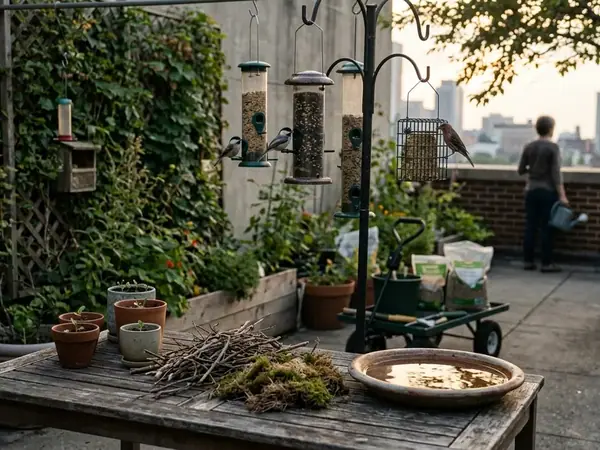
Establishing native plantings, maintaining clean feeders, and filling shallow baths remain valuable ways to support local wildlife. However, habitat improvements and cat containment address different hazards and must work in tandem. Before hanging another tube feeder or adding a water feature, trace the physical routes between exterior house doors, feeding stations, bathing basins, and the open patches where birds forage on the ground.
Look closely at the edges of those routes. Dense evergreen shrubs, stacked patio furniture, firewood piles, and low garden walls right beside a feeding zone act as ambush blinds. Placing a feeder in an open view away from thick, low cover gives foraging birds a clear sightline to detect approaching predators, though moving a feeder cannot make a yard safe while resident cats still have roaming access to the grounds. Retain dense native shrubs elsewhere on the property so birds have high escape cover and roosting sites, while keeping the immediate perimeter around seed catchers and ground trays open.
Glass Collision Prevention
Addressing reflective or transparent glass requires its own step alongside cat containment. When shifting feeders or setting up indoor viewing stations, apply exterior window markers, screens, or closely spaced cords to break up sky and tree reflections so visiting birds do not fly into the panes.
Structuring an Indoor Routine Around Play, Climbing, and Rest
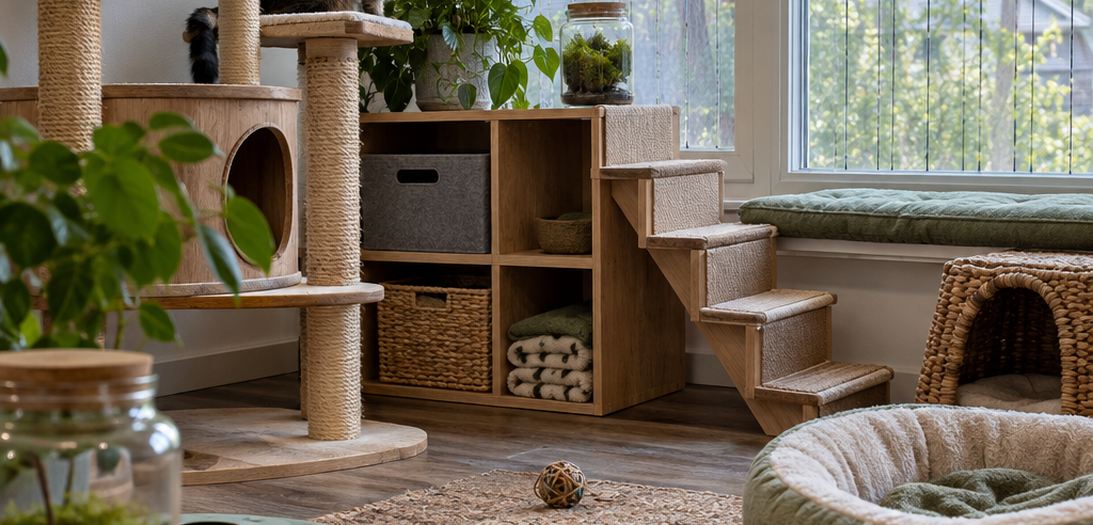
An enriching indoor territory replaces roaming with structured outlets for a cat's daily behavioural cycle: stalking, climbing, scratching, eating, and sleeping. Rather than relying on a single novelty gadget, organize the home around distinct activity stations that serve these specific needs.
Interactive Play and Meal Timing
Schedule supervised interactive play right before a regular meal. Using a wand toy to mimic the erratic movement of prey across the floor and onto furniture allows the cat to complete the stalk-pounce-catch sequence, and serving dinner immediately afterward matches the natural progression from hunting to eating and grooming. Store all string and wand toys in a closed drawer once the session ends so the cat cannot chew or swallow cords unsupervised. For independent hours, rotate a small selection of safe solo toys every few days to keep them fresh, and place a portion of the cat's daily dry ration inside food puzzles so foraging requires physical manipulation.
Vertical Space, Scratching, and Quiet Retreats
Cats assess their surroundings from above. Install stable climbing trees or cleared shelving paths leading to elevated resting perches. Position one sturdy perch beside a securely closed window; this turns safe window birdwatching into visual enrichment for the cat while keeping the glass barrier between hunter and bird. Anchor worn or fresh sisal scratching posts near sleeping areas and room entries where cats naturally stretch. Balance these active zones with cardboard hiding boxes or covered beds tucked into quiet corners away from household foot traffic.
When transitioning a formerly roaming cat indoors, consistency across the household prevents confusion at exterior doors. Have every family member follow the same exit check, and reward the cat with treats or a puzzle feeder at an indoor station well away from the threshold before busy arrival or departure times. Every animal adapts at its own pace; if a cat shows changes in appetite, persistent distress, or altered litter-box habits during the shift indoors, consult a veterinarian for tailored guidance.
Building Outdoor Time with a Roof, Secure Mesh, and a Reliable Latch
A catio—an enclosed outdoor porch, window box, or freestanding run—gives a cat fresh air, sunlight, and garden scents while maintaining complete physical separation from visiting wildlife. Unlike an ordinary fenced yard, an open balcony, or a partially screened patio, a true enclosure forms an unbroken boundary from floor to ceiling.
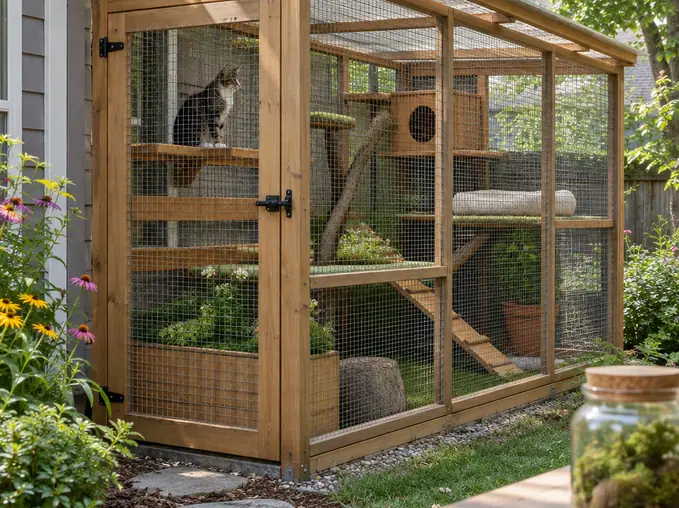
Evaluate a catio as a containment structure first and a lounging space second. Walk the perimeter and check five structural points before letting a cat inside:
- The base: Confirm the bottom frame sits flush against solid paving, decking, or buried edging so nothing can dig or squeeze underneath.
- The mesh: Press along the wire panels to verify tension and strength, checking after severe weather or falling branches for any loose sections.
- The edges and fasteners: Inspect every corner seam and staple line to ensure the mesh is firmly attached to the timber or metal framing without gaps.
- The covered top: Verify that the roof—whether solid weatherproof panelling or overhead wire mesh—is completely sealed against climbing escapes or visiting raptors.
- The door closure: Test the entry gate to make sure the edges fit closely and the latch engages smoothly and holds tight against pushing.
Once the boundary passes inspection, outfit the interior with stable resting platforms at varied heights, a weatherproof shelter box, overhead shade for warm afternoons, and a bowl of fresh water. Introduce the cat to the space gradually during short, supervised visits so its comfort level guides how long it stays outside.
The Catio-Wall Boundary
A contained cat can still reach a paw through wire mesh. Place all bird feeders, suet cages, and birdbaths well away from the catio walls so foraging songbirds are never drawn into the strike zone along the enclosure's perimeter.
Addressing Neighboring Cats Through Observation, Not Accusation
Even when your own pets stay indoors, a neighbor's free-roaming cat can turn a backyard feeding station into an ambush site. In birding community notes, conversations with neighbors go furthest when they start with a concrete observation about the yard rather than a judgment about the owner's character or care.
Choose a calm moment to speak directly and use clear, neutral phrasing:
“Your cat has been waiting beneath our feeder. Could you keep them indoors or use a secure enclosure so birds can feed without being stalked?”
Keeping the request anchored to what happened beneath the feeder removes defensiveness and opens the door to practical problem-solving. If the neighbor is receptive, mention how indoor food puzzles, pre-meal wand play, or a window perch can help a cat settle inside, without implying that you need to buy equipment for their household. At the same time, manage your own property humanely to make it less inviting to roaming animals: bring any outdoor pet food dishes inside, and seal gaps beneath garden sheds or low decks with sturdy lattice after checking thoroughly to confirm no wildlife or pets are sheltering underneath. Reject poisons and injurious traps under all circumstances. If a visiting cat has no clear owner or appears injured or unwell, contact local animal services or a regional rescue organization for humane assistance.
Replacing the Morning Roam Step by Step
Consider a common household routine where a resident cat slips out the back door while someone steps into the yard to refill a hanging feeder. During that brief window, human attention shifts to pouring seed and sweeping up hulls—creating the exact feeder-refill escape chain that gives an unsupervised cat a direct path toward ground-feeding birds arriving for breakfast.
You can break that chain starting tonight by preparing a quiet interior room with a water bowl, a cozy bed, and a puzzle toy, and agreeing with everyone in the house on a reversed morning sequence for tomorrow:
- Settle the cat first: Before touching the back door handle in the morning, bring the cat into the prepared interior room, set down a food puzzle holding a small portion of its breakfast ration, and close the interior door firmly.
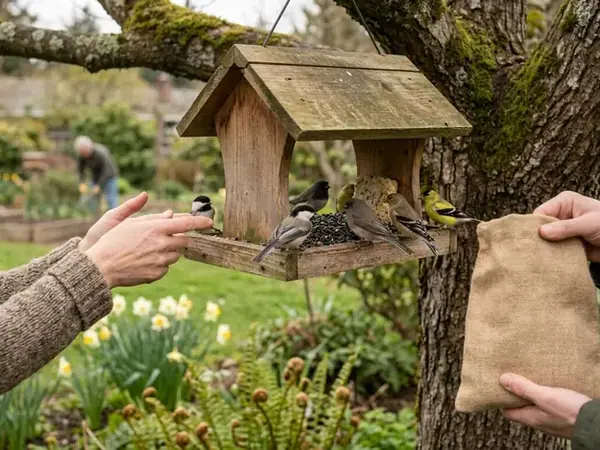
- Service the yard second: Step outside to refill the feeder and inspect the soil and patio stones underneath, sweeping up spilled seed and hulls as part of regular feeder upkeep so ground-foraging birds are not concentrated in messy piles.
- Secure the threshold: Return indoors, shut the exterior door, and check that the latch is fully engaged before opening the interior room to let the cat back into the main living space.
- Run the indoor hunt-and-eat cycle: Spend about ten minutes leading the cat through an active wand-toy chase across the living room floor and up its climbing tree, put the wand away in a drawer, and serve the remainder of its morning meal.
- Open the viewing station: Leave the curtains parted beside the cat's stable window perch—or, after checking the mesh and gate latch, open the access door to its secure catio—so the cat can watch the morning bird activity safely behind a barrier.