A Clean Autumn Feeder Can Support Departure
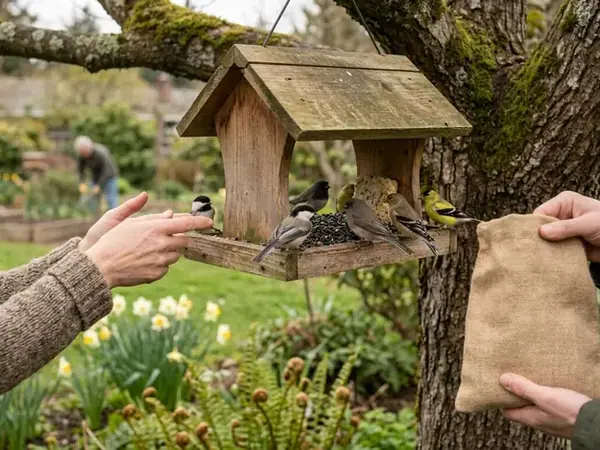
A clean autumn feeder can support a migrating bird's departure. Backyard feeding does not generally delay autumn migration. A bird eating in the garden is meeting an immediate energy need while its seasonal migration cues remain active.
The concern is understandable. A small bird returns to a seed tray as the leaves fall, and its repeated visits can look like a reason to stay. Yet a feeding visit fits naturally into migration: travel requires fuel, and birds obtain that fuel along the way.
The useful question concerns the condition of the feeding stop. Sound food, clean surfaces, and safe surroundings determine whether an autumn feeder remains helpful. A date on the calendar says much less about those conditions.
Removing food to encourage departure confuses an available meal with the seasonal processes that govern movement. Attention belongs on the feeder and the habitat around it.
Shorter Days Set Preparation in Motion
Autumn migration begins with seasonal preparation. Photoperiod, the duration of daylight, provides an important signal: shortening days help coordinate physiological changes and migratory behavior in autumn songbirds. That signal establishes a broader season for movement.
Readiness develops within that season. Feeding helps a bird build energy reserves, including pre-migratory fat that supplies fuel during flight. A seed-eating migrant taking food from a garden feeder may therefore be preparing for the next stage of its journey.
The immediate departure decision also involves conditions beyond the feeding tray:
- Wind direction and strength affect the energy required for flight.
- Weather conditions can favor movement or make sheltering and feeding useful before another flight.
- Fuel reserves help determine readiness for the next stretch of travel.
These influences work together, with different species following different schedules. A bird may be seasonally ready to migrate while spending time replenishing reserves during unfavorable weather.
A pause at a feeder belongs within that sequence. Eating, resting, and leaving when conditions suit the next flight are compatible parts of autumn movement. An available meal supports the energy budget behind them.
Late Visitors Can Have Different Seasonal Roles
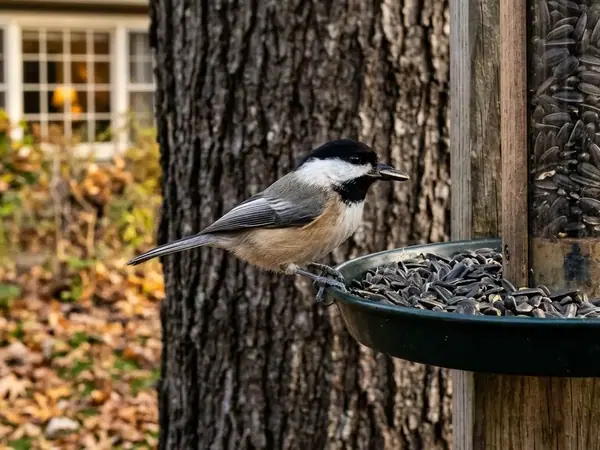
A familiar-looking sparrow at the tray can invite a familiar conclusion: the same bird has stayed. Species identification and local seasonal occurrence provide a more useful starting point for understanding the visit.
Several situations can produce the same brief view through a kitchen window:
- A passage migrant refuels. The garden serves as a temporary feeding and resting place between flights.
- A bird follows its seasonal preparation schedule. Molt, the replacement of feathers, forms part of that cycle, and its relationship with migration varies among species.
- A resident or winter visitor feeds locally. The bird uses the garden during the colder season without an onward autumn journey from that location.
A single feeder sighting cannot establish a bird's migration status, so compare repeated observations with its local seasonal occurrence.
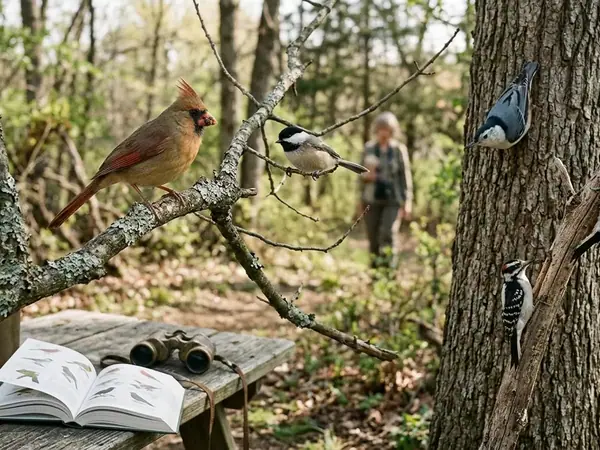
A succession of similar birds can create an impression of continuous occupancy. Recording the visiting group helps make seasonal turnover more apparent: species combinations change, arrivals feed together, and familiar species appear alongside different companions.
Plumage condition adds context when recorded alongside feeding behavior and group composition. Feather replacement belongs within the seasonal cycle; an untidy appearance calls for careful observation rather than a quick conclusion about migration.
A Seed Tray Is Part of a Larger Stopover
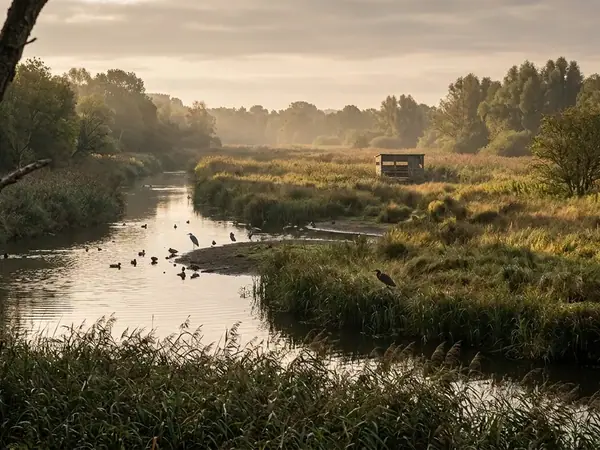
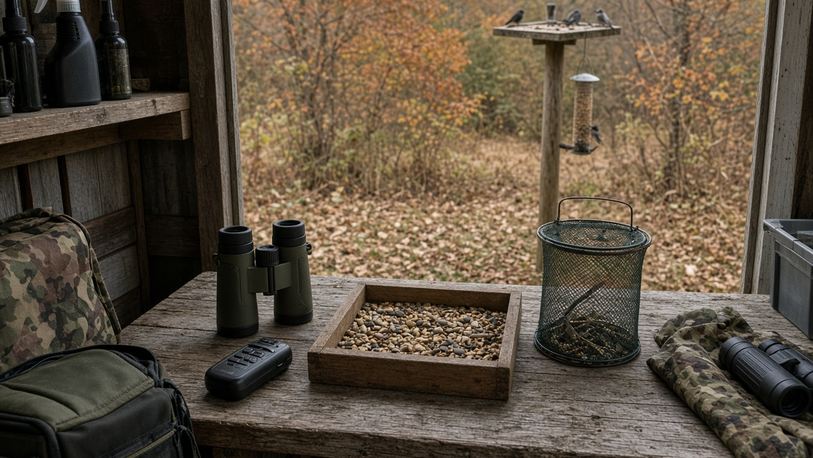
A seed-eating migrant may take food, retreat into a shrub, rest, and return to forage. Each part of that small circuit serves a purpose. Seeds supply energy for current activity and help replenish reserves; nearby vegetation offers refuge between feeding bouts.
The surrounding garden extends the feeding stop beyond the tray. Leaf litter supports invertebrate foraging. Standing seed-bearing plants contribute seasonal food. Shrubs provide sheltered places where birds can pause between trips into the open.
Consider a sparrow-like visitor moving through that setting. It feeds beneath a seed head, works through dry leaves, then takes cover on a low branch. A later visit to the feeder adds another food source to an already useful patch of habitat. Its movements make sense as a stopover routine.
Other migrants use the same space differently. A bird seeking insects may search vegetation while a fruit-eating visitor concentrates on berries. Their activity can remain mostly away from the seed tray, even while they use the garden extensively.
That distinction matters for bird-friendly habitat. Keeping leaf litter, seed heads, and protective vegetation gives birds feeding and resting opportunities across different diets. Feeder care works best alongside care for those surrounding resources.
Dry Seed and Safe Surroundings Decide Whether Feeding Continues
Inspection comes before topping up. Autumn rain can leave seed wet or clumped, while hulls and spilled food accumulate beneath a feeder. Adding fresh seed over spoiled material leaves the problem in place.
Check Food and Feeding Surfaces
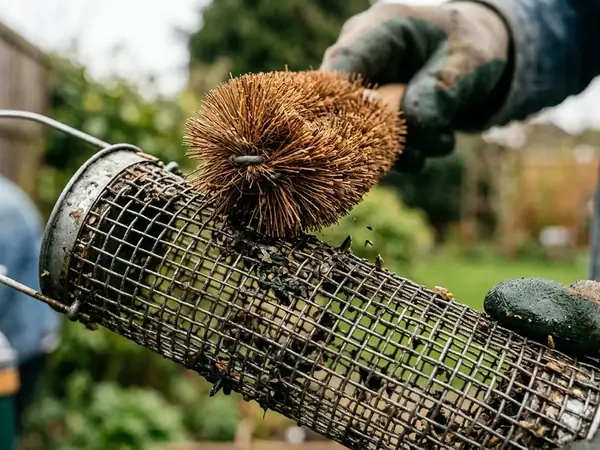
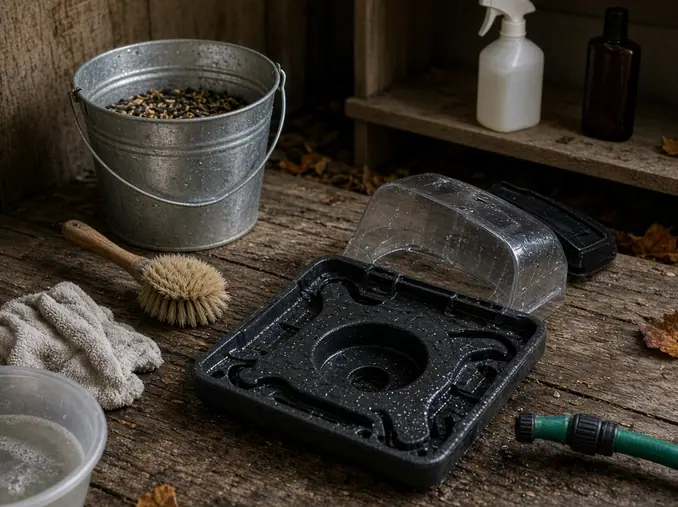
Wet, clumped, or moldy seed belongs in the discard. The tray, ports, perches, and accessible seams also need attention wherever residue or droppings collect. Beneath the feeder, removing accumulations of spoiled seed and hulls keeps ground care consistent with the clean feeding surface above.
A practical cleaning sequence follows the feeder's accessible parts:
- Empty the feeder and remove lodged food and debris.
- Separate removable components, then wash and scrub the accessible surfaces.
- Rinse thoroughly, including seams and feeding ports.
- Allow every feeding surface to dry completely before adding fresh seed.
Refill quantity should follow observed consumption. Smaller amounts reduce the food exposed to rain and prolonged deterioration, especially when damp autumn weather persists.
Check Glass, Cover, and Visiting Birds
Protective vegetation gives birds refuge, while concealed approaches immediately around feeding birds can give cats an ambush opportunity. A surroundings check considers both uses of cover. Keeping cats indoors removes that source of predation.
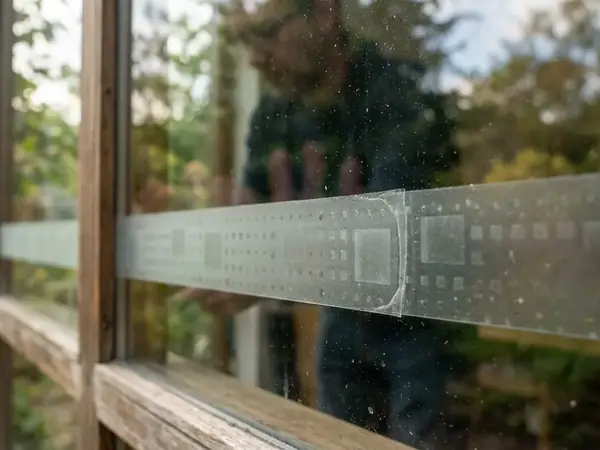
Nearby glass deserves equal attention. Exterior bird-visible window treatments interrupt hazardous reflections along flight paths. Objects placed inside the window leave the exterior reflection as the relevant hazard.
Visible illness changes the feeding decision. Sick birds prompt suspension of feeding and attention to wildlife-health advice for disease-specific cleaning and resumption instructions. Routine refilling stops while that response takes priority.
Let the Next Refill Begin With an Inspection
The next autumn refill offers a straightforward decision point. A short sequence keeps the focus on conditions that matter to visiting birds:
- Inspect the remaining food and tray before adding seed.
- Remove spoiled material and accumulated debris.
- Confirm that feeding surfaces are clean and fully dry, and check visiting birds for visible illness.
- Assess nearby window reflections, usable cover, and concealed access for cats.
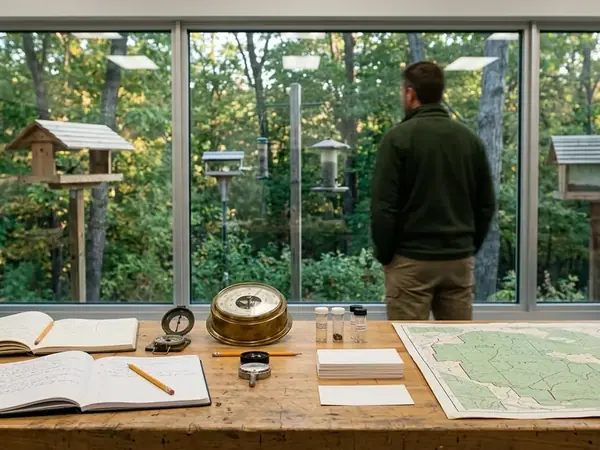
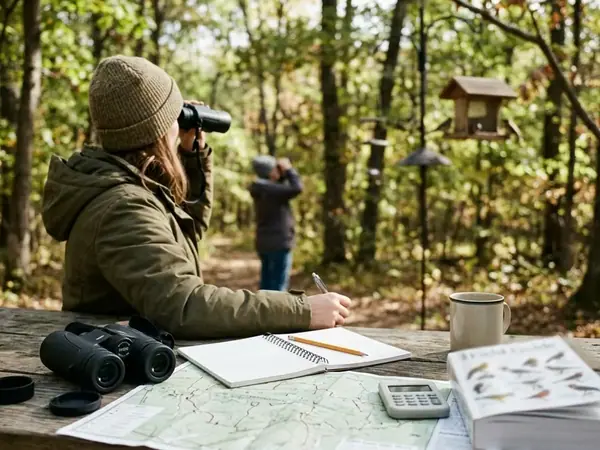
A brief observation note can follow: date, identified species, and feeding behavior. Over successive visits, those entries help reveal changes in the bird community without assigning each familiar-looking visitor a continuous personal history.
Seasonal daylight cues remain active while a bird uses food to meet immediate needs and prepare for travel.
Keep a clean, safe autumn feeder available, and make its next inspection the reason to refill or pause feeding.