From Feeder Visits to Useful Bird Records
Inconsistent counts, duplicate birds, and guessed identifications weaken an otherwise useful feeder record. A repeatable method gives an ordinary session of window birdwatching lasting value within a community project.
The work forms a chain of decisions: choose the project, copy its current rules, prepare the feeder area, observe for the prescribed period, preserve uncertain sightings, reconcile the final numbers, and submit the entry. Each decision protects the next from errors such as forgotten interruptions or repeated landings counted as new birds.
Patience and consistency matter more than advanced equipment. A fixed window, a paper field sheet, two pencils, and a visible clock or timer can support a defensible record. Binoculars may help with field marks, yet observers do not need to identify every visitor. A carefully described unknown bird carries more integrity than a confident guess.
Record the Evidence
Write what was seen before deciding what to call it. Size, bill shape, wing pattern, location, and behavior preserve clues that can be reviewed later.
Choose the Count Rules Before the Birds Arrive
Select the community science project first. Its current participant instructions determine when to count, where the site begins and ends, how long to observe, and which detections belong in the record.
This order prevents a familiar backyard bird feeding routine from being mistaken for the project protocol. One project may request the highest number seen together, while another may ask for every detection, presence alone, or a different observation period. The selected project's current rules always control the count.
Copy the Protocol onto the Sheet
Before choosing a session time, place these fields at the top of the field sheet:
- Project name and protocol version
- Site name and boundary landmarks
- Permitted feeder types
- Observation date, start time, and end time
- Treatment of birds flying over the site
- Required weather information
- The project's definition of observer effort
Choose a time when the full session can be completed from one position. Moving between windows or neighboring yards changes the visible area and makes the observation harder to repeat.
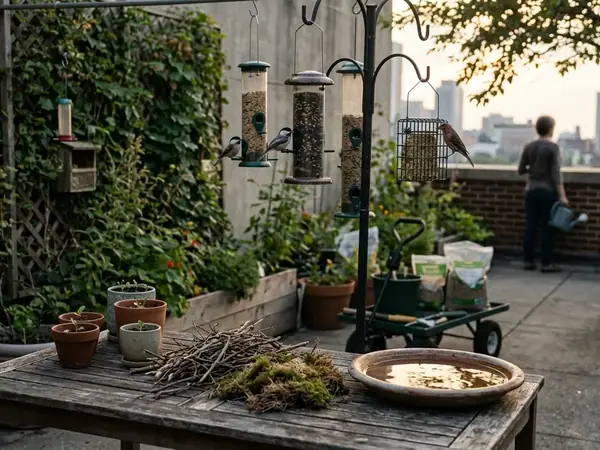
A practical boundary might extend from the feeder pole on the left to the birdbath in the center, the fence corner on the right, and the shrub line behind the feeders. This pole-bath-fence-shrub boundary gives every detection the same spatial test.
Prepare a Safe, Unbiased Feeder Count Site
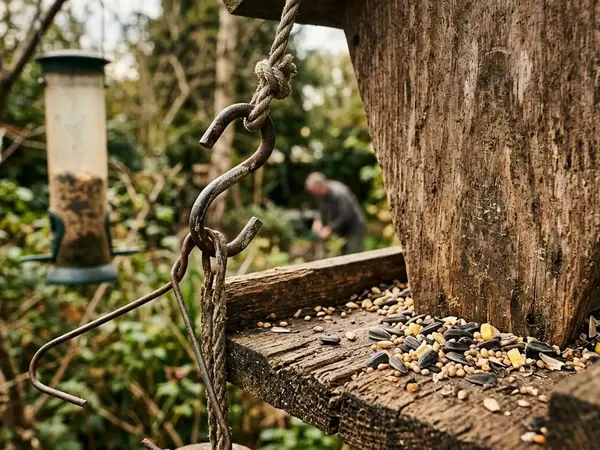
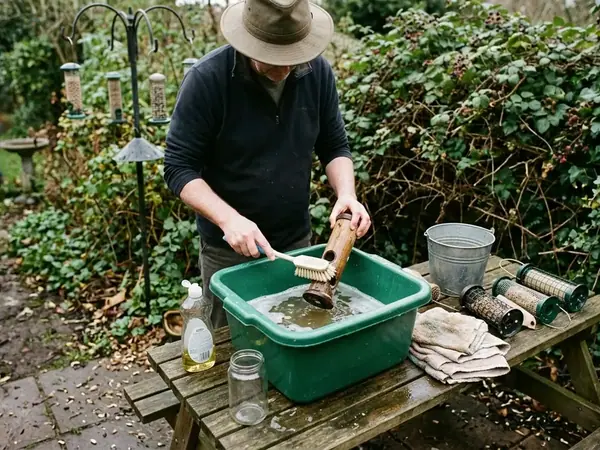
Complete routine feeder care before the observation period. Discard seed that is wet, clumped, moldy, or sour-smelling, then clean the feeder under current local wildlife and public-health guidance. Refill it and allow the station to resume its ordinary pattern of activity.
Keep the usual feeder positions and food mix on count day unless the chosen protocol requests a change. A temporary tray, extra pole, or unusually attractive food may alter which birds visit and how they move through the site.
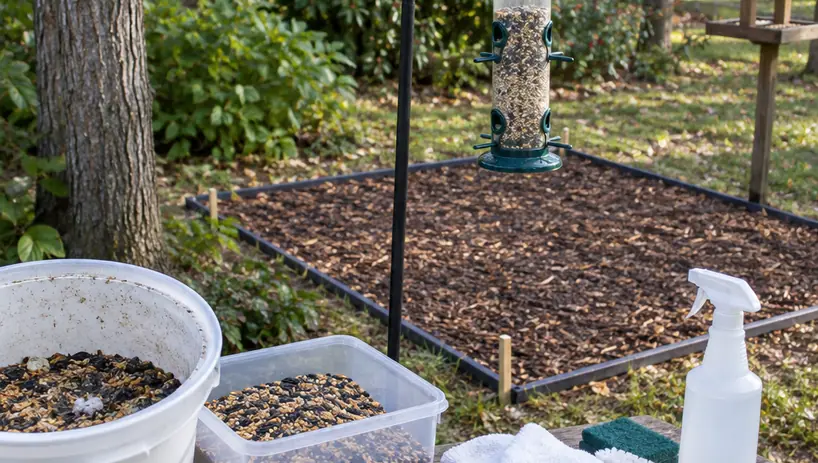
Walk the Boundary from the Viewing Position
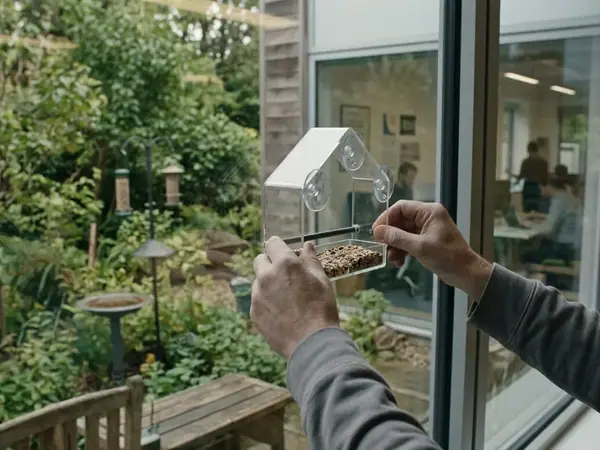
From the selected window, trace each landmark in sequence. Check for an obstructed sightline, spoiled food, a stalking pet, or a collision risk before starting the timer. Indoor pets should remain away from the observation window, while outdoor pets should stay out of the feeder area for the full count.
Bird welfare takes priority over the planned start time. If a feeder needs attention or a hazard appears, resolve it and begin the count later.
Keep the Station Ordinary
A representative count begins with the feeder arrangement birds encounter on a routine day.
Build a Field Kit That Keeps Observations Separate
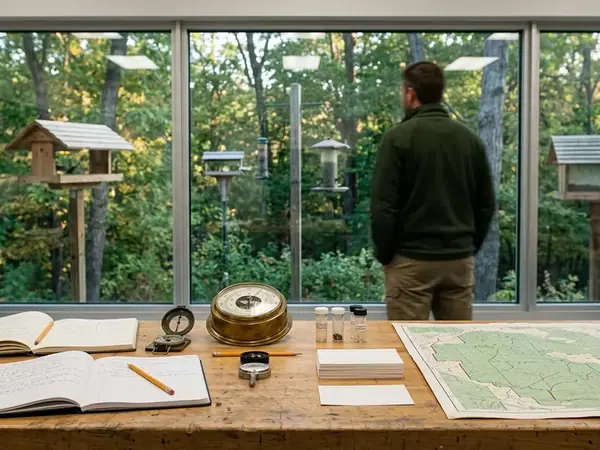
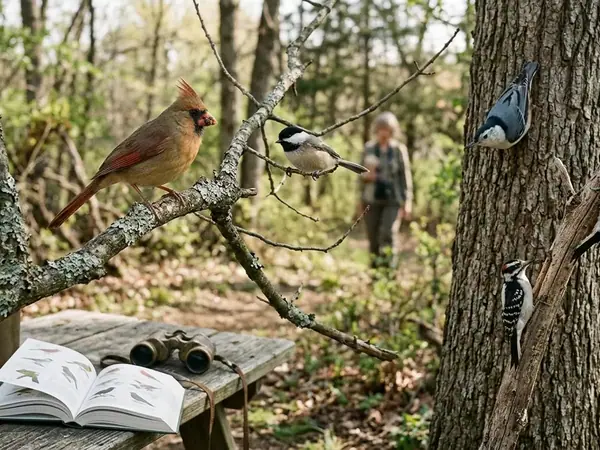
The basic kit is compact: one field sheet, two sharpened pencils, a visible clock or timer, binoculars, weather protection when needed, and a printed or saved copy of the project instructions.
Two pencils may sound overly cautious until one rolls beneath a cabinet while a flock reaches the ground tray.
Set Up Species Rows in Advance
Write likely species in separate rows and leave blank rows for unexpected or unidentified visitors. Each row should provide at least three working spaces:
- Running maximum: the highest defensible number observed under the protocol.
- Identification evidence: field marks, apparent size, bill shape, voice, or comparison with a nearby bird.
- Behavior and interruptions: feeding location, movement, lost visibility, or an event affecting the session.
Keep the active sheet and pencil in the primary position. A field guide or camera can remain within reach, though searching for a reference should not erase the original observation from memory.
When an unfamiliar bird appears, enter it immediately in a blank row. A useful note might include the time, apparent size, streaking, bill form, wing pattern, and the exact place where it was seen.
Count the Most Birds Seen Together
When the selected protocol uses a maximum-seen-together method, update a species total only when more individuals are visible simultaneously than at any earlier point.
Consider one chickadee making five approaches to a tube feeder. It lands, leaves for the shrub, returns to the tray, and disappears again. The running maximum stays at one unless a second chickadee becomes visible at the same time.
The One-Two-Four Split
A pair seen together establishes a maximum of two. If four later appear together, the maximum changes to four. The observer submits four rather than adding the pair and the later flock to produce six.
For a mixed flock, maintain separate maxima by taxon. Three finches and two chickadees visible together update two rows. Follow movement among the feeder, branch, ground, and shrub with the eye, retaining the last defensible maximum when birds disappear or sightlines overlap.
A stable plumage distinction can support separate individuals. For example, two clearly different sex or age plumages visible together may establish two birds. Direction of flight or a brief disappearance behind a shrub provides weaker evidence and should not inflate the tally.
Hold the Maximum
When concealed birds cannot be counted directly, keep the highest number already supported by simultaneous observation.
Record the Conditions Around Each Feeder Visit
A species total gains meaning from its context. Preserve the calendar date, start and end time, project-defined location, observer names or number of observers, and every requested weather field while those details remain fresh.
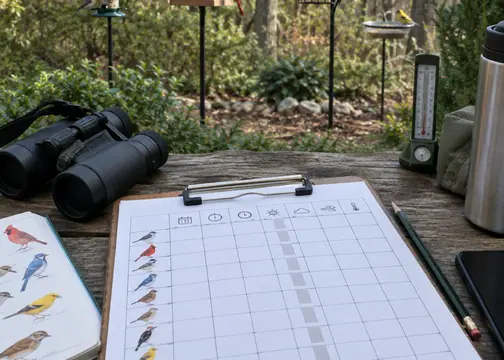
Record changes as events occur. If a delivery blocks the window, an effective note reads, “10:11—delivery at door; view lost until 10:13.” The clock times allow a reviewer to understand the interruption more clearly than a margin note containing only the word “interrupted.”
Heavy rain, a passing predator, feeder maintenance, and an early end to the session also belong in the record when they affect visibility or bird activity.
Keep Uncertain Birds Descriptive
Build an identification from shape, size, plumage, voice, location, and behavior. “Small brown bird, streaked breast, fed on ground below tube feeder” preserves observable evidence. An unsupported species name loses that detail and may introduce an error.
If the submission system accepts a broader taxon, an observer can enter “sparrow species.” Otherwise, the sighting should remain on the original sheet without being forced into the submitted species list.
Check Every Number Before Submission
Review the sheet in two passes. First, compare each proposed total with the highest number written in its species row. Circle or otherwise mark that final maximum before transferring any value to the submission form.
Second, inspect the header and margin notes. Confirm the count period, site boundary, observer effort, weather fields, and interruptions. This pass catches missing context without disturbing the bird totals.
Investigate Surprises Without Editing Them Away
Recheck an unusually high total, rare identification, or accidental zero against the time-stamped sequence, identification notes, and photographs. Leave the result unchanged when the original evidence supports it, even if the number seems surprising.
Photographs can resolve evidence they actually captured. They should not replace an undocumented field observation or supply birds that were never entered during the session.
After submission, confirm that the saved entry contains the intended site, date, duration, and species totals. Retain the paper sheet until the electronic record is visible and any validation question or correction has been resolved.
Give Each Participant One Counting Role
Group counting works best when one person keeps time, one controls the primary count, and one records the agreed updates. Other participants may describe sightings, but the primary spotter decides whether a detection raises the running maximum.
Rotate roles during a later session rather than midway through an active count. That preserves a consistent decision-maker while giving each participant a chance to practice.
Make Young Observers Responsible for One Feature
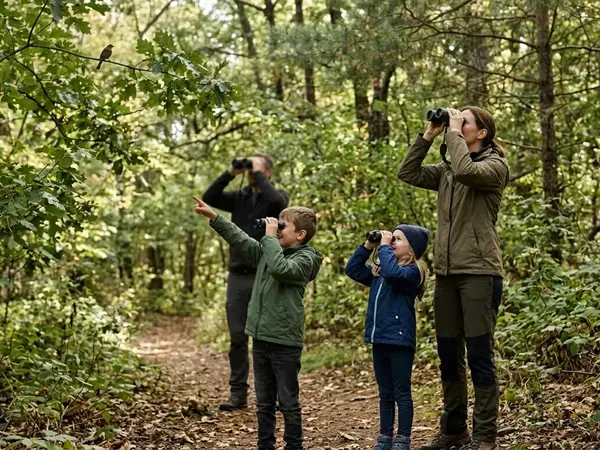
A younger participant can monitor the tube feeder, ground tray, or birdbath and report number, color, size, and direction of movement. The recorder then places the observation in the appropriate row under adult review. This concrete assignment reduces competing totals and keeps attention within the defined boundary.
Neighboring households should label sheets by distinct station, such as “east-yard pole” and “west-yard window feeder.” Keep the sites separate unless the project explicitly permits a combined area. One submitter's name should appear on the final sheet, with the remaining observers listed as contributors, so the same session is not uploaded twice.
These shared routines also strengthen birding community notes. Participants can compare timing, behavior, and feeder use across separate stations while preserving the site structure required for submission.
Work Through a 15-Minute Feeder Count
Suppose the chosen project approves a 15-minute session and the maximum-seen-together method. The observer can copy the following sequence step by step.
- Prepare the view. Sit at one window and define the boundary as the feeder pole, birdbath, fence corner, and shrub immediately behind the feeders.
- Complete the header. Write the site, observer, required conditions, a 9:00 start, and a 9:15 end. Prepare rows for chickadees and cardinals, then leave a blank row for an uncertain bird.
- Start the timer. At 9:03, one chickadee appears. Enter one as the running maximum and note its position at the feeder.
- Update only on simultaneous birds. At 9:05, two chickadees are visible together. Change the chickadee maximum to two. A lone chickadee returning later leaves that row unchanged.
- Track the second species separately. At 9:09, two cardinals appear together, establishing two. At 9:12, a third cardinal joins them, so the maximum becomes three.
- Preserve uncertainty. A small streaked bird feeds on the ground. Record its field marks and location in the blank row. Submit it only as a broader sparrow category if the project's system accepts that entry.
- Close and reconcile. Stop at 9:15, circle the 9:05 chickadee maximum and the 9:12 cardinal maximum, then check the header and interruption notes.
- Submit the supported totals. Enter two chickadees and three cardinals. Confirm the saved site, date, duration, and totals, then retain the original field sheet.
The finished record leaves the project with two chickadees, three cardinals, and one streaked sparrow described rather than named, all tied to a single window between 9:00 and 9:15 — and a paper sheet that still shows where each of those numbers came from.