A Chickadee Leaves a Seed in the Maple
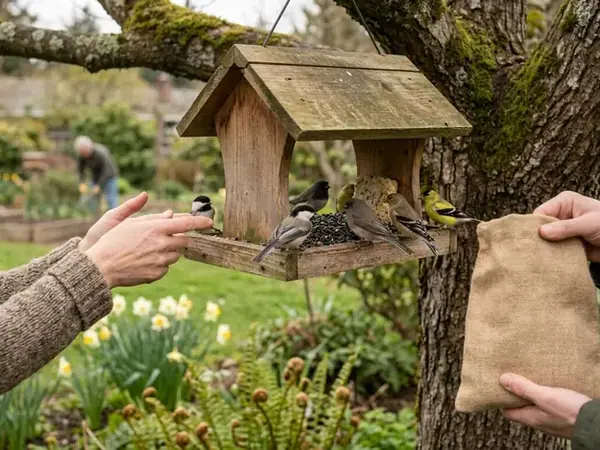
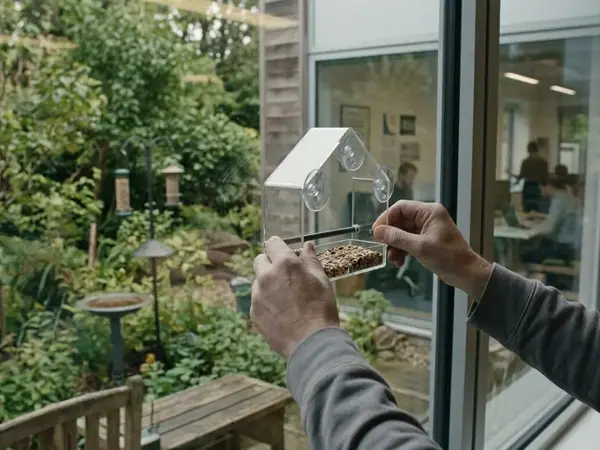
A chickadee lifts a sunflower seed from a backyard feeder and flies to a maple. It presses the seed into a narrow bark crevice, releases it, and returns to the feeder for another. The revealing action comes at the end: the bird leaves the seed behind.
This is caching, the practice of setting food aside for later. A single seed tucked into bark qualifies as a stored portion. The hiding place can be small enough to escape notice from a kitchen window.
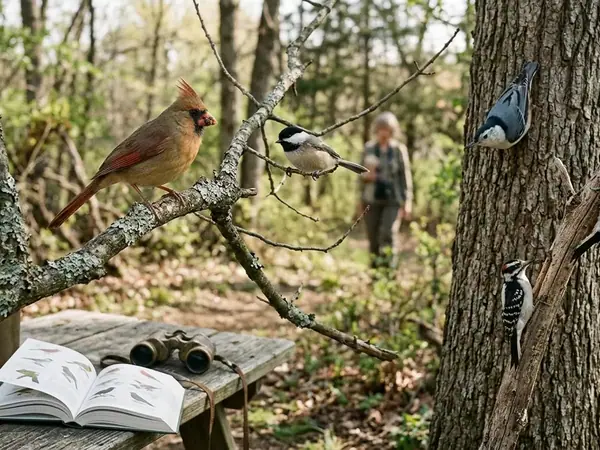
Several familiar North American feeder birds store food, including chickadees, nuthatches, titmice, and jays. Their movements offer useful clues, especially when an observer follows the food beyond the feeding tray. From a window, the most informative moment often happens on the next branch or trunk.
Follow the Food Through Its Next Action
A cache is food placed in a storage location for later use. By separating the moment of obtaining food from the moment of eating it, caching gives a bird stored food to retrieve when feeding conditions or food availability change.
Three short sequences help distinguish the purposes of a feeder visit:
- Storage: a bird tucks food into a crevice or covers it with material, then departs.
- Immediate feeding: a bird holds a seed on a perch, hammers the shell open, and eats the contents.
- Feeding young: an adult carries food directly to a dependent youngster and passes it over.
A nuthatch makes this distinction particularly useful. It can wedge a sunflower seed into bark and use the crevice as a brace while opening the shell. Continued hammering and eating identify an opening station; leaving the food tucked in place indicates storage.
The destination and next action therefore deserve attention together. Repeated trips provide repeated opportunities to watch that sequence unfold.
Chickadees Spread Small Stores Across Separate Sites
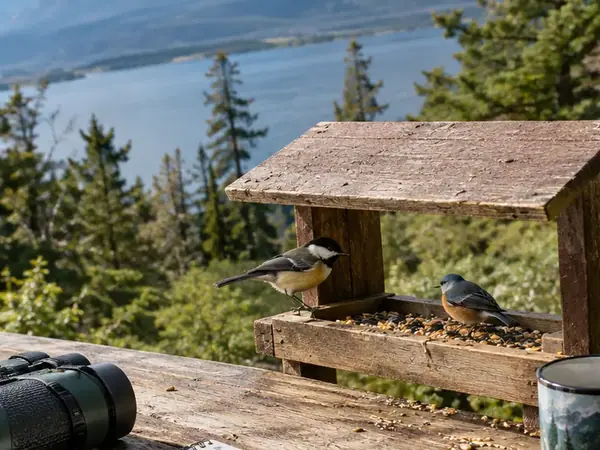
Small bodies, black caps and bibs, and pale cheeks make chickadees recognizable feeder visitors. Black-capped Chickadees are familiar across northern portions of North America, while Carolina Chickadees are familiar in the southeastern United States. These broad regional cues give backyard observers a starting point.
The feeder sequence is easy to follow: take one seed, leave the tray, settle on a nearby branch. There, a chickadee may grip the seed with its feet and peck it open. Watching the feet and bill helps establish whether the bird is handling a meal.
For storage, chickadees distribute food among separate small hiding places, including bark crevices. This pattern is called scatter-hoarding. Several departures from the same feeder can lead to different spots around the yard rather than a single conspicuous pantry.
A useful observation follows one seed through one complete trip. That keeps attention on visible behavior: where the bird lands, how it handles the seed, and whether it leaves food behind.
Nuthatches Use Bark for Opening and Storage
A compact bird moving headfirst down a trunk, with a pointed bill held close to the bark, offers a good introduction to nuthatch behavior. White-breasted Nuthatches occur in wooded settings across much of North America. Red-breasted Nuthatches are especially associated with conifer-rich habitats and also appear at feeders during seasonal movements.
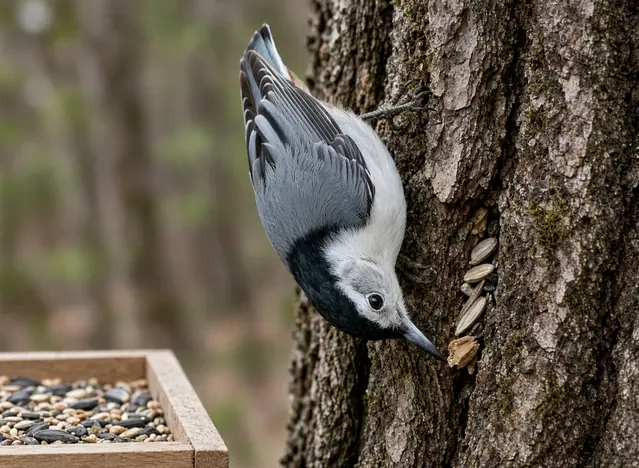
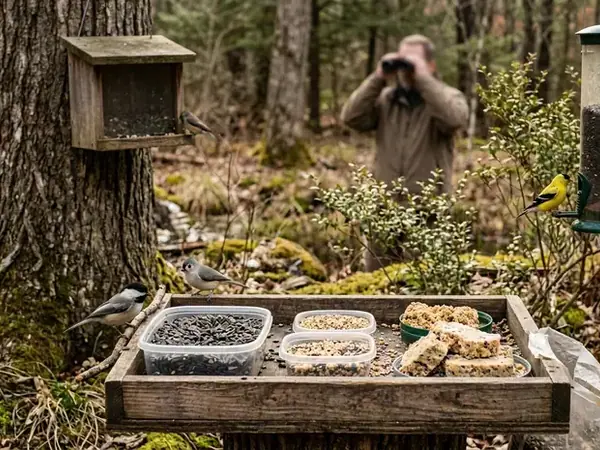
Sunflower seeds and peanut pieces can travel from the feeder to crevices in a trunk. The rough surface provides both sheltered storage locations and places where a bird can brace food for opening.
Consider the same visible placement in each case: the bill pushes a seed into a crack. If the nuthatch stays and hammers, the bark supports immediate feeding. If it releases the seed and departs, the sequence indicates storage. The next action resolves what the placement means.
For behavior notes, this makes a precise entry more useful than a broad label: record the seed placement, then the hammering or departure.
Titmice Carry Single Items Into Woody Cover
The Tufted Titmouse provides a familiar eastern United States example of another caching feeder bird. The Black-crested Titmouse occurs in parts of Texas, southwestern Oklahoma, and northeastern Mexico. A crest and gray plumage help draw attention to this group at the feeder.
Titmice may carry seeds or peanut pieces to concealed sites in woody vegetation. Their repeated single-item visits make the journey from tray to branch especially worth following.
A bird gripping and hammering a seed is preparing food to eat. A bird placing food into a concealed woody site and departing is storing it. Recording those actions separately gives your notes more useful detail than treating every feeder departure as a cache trip.
Jays Place Larger Foods in Ground and Tree Caches
Jays broaden the view from individual bark crevices to soil, leaf litter, and sheltered tree locations. Regional examples include Blue Jays in eastern and central North America, California Scrub-Jays in western oak and scrub habitats, and Steller's Jays in western forests.
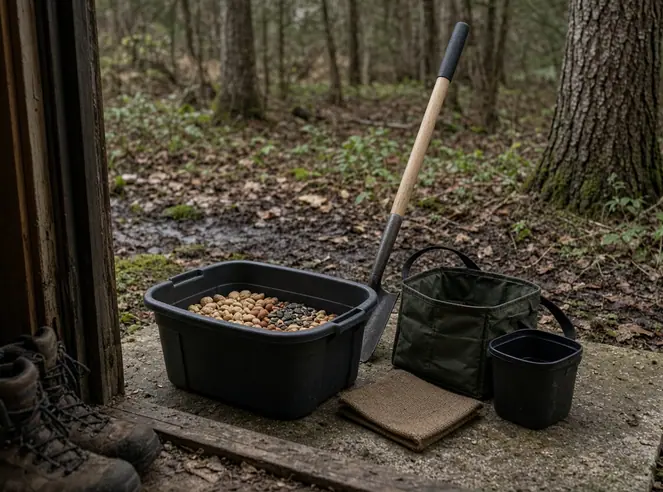
These birds cache nuts and seeds and may transport multiple food items on a trip. Following the individual bird reveals its choice of location: an item goes into soil, beneath litter, or into a sheltered place in a tree. Sometimes the jay covers it before departing.
The food's later fate connects caching with bird-friendly habitat. Some uneaten cached nuts and seeds germinate and contribute to plant establishment.
When offering peanuts, choose plain, unsalted ones without flavorings; suitable seed is another option. The observation remains the same whichever food leaves the feeder: follow its destination and watch the placement.
Keep the Sightline Clear and the Cache Untouched
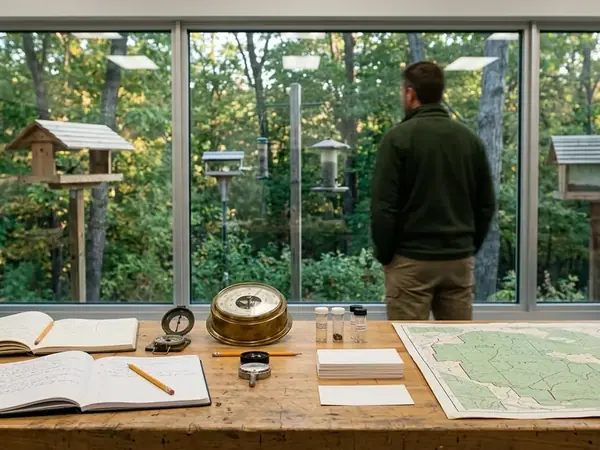
A window or seated backyard viewpoint supports a simple observation routine:
- Identify the bird.
- Note the food it takes.
- Follow its flight visually to the next perch or landing place.
- Record whether it eats, delivers, or conceals the item.
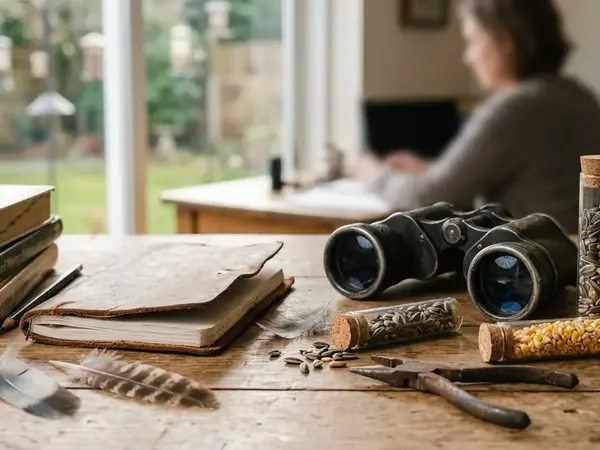
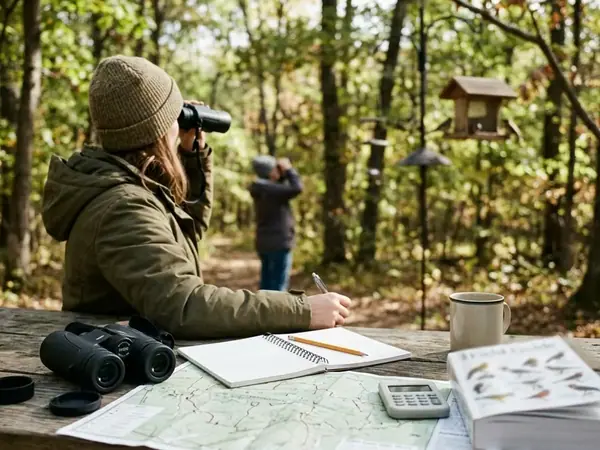
A notebook entry can use four fields: bird, food, destination, and visible action. When a bird carries food behind the maple trunk or otherwise disappears before its next action is visible, record “carried out of view.”
Stay With Binoculars
Binoculars help follow the bird from the original viewing position without walking toward its hiding spot.
Leave bark, holes, soil, and leaf litter undisturbed. Avoid probing, uncovering, moving, or collecting stored food, adding food to an existing cache, or placing markers beside hiding spots. Opening or moving a cache interferes with food the bird has set aside. Keep ordinary feeder tasks, including cleaning, separate from the surrounding hiding places.
At the window, a White-breasted Nuthatch presses a sunflower seed into the maple's rough bark and flies away. The notebook reads, “White-breasted Nuthatch; sunflower seed; maple bark; seed concealed; bird departed.” The crevice stays untouched.