What the Bird Can Tell You Before the App
What is the bird doing before you ask an app what it is?
Identification apps make useful checking tools. They can also draw attention toward a photograph before a beginner has retained the living sequence: how the bird arrived, where it stood, what it ate and how it departed. Those details often disappear once the bird leaves the frame.
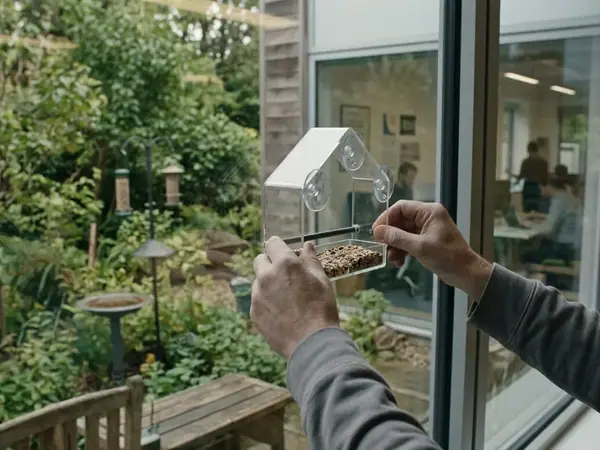
For a feeder visitor that remains visible, an initial watch in the range of 20–40 seconds usually captures more than a frozen plumage impression. Delay the app check until the bird completes one observable sequence, such as arriving, taking food and departing. If the visit lasts only a few seconds, speak the actions aloud immediately instead of spending those seconds unlocking a phone.
This order builds transferable identification and behavior skills. A beginner may encounter an unfamiliar species tomorrow, yet still recognize a bark-clinger, a flocking seed eater or a bird that repeatedly carries food toward cover. The observation remains useful even when the first identification proves uncertain.
Keep the Sequence
Hold three events in mind: arrival, action and departure. A single photograph may preserve none of them.
Behavior Narrows the Backyard Field
Color attracts attention first, especially during window birdwatching. It is also vulnerable to poor light, distance, molt and viewing angle. A gray bird in shade may look brown; a pale wing bar may vanish when the wing folds; a bright patch can dominate the whole impression.
Behavior places that uncertain bird into a more manageable group. It may feed on the ground, cling to bark, hover near flowers, travel with other seed eaters or wait alone for moving prey. These groupings do not supply a species name. They establish a practical starting field for comparison.
Evidence Before Interpretation
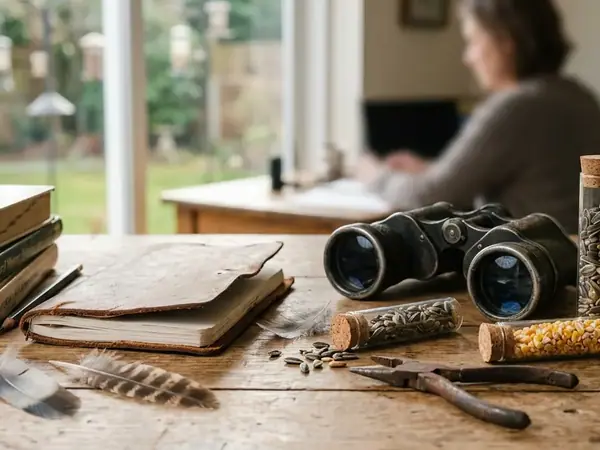
Careful notes separate what happened from what the observer thinks it means. Consider this field entry:
Under the platform feeder, hopped twice, scratched backward, then picked at the exposed ground.
That sentence records location, movement and result. “It must be a sparrow” is a provisional inference requiring checks against shape, habitat and markings. Keeping those two layers separate prevents a promising guess from hardening into certainty.
The distinction matters in busy backyard feeding areas. Several birds may use the same patch of leaf litter, while only one performs the backward scratch that first caught the observer’s eye. Following one individual from approach to departure produces a cleaner account than combining actions from different birds.
Four Clues to Watch: Posture, Food, Flocks and Motion
A fixed scan order helps keep conspicuous color from controlling the identification. Start with posture, continue to feeding action, note the bird’s relationship with nearby birds and finish with movement. Leave a category blank when it cannot be seen. A blank preserves uncertainty; a guess contaminates the record.
Posture
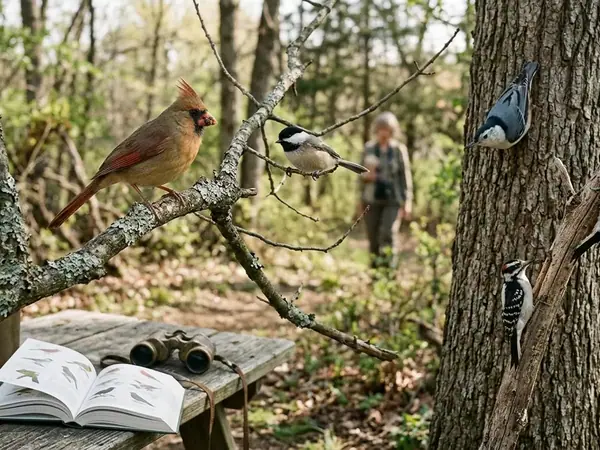
Notice whether the body looks upright or nearly horizontal. Does the bird crouch close to the surface, perch openly or cling to a vertical trunk? Record how it holds its tail and whether that position changes before takeoff. These structural impressions often survive difficult light better than fine plumage marks.
Feeding Action
Watch the mechanics rather than recording only “eating.” A bird might crack seeds at the feeder, remove one seed and carry it away, probe a flower, inspect bark, glean insects from leaves, scratch through litter or catch food in the air. Each action narrows the comparison in a different way.
Flock Relationship
Record whether the visitor arrives alone, as part of a pair or within a loose group. Then watch its position. Does it wait below the feeder, displace another bird or feed calmly beside its neighbors? The interaction may reveal more than the simple presence of a flock.
Movement
Follow one bird through a complete approach and departure. Note hops versus walking, direct versus wavering flight, repeated trips to cover and any return along the same short path. When the bird remains visible, approximately one 30–60-second observation cycle can yield a compact record such as: “body nearly horizontal,” “carried one seed,” “arrived alone” and “returned by the same short flight path.”
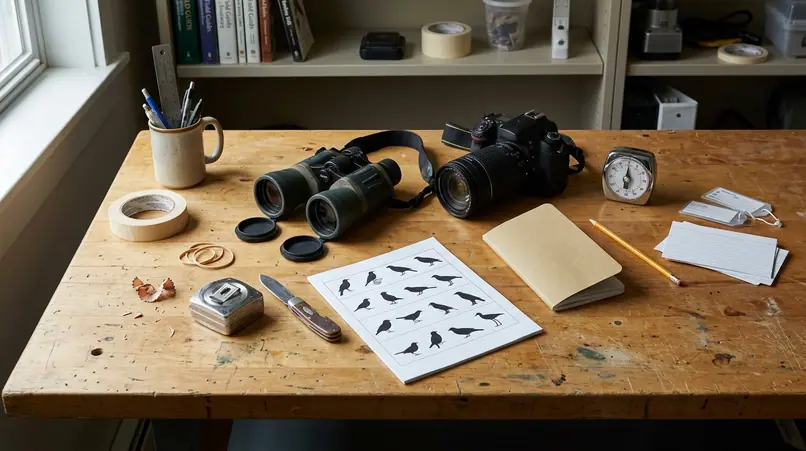
A Behavior Clue Only Works in Context
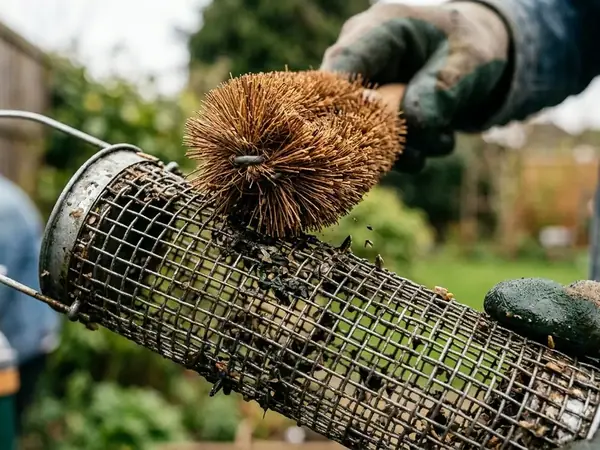
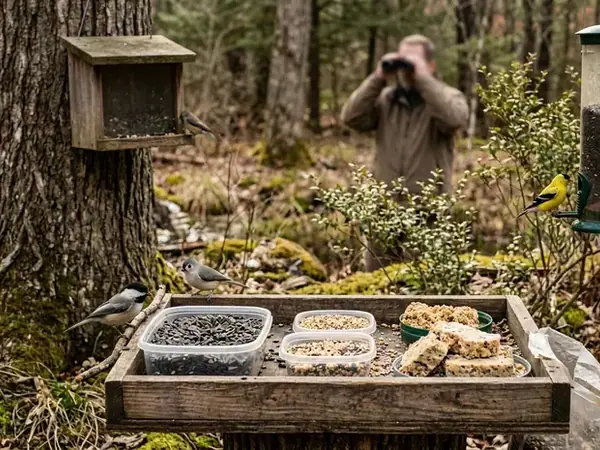
Every action belongs to a setting. “Clung vertically” becomes more informative when the note continues with “on the shaded trunk beside the suet cage.” The substrate, feeding height and nearest escape cover explain choices that might otherwise appear species-specific.
Name the Immediate Setting
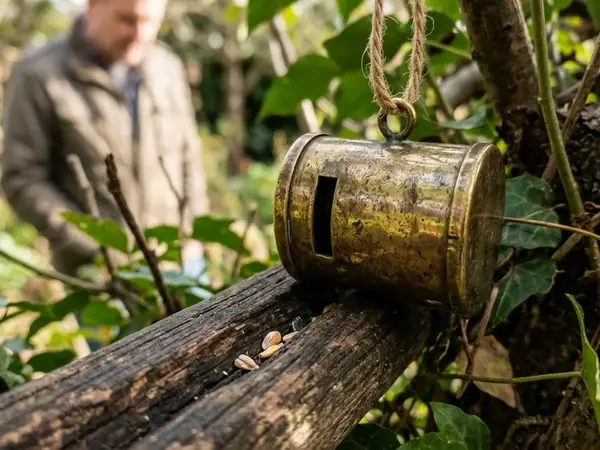
Record the surface precisely: tube port, platform edge, suet cage, lawn, leaf litter, shrub, trunk or open air. Add the food offered and estimate height in household-scale bands such as ground level, knee to head height, roofline or canopy. These bands are more defensible than an exact measurement guessed through a window.
Distance to cover deserves equal attention. A compact feeder bird may remove food because a dense shrub stands nearby. Another may remain at the port because it has a clear view of approaching birds. The feeding action gains meaning from that arrangement.
Allow for a Changed Routine
Season, weather, alarm, age and competition can alter an individual’s usual behavior. A feeding action can narrow candidates, while identification still requires agreement with size, shape, habitat, voice and visible field marks. That is where certainty at the feeder window ends: a bark-cling, backward scratch or repeated cover flight shortens the list without earning a species name by itself.
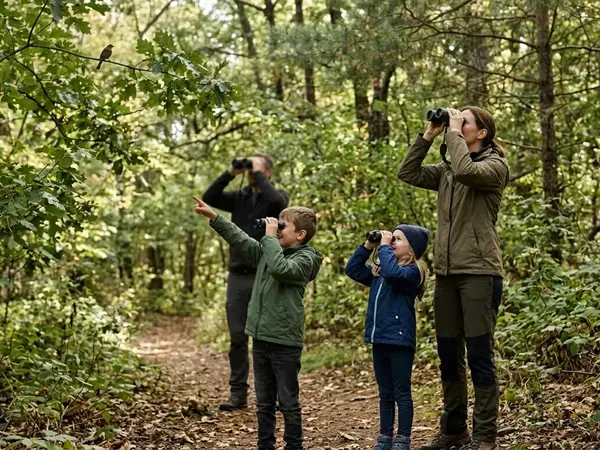
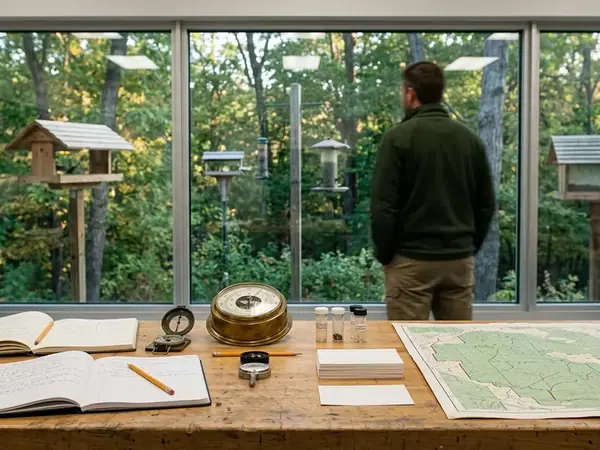
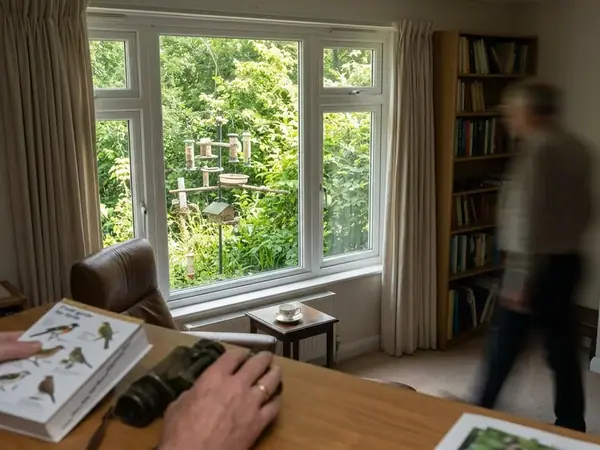
A quiet 5–10-minute session from the same window or outdoor seat offers a consistent view. Avoid approaching the feeder, shifting the food or flushing the bird to obtain another angle. Stable conditions support a fairer comparison and safer conditions at the feeder.
Look, Describe, Predict—Then Open the App
The practical sequence has four steps:
- Look: follow the bird through one complete action sequence.
- Describe: record posture, feeding, company, movement and setting in neutral language.
- Predict: name the narrowest group supported by the evidence.
- Check: compare an app or field guide result with the recorded behavior and visible features.
A useful prediction might be “small bark-clinging bird” or “flocking ground-feeding seed eater.” Group-level language leaves room for several candidates when a species-level answer would exceed the evidence.
Review two to four plausible candidates at first. A longer list usually signals that habitat, size or movement needs a clearer description. Compare each suggestion with the actual account: Did the candidate use the same feeding surface? Does its typical posture fit? Would it carry food toward cover or remain at the feeder?
When behavior conflicts with the first visual suggestion, wait through another short watch or until the bird returns. The app tests an observation-based hypothesis; it does not replace the observation that produced the hypothesis.
Check the Match
A convincing photograph can still represent the wrong candidate when its expected feeding and movement conflict with the bird at the window.
Try the Method on One Sunflower-Seed Visitor
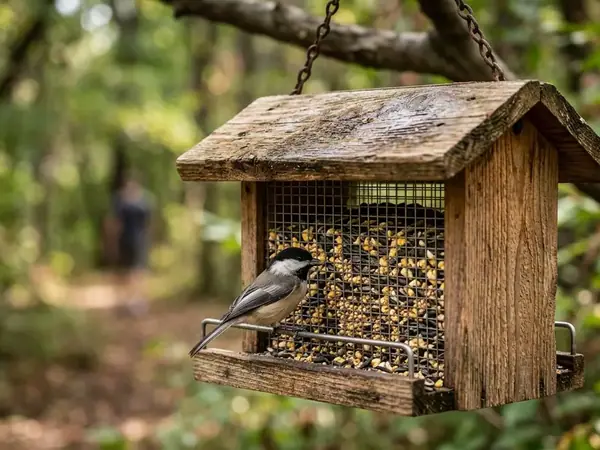
A compact songbird arrives alone at a tube feeder filled with sunflower seed. It lands briefly, removes one seed and flies to a nearby branch. There, it braces the seed and pecks it open before returning.
That is the complete starting record. Plumage has not yet entered the decision.
Read the Trips, Not the Impression
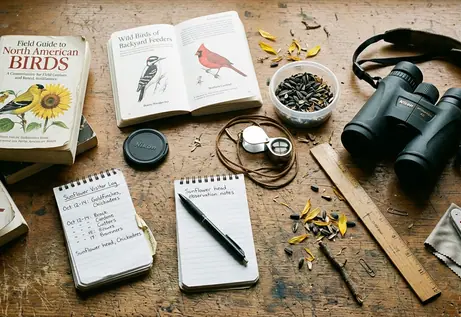
Count the routine by trips. On two or three consecutive visits, note whether the bird carries away one seed each time. Record whether it returns to the same branch cluster and flies directly back to the same tube port.
This carry-away pattern weakens candidates that commonly remain at the port and process several seeds there. It retains multiple species capable of removing food, bracing it against a perch and returning. The observation has narrowed the field without forcing an early answer.
Next, add posture and movement. Was the body upright at the port or held more horizontally? Did the bird fly straight to the branch, pause in cover or change perches? Then examine shape, visible field marks and the habitat immediately around the feeder. Each added clue can strengthen or weaken the remaining candidates.
Build a Backyard Reference
Repeat the exercise during one 5–10-minute watch of a familiar feeder bird. Its routine becomes a reference for later visitors: where it waits, how it handles seed and whether it tolerates neighbors. Notes shared among birders become more useful when observers include these plain sequences alongside identification suggestions.
On your next feeder visit, will you name the bird immediately—or first describe the one behavior that would change your identification?